







Woo Woo
 (1 оценок, среднее: 5.00 из 5)
 Loading...
Similar Games





Description
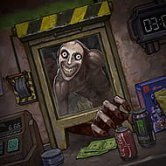
You sweep a pile of what looks like ordinary trash toward the hallway closet, and it skitters away on tiny spider legs before you can catch it, which is the exact moment Woo Woo stops feeling like a cleaning chore and starts feeling like a horror game with a broom mechanic bolted on.
| Genre | Puzzle-exploratory horror roguelike |
| Core Loop | Clean the house before midnight |
| Level Generation | Procedural |
| Threat | Dad eats you if the house isn’t clean |
Cleaning a House That Fights Back
The premise sets an oddly specific stakes system right away: clean the house by midnight, or Dad eats you for dinner. That threat shapes every decision in Woo Woo, since exploring eerie, procedurally generated rooms for trash and sorting it into the correct spot — clothes into drawers, furniture back into place — has to happen against a genuine time limit rather than at your own pace. What makes the cleaning itself interesting is that not everything sits still; some trash items grow small spider legs and scurry away the moment you approach, forcing you to whack them with a broom before they can escape into another room entirely.
The Centipede, the Ghost, and Procedural Threats
Because the house regenerates its layout each run, the specific creatures you encounter shift unpredictably — a multi-meter-long centipede might be waiting in the basement one run and completely absent the next, while a hungry ghost occupying the attic in one playthrough could show up somewhere else entirely the next time. Beginners consistently underestimate how much this randomization changes strategy from run to run, since memorizing a single house layout the way you might in a fixed-map game simply doesn’t transfer here.
Controls in Woo Woo have drawn real, direct criticism from players, several of whom describe them as clunky, particularly given there’s currently no option to remap keys or use a controller. It’s a fair complaint that comes up in nearly every piece of player feedback, even from people who otherwise enjoy the atmosphere and tension the game builds.
Item Placement and Reading the House Correctly
Beyond dodging scurrying trash and avoiding the house’s larger threats, success depends on correctly identifying where each item actually belongs — clothes that end up in the wrong drawer or furniture placed in the wrong room don’t count toward finishing the cleaning objective, which means careful observation matters as much as speed under the midnight timer. Players who rush toward volume over accuracy often find themselves scrambling in the final minutes trying to fix earlier placement mistakes rather than actually finishing the job.
Is Woo Woo meant to be played quickly or carefully? Both matter simultaneously — the midnight deadline forces speed, but incorrect item placement wastes time you don’t have, so accurate sorting under pressure is the actual skill being tested rather than raw movement speed.
Does the house layout stay the same across playthroughs? No — procedurally generated rooms mean creature placement and layout shift each run, which is why strategies that worked in one attempt at the basement centipede or attic ghost may not apply the next time.
Are the controls difficult to learn? Players consistently report the controls as clunky, especially without controller support or remapping options currently available, which is one of the more honest criticisms circulating around otherwise positive impressions of the game.
Woo Woo turns a mundane chore into something genuinely tense by making the house itself an active participant, and once that basement centipede starts scraping toward you while you’re still sorting last week’s laundry, the midnight deadline stops being an abstract number and starts feeling like something worth actually fearing.