
Categories






Stickman Games
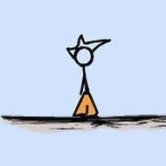

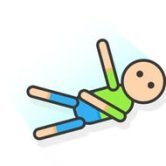

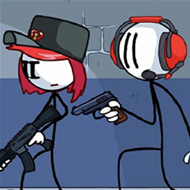
Stickman Games prove that a hero does not need detailed graphics to be memorable. A few lines for arms and legs are enough to carry precise platforming, slapstick ragdoll fights, prison escapes full of choices and flowing runs across hand-drawn worlds. The simple look keeps attention on movement, timing and humour.
Why Simple Figures Work So Well
Stick figures are easy to read on screen. Their pose tells you instantly whether they are jumping, sliding, falling or swinging, which matters a lot in fast or precise titles.
The minimal style also leaves room for expression. A slumped posture after a failure or an exaggerated tumble down a staircase can be funnier than a detailed animation.
That is why Stickman Games span so many genres. The same basic figure can be a parkour athlete, a fighter, a secret agent or an inmate trying to break out of prison.
Genres That Use the Stickman
Precision platformers, with wall jumps, spikes and buzzsaws.
Momentum adventures, built on hills, launches and speed.
Ragdoll fights, where floppy limbs make each hit unpredictable.
Choice-driven stories, where picking an option leads to success or a comic fail.
Exploring each genre is a good way to see how flexible these figures can be. Fans often start with one style and end up trying every branch of Stickman Games in the catalogue.
Precision Platforming
Many Stickman Games focus on difficult obstacle courses. In titles like Vex 6, the hero runs, slides and wall-jumps through levels packed with spikes and moving saws, and checkpoints break the challenge into manageable pieces.
Success here depends on timing. Pressing jump a fraction too early or too late can mean the difference between a clean climb and a fall back to the last flag.
Breaking each section into small steps helps. Treat each wall and each saw as its own small task, and the long stretches become far less intimidating.
Momentum and Flow
Other titles favour flowing movement over pixel-perfect jumps. The hero builds speed on hills, launches off ramps and keeps momentum through curves, which feels closer to skateboarding than to careful hopping.
Let the hero run instead of stopping at every ledge.
Use slopes to gather speed before a big jump.
Chain slides and wall jumps to keep momentum.
Explore high ledges for hidden rooms and collectibles.
These Stickman Games reward exploration as much as skill, since secret doors and bonus areas are often tucked away along alternative routes.
Ragdoll Chaos
When stick figures fight, physics often takes over. Limbs swing loosely, weapons drag the body off balance and a single hit can send both fighters flying across the arena.
That unpredictability is the main attraction. Fights rarely play out the same way twice, and some of the funniest moments come from accidental knockouts.
Two-player modes make these titles especially popular for sharing a keyboard with a friend, since the chaos levels the playing field.
Stories Built on Choices
A different branch of Stickman Games tells stories through decisions. The hero faces a situation, several options appear and each choice plays out as a short animated scene.
Wrong picks lead to comic failures, and the right ones move the plot forward. In Fleeing The Complex, for example, Henry Stickmin must escape a high-security prison, and his partner and tools decide which ending you reach.
These titles encourage replaying. Seeing every fail and every ending is a goal in itself for many fans.
Where to Start
If you enjoy precise challenges, begin with a platformer full of saws and spikes. If you prefer relaxed exploration, try a momentum-based adventure. Fans of comedy and stories will enjoy the choice-driven escapes, while those who want quick laughs with a friend should head for ragdoll duels.
All of these are gathered on Gamaloplay, so moving from one style to another takes only a click.
Humour in a Few Lines
Comedy is a big part of what makes Stickman Games so popular. Without detailed faces, humour comes from timing and exaggeration: a hero who stares blankly after a plan collapses, a rider who keeps pedalling after losing his balance or a fighter who flops into a wall after a missed kick.
Fail screens and ragdoll falls are often more memorable than victories. Many players deliberately make wrong choices just to see what happens next.
This playful tone keeps frustration low, even in the hardest titles. A difficult platformer feels easier to retry when every failure produces a small laugh, and that mix of challenge and comedy is something Stickman Games handle better than most genres.
From wall-jumping past buzzsaws and sliding down hand-drawn hills to brawling with floppy limbs or guiding Henry Stickmin out of prison, Stickman Games show how much fun a few simple lines can create when timing, physics and humour come together.