



Categories






Simulation Games

























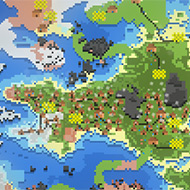




Some categories are about winning or losing, while this one is about running something and watching how it responds. Simulation Games recreate systems — cities, farms, vehicles, entire businesses — and hand you the controls. There is no fixed script here, just a set of rules that react to whatever decisions you make.
What This Category Is Actually About
At the core of every title in this section is a working system that responds to input in a consistent way. Simulation Games are less concerned with a single objective and more focused on ongoing management — balancing resources, reacting to events, and adjusting plans as circumstances shift. Progress often looks like stability rather than a finish line. Failure states usually build up gradually too, giving you room to notice a problem and correct course before it becomes serious.
Common Themes Within This Category
The range of subject matter here is wide, since almost any system can be modeled in some form. Some of the recurring themes among Simulation Games featured on this page include:
- City and settlement management — balancing infrastructure, population needs, and available resources.
- Farming and production — planning crops, cycles, and output over repeated seasons.
- Vehicle operation — handling realistic controls for cars, trains, aircraft, or ships.
- Business and economy management — pricing, staffing, and supply decisions that shape a company’s growth.
- Life and social simulation — guiding characters through routines, relationships, and daily choices.
- Environmental and ecosystem models — observing how interconnected variables affect a shared space over time.
- Construction and infrastructure planning — laying out physical space so it functions efficiently as demand grows.
How Feedback Is Communicated to the Player
Since there is no scripted narrator guiding decisions, most titles rely on charts, indicators, and status reports to show how a system is performing. Learning to read these signals is often as important as any single decision, since a graph trending in the wrong direction usually gives more warning than an isolated event. Simulation Games that communicate this feedback clearly tend to feel far less frustrating than ones that leave you guessing why a system is struggling.
Why Systems Matter More Than Scripted Events
What separates Simulation Games from more linear formats is the absence of a fixed sequence of events. Instead of scripted moments, outcomes emerge from how different variables interact — a shortage in one area might quietly affect something on the opposite side of the same system. This is part of why two people can start the same scenario and end up with completely different results after the same amount of time.
Skills These Titles Tend to Reward
Spending time with Simulation Games tends to reinforce a specific set of habits, whether or not that is the reason someone picks the category up:
- Reading trends over time rather than reacting to a single data point in isolation.
- Balancing short-term fixes against long-term stability.
- Anticipating how one change will ripple through connected systems.
- Adjusting a plan gradually instead of making large changes all at once.
- Recognizing early warning signs before a system becomes unstable.
Finding the Right Simulation Games for Your Interests
Since this category covers so much ground, narrowing things down by subject matter tends to work better than browsing at random. Someone drawn to logistics and planning might prefer a business or transport-focused title, while someone more interested in storytelling might lean toward a life or social simulation instead. If you want a wider view of what else the site offers before narrowing your search, the homepage is a straightforward place to start.
Pacing a Long-Term Session
Many Simulation Games are designed to be returned to over extended periods rather than finished in one sitting. A few habits make that kind of pacing more manageable:
- Set small, specific goals for each session instead of trying to address everything at once.
- Review recent changes before making new ones, since earlier decisions often explain current conditions.
- Save at natural stopping points, particularly before testing a change with uncertain consequences.
- Revisit tutorials or in-game guidance periodically, since later mechanics often build on earlier ones.
Realistic Detail Versus Approachable Design
Titles in this category sit on a spectrum between strict realism and simplified mechanics. Some aim to mirror real-world systems closely, with detailed variables and layered consequences, while others trim complexity down so the core loop stays easy to follow. Neither approach is inherently better — it depends on whether you want to study a system closely or simply enjoy managing one without extensive research beforehand.
Simulation Games reward attention and patience more than quick reactions, since most systems here reveal their patterns gradually rather than all at once. This category keeps expanding with new subject matter, so it is worth revisiting if managing a system over time is the kind of session that appeals to you.