














Family Manners
 (1 оценок, среднее: 5.00 из 5)
 Loading...
Similar Games










Description
Is Family Manners worth an evening when the store page promises only about one hour of playtime? That question comes up before almost every first launch, and the answer depends on what kind of horror you want from a first-person story.
| Genre | First-person psychological horror |
| Playtime | About 1 hour |
| Mode | Single-player, story-driven |
| Look | Old cartoon aesthetic with a retro, 1990s feel |
Mr. Evans Comes Home: The Setup Players Start With
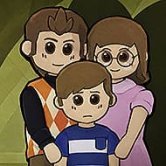
The premise is deliberately ordinary. Mr. Evans finishes a long and exhausting workday and returns to the comfort of his home, where his family is waiting for him. Nothing in that sentence sounds dangerous, and that is the point. The story starts from a picture of domestic calm and then asks you to look at it more closely, until the idea of a perfect household begins to feel like a surface rather than a fact.
The introduction paints a quiet scene: light touching every corner of the house, a clock marking the first heartbeats of the morning, and the Evans family living what looks like a wonderful life. The text then ends on a pointed little question that casts doubt on all of it. That tone of polite suspicion is what carries the horror from the first minute to the last.
Because the setup is so small, the story leans on mood rather than on a big cast or a sprawling map. You are in one home with one family, and every detail you notice matters more than it would in a larger world.
Family Manners and the Old Cartoon Look That Hides Something
The visual style borrows from old cartoons. It is warm, rounded and colorful, and it reads as friendly at first glance. The charm is part of the trap, because a cheerful look makes any unsettling moment land harder. Horror fans who enjoy contrast between innocent art and dark subject matter will recognize the technique right away.
The fear is built through psychological horror and mystery rather than through constant chases. Tension rises gradually, and the questions you carry about the Evans family matter more than any single scare. Players who prefer slow-burn atmosphere over jump scares are the natural audience here.
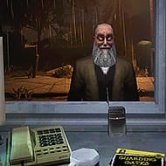
Some players describe the look as late-90s cartoon horror, a place where a children’s show aesthetic and a grown-up story share the same frame. That mix explains why the art is the first thing people mention in early reviews.
Atmosphere and Tone: Why the Quiet Moments Matter Most
The word players use most often for this kind of horror is atmospheric, and it fits. The unease comes from how a room feels, how long a scene is allowed to sit, and how calm it stays even when you sense something is off. A game like this is judged less by what happens and more by what you keep expecting to happen.
Early in the story, Mr. Evans is simply a tired man arriving home, and the calm of that moment gives the horror its starting point. The longer you stay in the house, the more that calm starts to feel staged. By the time the cartoon surface begins to crack, you have already spent enough time with the Evans family to care about what is underneath.
It is an emotional story as much as a frightening one. The store page itself describes the narrative as heartbreaking, and players pick up on that: the dread is tied to the family rather than to monsters.
What One Hour of Family Manners Asks From You
Attention to the home. The Evans house is your only stage, so the way rooms are lit, arranged and decorated tells you more than any line of exposition. Take your time moving through it.
Patience over reflexes. This is a story-driven game, not a test of speed or aim. You are rewarded for observing, thinking about what you see, and letting each scene settle before moving on.
Willingness to sit with discomfort. The mystery of what is hidden beneath the seemingly perfect life of Mr. Evans is meant to bother you. Players who want a clean answer in the first ten minutes will find the pacing deliberate.
A Linear Walk Through the Evans Home
Players tag the game as a walking simulator, and that is a fair description of its rhythm. The structure is linear, so you are guided from scene to scene rather than turned loose in an open world. The benefit is control: the story reaches you in the order it was designed to, which matters a lot for horror built on slow revelation.
If you are used to survival horror with inventories, hiding spots and resource management, expect none of that tension. The pressure here is emotional and narrative. The player who needs a lot of mechanics to stay engaged may find the pace too quiet, while a player who loves short, directed stories will find it comfortable.
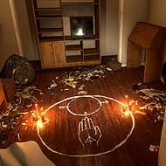
Some players have also pointed out that the story knows when to shift perspective, and that these moments are where the horror stops feeling grounded and turns strange. It is worth going in without a map in your head of what those moments will be.
Nothing Stays Hidden Forever: The Themes Behind the Cartoon Surface
The store page carries a short line that works almost like a motto: the more you look away, the harder it becomes to ignore, and some wounds never heal, they only learn how to hide. That idea sits at the center of the story. The home looks warm, but the game keeps returning to the question of what a family chooses not to see.
That is why the horror feels personal instead of supernatural. A dangerous truth lies beneath the life of Mr. Evans, and the story treats it as something the family has been living around for a long time. Players who connect with stories about domestic secrets tend to find this the strongest part of the hour.
The tone will not suit everyone. Because the subject matter is about hidden hurt in a household, some players find it heavier than the cartoon art suggests, and it helps to know that before you start.
Where Players Split on Family Manners
The most common debate is length. About one hour is short, and some players feel a single evening of horror is not enough for the price of a purchase, while others see it as a tight, well-contained story that respects their time. If you like long campaigns, adjust your expectations before you start.
Replay value is the second point of friction. A narrative built around a hidden truth works best the first time, so once Mr. Evans has walked you through the full story, there is less reason to go back. Treat it like a short film and the length feels fair. Early store reviews lean strongly positive, though the number of reviews is still small.
The safest advice is to go in without reading plot summaries. Everything the game does depends on you slowly working out what is wrong inside the Evans home, and a spoiled twist removes most of its power.
Family Manners works because it takes one ordinary house, one tired father and one cheerful cartoon surface, and makes you doubt all three. If you want a compact psychological horror story that follows Mr. Evans and the Evans family through a single unsettling hour, it is easy to recommend, as long as you value atmosphere over action.