










The Garden Path
 (Пока оценок нет)
 Loading...
Similar Games





Description
What actually happens when the season turns in The Garden Path and the vegetables you’ve been coaxing along for weeks finally come up? You don’t get a failure screen or a countdown timer — you get a quiet garden that looks a little different than it did yesterday, because time here moves whether you’re watching or not. That single design choice shapes almost everything else about how the game plays.
| Genre | Life simulation, gardening sim |
| Platforms | PC, Nintendo Switch |
| Full year length | 28 real-world days, covering all four seasons |
| Multiplayer | Local co-op for two players |
| Price | $19.99 |
Arriving in The Garden Path With an Empty Plot
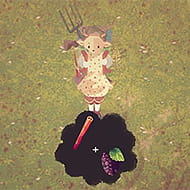
You start by making a character that looks something like yourself, then you’re set loose in a garden that’s clearly seen better days. There’s no opening tutorial marching you through menus — you can start harvesting and researching plants within the first couple of minutes, and the game trusts that you’ll figure out the rest by poking around.
That hands-off approach is one of the more divisive choices players bring up. Some find it liberating after years of overexplained tutorials; others wish there were at least a light nudge toward what to prioritize first, since an empty plot with no direction can feel aimless before you understand the rhythm of a session.
Either way, the low pressure is the point. You’re not racing a clock inside a single sitting, and nothing punishes you for wandering off to examine a fence post instead of watering something.
Vegetable-Headed Visitors and How Bonds Form
The garden fills up over time with a rotating cast of vegetable-headed visitors, each with their own small requests — help finding an item, a favor, sometimes just a conversation. You’re never required to fulfill these requests, which is a deliberate contrast to games that gate progress behind NPC errands.
Completing them anyway tends to be worth it. Visitors who feel welcomed can be convinced to stick around and make the garden their home, gradually turning an empty plot into something that feels populated and specific to your save rather than generic.
Newer players sometimes ignore visitors entirely, treating the game purely as a farming loop, and end up missing most of what gives a given session its personality. The vegetable-headed cast is doing a lot of the emotional work here, not the harvesting numbers.
Fishing, Foraging, and the Rhythm of a Session
Beyond tending your own plants, The Garden Path leans hard on fishing and foraging as ways to fill a short sitting without committing to a long farming loop. You can dip into a pond for ten minutes, find something interesting along a path, and log off without feeling like you left anything unfinished.
That’s the “picked up and played in short and sweet bites” pitch made literal. There isn’t a mechanic in the game demanding a two-hour block of your evening, which puts it closer to a cozy, low-stakes hobby than to a management sim with escalating systems.
Players used to more traditional farming sims sometimes expect a bigger numbers game underneath — crop rotations, complex economy layers — and are surprised by how gentle the actual systems are once you dig in.
Playing Conkers Against Your Garden Guests
One of the more specific things community discussions latch onto is Conkers, a small competitive minigame you can play against your visitors. It’s a nice break from the otherwise solitary pace of gardening, and it’s often the first thing new players mention once they discover it, since nothing in the early hours signals that it’s coming.
It’s a small detail, but it’s the kind of thing that gets brought up in forum threads about favorite moments — not a system that changes how you play, just a specific bit of texture that makes a given visitor memorable.
It won’t take up much of your time. But it’s proof the game is willing to break its own quiet rhythm occasionally, rather than staying uniformly gentle for the entire 28 days.
How the Seasons Move Whether You’re Logged In or Not
Time in The Garden Path runs on a hybrid clock: a full year takes 28 real-world days, and each in-game day mirrors a 24-hour cycle, meaning the garden keeps changing between your sessions. Log in after a few days away and you’ll find growth, decay, or new visitors that arrived while you were gone.
This is easily the most polarizing mechanic in player discussions. Some appreciate that it mirrors real gardening — you plant something, walk away, and come back to see what happened. Others find it frustrating if their schedule doesn’t line up neatly with the game’s clock, since a crop timed for a specific season might finish while you’re not around to see it.
Local Co-Op in The Garden Path
A second player can drop in and tend the same garden with you, which changes the pacing of a session considerably — tasks that would take one person a while to work through get split naturally between two people wandering the same plot.
It’s built for the kind of low-key, shared-couch play where neither person needs to be doing something urgent. There’s no competitive layer to the co-op beyond the optional round of Conkers.
How long does a full year take in The Garden Path?
- How long does a full year take in The Garden Path? A complete cycle through all four seasons takes 28 real-world days, with each in-game day following its own 24-hour clock, so the garden’s calendar and your own calendar run side by side.
- Can you play The Garden Path with someone else? Yes — local co-op lets a second player join you in the same garden, tending plants, fishing, and meeting vegetable-headed visitors together rather than splitting into separate saves.
- Do visitors ever move into the garden permanently? Some do. If you build enough of a bond with a vegetable-headed visitor through requests and conversation, they can be convinced to settle in and become a regular fixture rather than a passing traveler.
Whether The Garden Path clicks for you usually comes down to how you feel about that real-time clock — if a slow, sometimes unpredictable garden that grows a Conkers match’s worth of personality between sessions sounds appealing rather than frustrating, this is built exactly for that pace.