









Teach My Little Sister How To Drive
 (1 оценок, среднее: 5.00 из 5)
 Loading...
Similar Games





Description
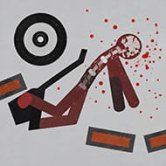
You are not touching the wheel. You are not touching the pedals. All you have is your voice, a nervous new driver next to you, and about four seconds to decide whether to shout “brake” before the intersection stops being a hypothetical problem. That is the entire tension of Teach My Little Sister How To Drive, and it turns a genre usually about hand-eye coordination into one about timing and tone of voice instead.
| Genre | Casual Simulation |
| Perspective | Passenger seat |
| Core Mechanic | Voice-based coaching, not direct driving |
| Structure | Progressive lessons and courses |
Coaching From the Passenger Seat in Teach My Little Sister How To Drive
The premise is simple to state and harder to live through. Your sister has just gotten her license and is taking her first real trip onto the road, and you are riding shotgun as the one person responsible for making sure the lesson does not end badly. You cannot grab the wheel. You cannot stomp an invisible brake pedal. All you can do is talk, and the game is built entirely around how well you use that one tool.
That restriction is what separates this game from a normal driving sim. Most racing or driving titles measure how well you control a car. This one measures how well you communicate under pressure, which is a very different skill and one that most players are not used to being tested on.
Early lessons keep things forgiving. Wide roads, gentle curves, and plenty of time to react mean new players can get away with vague callouts and still make it through. The game uses this window to teach the rhythm of coaching before it starts punishing hesitation.
From S-Curves to Real Road Driving
Once the basics click, the courses in the game start layering complexity instead of just adding more of the same. S-curves force you to call turns early enough that your sister has time to adjust the wheel before the curve actually arrives. Parking sections flip the pressure entirely, rewarding short, precise instructions over the long warnings that work fine on an open road. By the time road driving unlocks, the game is throwing in traffic, unpredictable pedestrians, and sudden emergencies that do not wait for you to finish your sentence.
A lot of new players get this part wrong at first. They keep coaching the way they did during the earliest lessons, giving long, explanatory instructions when what the moment actually needs is a short, sharp word shouted at exactly the right second.
Sound design carries a surprising amount of the tension here. The engine note rising, the faint scrape of tires drifting toward a curb, the pause in your sister’s breathing right before she overcorrects — these small audio cues in the game are often the only warning you get before a lesson goes sideways, and players who ignore them tend to notice too late.
When Your Tone Becomes Part of the Mechanic
One detail that surprises a lot of players the first time through is how much your sister reacts to how instructions are delivered, not just what they say. Push too hard, snap too many times, or stack corrections on top of each other, and she gets rattled, sulky, and noticeably worse at listening. Coach calmly, and she settles into the lesson instead.
- Give instructions early enough that there is time to act on them, especially heading into a blind curve.
- Keep your tone level even after a mistake, since scolding tends to make the next mistake more likely, not less.
- Save the sharpest, loudest callouts for genuine emergencies so they actually register when it matters.
Players who treat the mechanic like a pure reaction test usually hit a wall here. Teach My Little Sister How To Drive is quietly asking you to manage a relationship under stress, not just call out turns on time, and that emotional layer is what a lot of the community ends up talking about once the initial fear of crashing wears off.
The learners in the driver’s seat vary in confidence session to session, and players who enjoy tense, reactive scenarios tend to gravitate toward the harder road-driving stretches, while players who prefer a slower burn linger in the earlier parking and S-curve lessons instead. A third type of player treats each run as a small story, narrating their sister’s growing confidence lesson by lesson rather than optimizing for a clean pass.
What Players Argue About Most
Not everyone agrees on how forgiving the reaction window should feel. Some players find the timing tight enough that a single late callout can undo an otherwise clean run, while others think that tightness is exactly what makes surviving a full lesson satisfying. It is one of the more debated points among people who have spent real time with the game.
What Happens if You Give an Instruction Too Late in the Game?
Late callouts do not just get ignored. Your sister reacts to whatever the road is doing in that moment, which often means overcorrecting, drifting, or braking too hard, so the consequence of a slow warning shows up almost immediately rather than being quietly forgiven.
Can You Fail a Lesson Without Crashing?
Yes. Certain lessons track more than collisions, and enough shaky moments, missed cues, or panicked overcorrections can end a lesson even if the car technically never hits anything.
Does Yelling at Your Sister Actually Help in the Game?
Not for long. A sharp instruction can work once in a genuine emergency, but repeated harsh corrections make her rattled and less responsive, which tends to cause the exact mistakes you were trying to prevent.
By the time the lessons in Teach My Little Sister How To Drive start throwing full intersections and unpredictable traffic at you, the game has already trained you to think less like a driver and more like the calm voice in the passenger seat, which turns out to be a much harder job than it sounds.