





Road To Jukai
 (1 оценок, среднее: 5.00 из 5)
 Loading...
Similar Games





Description
Road to Jukai looks like a quiet regional driving game about ferrying strangers between small towns after dark, but it plays like a slow negotiation with whoever climbs into your back seat. The car is the whole world for most of a shift, and the game is far more interested in what a passenger does with their hands than in whether you hit every turn on time.
What Road to Jukai Actually Asks You to Do Behind the Wheel
You’re a night-shift driver working routes between towns that sit on the edge of a dense, ancient forest. A fare flags you down, gets in, states a destination or a request, and you drive. That’s the entire loop stated plainly, and it undersells how much tension the game builds out of something as ordinary as small talk with a stranger in your cabin.
It’s worth being clear about what this isn’t: there’s no open map to wander freely, no side objectives scattered across a sandbox. Road to Jukai is route-based, built around specific roads between specific towns, and the horror comes from what happens on those fixed routes rather than from freedom to explore off them.
Genre veterans who come in expecting a driving sim with horror dressing tend to be surprised by how little the mechanical act of driving matters compared to reading the person sitting behind you. Missing a turn isn’t the danger. Missing a detail about your passenger is.
The Forest That Gives Road to Jukai Its Name
The forest bordering every route is called Jukai, and it’s less a location you visit than a presence pressing against the edges of every road you drive. Towns exist as small pockets of normal life carved out of something much older and less explainable, and the game leans on that imbalance constantly — you are always slightly too close to the trees.
Fog, tree lines catching your headlights at odd angles, roadside markers that don’t quite make sense in daylight logic — these are the forest’s fingerprints on an otherwise mundane driving job, and they accumulate rather than announce themselves.
Reading a Fare Before They Even Sit Down
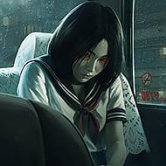
Every fare is a small performance you have to interpret in real time. Public messaging around the game is upfront that not everyone who flags you down is entirely what they appear to be, and the only tools you’re given to sort that out are attention and patience — there’s no bestiary, no glossary of threats to check against.
The tell: a small visual or behavioral detail a passenger gives off — how they hesitate before answering, how they hold themselves entering the cabin — and noticing it in the moment, without slowing the car down to stare, is the actual skill the entire game is built around.
Players new to this kind of subtlety often want a clearer signal, something closer to a jump scare confirming danger. That clarity never really arrives, and it’s one of the more divisive things about Road to Jukai: the restraint that makes patient players uneasy for hours can read as frustratingly vague to anyone wanting a harder confirmation of what they just drove away from.
The Cockpit’s Rearview Mirror and Why It Matters More Than the Road
The mirror is doing more storytelling work than the windshield. Boarding is the first real beat of every fare, and a shaky or rushed glance at the mirror during that moment can cost you the one visual tell you’re going to get for that passenger. Keeping the camera steady while someone gets in isn’t a suggestion, it’s close to a mechanical requirement if you want to actually follow what’s happening.
This is where horror newcomers tend to struggle most, since the instinct to look away from something unsettling is exactly the wrong instinct here. The game rewards staring a beat longer than feels comfortable.
Six Nights, No Straight Line Between Them
The story unfolds across six nights, and it’s explicitly non-linear rather than a simple countdown. Threads from an earlier shift resurface later without warning, and a passenger’s odd comment on night two might not mean anything until a completely different fare on night five.
Completionists chasing every narrative thread will want to pay closer attention to seemingly throwaway dialogue than the pacing of any single night suggests is necessary, since the six-night structure is clearly built to reward piecing details together after the fact rather than during a single drive.
What New Drivers Get Wrong on Their First Shift
The most common early mistake is treating every fare like a puzzle to be solved immediately. Some passengers are exactly what they say they are, and reading danger into an ordinary, tired commuter breaks the tension the game is actually trying to build toward the fares that aren’t ordinary at all.
The second mistake is rushing the drive itself to get to the “next” moment. Silence between pickups is doing work too — it’s where the forest gets to sit with you, uninterrupted by a passenger’s voice.
Passengers Regulars Talk About Long After Their Route Ends
Community discussion around the game tends to center less on jump scares and more on specific fares — a particular request, a particular silence, a particular moment where a passenger’s reflection in the mirror didn’t line up with what was sitting in the seat. These are the moments players compare notes on, because the game rarely explains them outright.
That ambiguity is a real point of friction for some players, who’d prefer Road to Jukai commit harder to explaining what its passengers actually are. Others treat the uncertainty as the entire appeal, closer to folklore than to a monster roster.
The Radio, the Silence, and Small Details Only Repeat Drivers Notice
The cabin radio functions almost like a second passenger — background noise that occasionally isn’t quite background. Repeat drivers report catching things on a second pass through a night that they missed entirely the first time, which says a lot about how densely the cockpit is packed with small, easy-to-miss detail.
By the time you’ve driven through Jukai’s fog often enough to stop flinching at it, Road to Jukai has usually already gotten what it wanted from you: not a jump, but the slow realization that you started paying closer attention to your passengers than to the road.