















Potato Please
 (1 оценок, среднее: 5.00 из 5)
 Loading...
Similar Games












Description
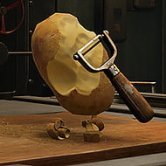
Potato Please looks like a cozy chore simulator but plays like a small, absurd job under a very watchful state. You have one knife, one bucket, and a mountain of potatoes, and the army is hungry.
| Genre | First-person simulation with incremental progression |
| Player mode | Single player |
| Core loop | Peel by hand, drop into the water, upgrade toward automation |
| Mood | Cozy and relaxing with Cold War dark humor |
Peeling by Hand in Potato Please: Knife, Bucket, and Real Physics
The core loop fits in one sentence: pick up a potato, peel it with the knife, and toss it into the water. Peeling runs on real physics, so the knife follows your hand rather than a canned animation, and the way the blade bites into a potato decides how much of it you lose. Every cut is a small decision about angle and pressure, which makes a simple job feel physical in a way few chore simulators manage.
Early in the game the work is entirely manual, and that stretch is where you learn the rhythm of the job. Pick, peel, toss, repeat. The calm of it is the draw for the cozy crowd, and it is also where some players first wonder whether the loop will hold.
Physics-minded players will enjoy how differently thin, steady strokes feel from hacking at a potato, because the game responds to both. Short, controlled cuts save potato, while wide swings waste it.
Cut Thin, Waste Nothing: Where Beginners Lose Time
New players tend to treat speed as the goal and carve thick strips, which throws away usable potato and makes the pile look bigger than it needs to be. The better habit is thin and steady, because waste is what the job punishes. Thick peels feel faster in the moment and cost you across the whole pile.
Another common stumble is lingering on a single awkward potato to get a perfect result. The pile does not reward perfection on one potato, and every second spent chasing it is a second not spent on the next.
If you are asking how to peel faster, the answer is rhythm. Keep the knife angle shallow, rotate the potato instead of fighting it, and drop it into the water the moment it is clean. Those habits matter most before the machines arrive and the work stops being entirely yours.
From the Pile to the Machines: How Potato Please Changes Shape
By the time machines enter the job, the pace is different. You buy better tools, collect potatoes in bulk, and start processing them with machines instead of one at a time. What began as hand work becomes a small operation that you design as much as you perform.
Once you can collect potatoes in bulk, the question shifts from how well you peel to how well you organise. Incremental fans will find the hook there, because each purchase shortens the path to finishing the pile and makes the next upgrade feel earned.
The honest tension is that the more you automate, the less you hold the knife. Some players love watching the system take over, while others miss the hands-on feel of the early game and wish manual peeling stayed more useful once the machines are running.
The Army Is Hungry: Tone, Dark Humor, and Repetition
The Comrade framing. You are addressed as Comrade, the nation has entrusted you with keeping the army fed, and the writing plays this with a straight face. The Cold War setting and dystopian flavor give ordinary peeling a faint sense of dread, as if someone is always checking the size of the pile.
The cozy surface. Despite the looming state, moment-to-moment play is relaxing, and that is why the dark humor works. A peaceful job in an uneasy place makes each peeled potato feel like a tiny act of obedience.
The fictional disclaimer. The store page states that every nation, character, and event is fictional, so the setting works as flavor rather than commentary. If you were wondering whether the game is relaxing or stressful, it leans relaxing, with the unease coming from the tone and not from the pace.
Is the Grind Enough? What Players Debate About Potato Please
Players are split on whether a game built around one action has enough range. Fans of short, repetitive sessions find the loop soothing, while others feel the early manual stretch asks for patience before the upgrades arrive. Both camps agree that the first few piles are the hardest part to sit through.
Because the game is new, long-term content depth is still being judged. Player reviews lean strongly positive, but the open question is whether the machines and upgrades carry the job far enough for players who finish the pile quickly.
Completionists will find Steam achievements to chase, and anyone who enjoys job simulators will recognise the satisfaction of a clean, efficient shift. If you need constant variety, expect to hit the limits of the loop sooner than most.
Potato Please comes down to a knife, a bucket, and a Comrade who keeps peeling because the army is hungry. If the thin cut, the full pile, and the slow march toward machines sound relaxing rather than repetitive, this is a small, strange job worth taking.