







No, I’m not a Human
 (Пока оценок нет)
 Loading...
Similar Games
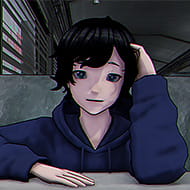





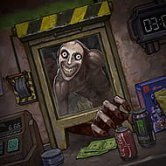

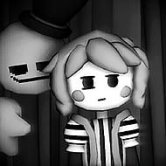
Description
You notice it almost by accident — a pause that lasts half a second too long before someone answers a simple question. Nothing about the room has changed, nobody has moved, but suddenly you are counting who spoke, how they stood, and whether any of it matched. That is the entire premise of No, I’m not a Human distilled into one moment: something nearby is not what it claims to be, and the game gives you almost nothing except your own attention to figure out who.
There is no combat here and no obvious threat meter counting down in a corner, and nothing in the pacing relies on a sudden jump scare to land its effect. No, I’m not a Human works as a slow-building horror adventure about suspicion rather than confrontation, built around watching behavior closely enough to notice when it stops adding up. The tension comes from not knowing, not from anything jumping out.
Reading Behavior Instead of Reading a Threat Meter in No, I’m not a Human
Beginners tend to look for an obvious tell — a glitch, a visual error, something broken that flags the answer outright. That almost never happens here. Small inconsistencies in how someone acts or responds are the real signal, and they are easy to miss on a first pass through a scene.
Cautious players who stop and observe before committing to a decision generally get more out of this kind of setup than players who move quickly and guess. Impulsive choices tend to get punished exactly because the game withholds confirmation until it is already too late to take one back.
What makes this uncomfortable rather than simply difficult is the pacing — nothing here rushes a decision, which means the doubt is allowed to sit and build instead of resolving quickly one way or another.
Deciding Without Proof in No, I’m not a Human
There is rarely a clean piece of evidence handed over before a decision has to be made. Committing to an answer usually means acting on a feeling built up over several small moments rather than one obvious confirmation, and that uncertainty is clearly intentional rather than a gap in the design.
Players expecting a puzzle with a single correct solution to uncover often come away frustrated, and that reaction is a fair one to have — ambiguity as a core mechanic will not land for everyone the same way. It asks for patience more than logic.
Getting comfortable with not knowing for certain is really the skill No, I’m not a Human is testing, more than any specific observation a player could be told to look for in advance.
No, I’m not a Human never hands over a clear answer key, and that refusal is the whole point of playing it — the doubt about who around you is genuinely human is meant to follow you past the moment a scene actually ends. Whatever conclusion a player settles on, it comes from watching a pause, a reaction, or a detail that simply did not sit right, not from anything the game spells out directly.