















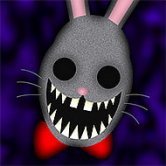
Mr. Hopp’s Playhouse 2
 (1 оценок, среднее: 5.00 из 5)
 Loading...
Similar Games








Description
You slip out of bed at Blacklands Manor Orphanage to hunt for a rabbit plush you were sure you left nearby, and a few rooms later Molly and Isaac have vanished. That is how Mr. Hopp’s Playhouse 2 grabs you, and the story wraps up in roughly four hours. You play Esther, an orphan who has just received three donated toys named Mr. Hopp, Mr. Stripes and Miss Bo, and the toys clearly have plans of their own. The game is a pixel art side scroller, yet the mood sits closer to a ghost story whispered after lights out than to a typical platformer.
Hide and Seek Rules in Mr. Hopp’s Playhouse 2
Esther cannot fight, so the whole game is about reading a room before you enter it. The three toys, Mr. Hopp the rabbit, Mr. Stripes the tiger and Miss Bo the panda, haunt the manor like a family of very polite nightmares, and your only tools are timing, distance and hiding spots. Community players call this style mascot horror, because the scares come from a cute face turning up where it should not be. Even the opening works as a hide and seek lesson, since Esther goes looking for Mr. Hopp before bed and then has to slip past the toys on the way back to her bedroom.
Fans of stealth horror will feel at home immediately, because peeking ahead, waiting and then moving is the whole rhythm. Slow down and the manor becomes readable.
A side scroller shapes tension differently from a first person horror game. You always see Esther’s silhouette and a slice of the room on either side, so danger rarely comes from a blind corner and far more often from a door you opened one second too early. That makes every sprint a gamble, and a rushed run tends to end on a game over screen. Jumpscares exist, but the real pressure is the constant sense that something is one screen away.
Keys, Balls and Medallions Behind the Puzzles
Progress runs on small fetch-and-use puzzles rather than clever logic. A good example comes after Esther argues with Molly: Esther believes Molly moved Mr. Hopp to the kitchen, the quarrel ends with Molly storming off, and Isaac suggests Esther should apologize. Now the goal is to find Molly, the library is the obvious place to look, and a locked storage room means you need a key. Inside waits a ball that has to be carried back to the library.
The collectible spine of the game is the set of six medallions scattered across the manor. Picking them up opens new obstacles, and the final set of obstacles only appears once the last medallions are in hand. Players who like clearing every corner of a map will enjoy this, because each medallion quietly changes what the manor allows.
A few places are worth remembering as you move through Blacklands Manor:
- The kitchen, where the argument over Mr. Hopp’s missing plush pushes Molly away from Esther and Isaac.
- The library, the natural place to look for Molly and Isaac and the place the ball has to be returned to.
- The storage room, locked until the key turns up.
- The third floor, where the fifth medallion sits close to the stairs, directly under a suspended hand.
What Beginners Get Wrong About Mr. Hopp, Mr. Stripes and Miss Bo
The classic beginner mistake is treating the manor like an action game and sprinting from one objective to the next. Esther has no way to fight the toys, so speed without awareness only shortens the run. Newcomers tend to charge forward because the pixel art looks friendly, and the toys punish exactly that habit.
The second mistake is skipping dialogue. The kitchen argument is not just flavor, because it explains why Molly leaves and tells you where to go next. Players who skim conversations end up circling between the bedroom and the library without a plan.
The third mistake is assuming the toys are the final problem. The real force behind them is The Entity, which Esther must defeat to bring back Molly and Isaac and lift the curse hanging over Blacklands. Treating Mr. Stripes and Miss Bo as random chasers hides the fact that they are pieces of a larger curse. Lore hunters get the most from the story once they read the toys as tools of that curse, because the dark history of the town starts to make sense around them.
How Pressure Builds From the Bedroom to the Third Floor
Early in the game the danger is almost domestic: a bedroom, a bed, a missing plush. Once Molly leaves after the kitchen quarrel, the manor stops feeling like a home and starts feeling like a maze. By the time Esther heads down to the library, the toys are no longer a bedtime scare but a presence that shapes every route you take. The change is gradual, yet it is unmistakable.
Later stretches lean on looping scenery and closing shadows, which makes some corridors feel longer than they are. By the time Esther climbs toward the third floor, you are playing mostly on nerve.
Not everyone agrees on how well this works. Many players call the game a perfect prequel and praise the art and the voice acting, while one reviewer argued that production value is the only saving grace and that the gameplay stays thin. Both camps have a point: the controls ask little of you and the story is short, but the mood does the heavy lifting, and that is where the game earns its reputation.
Four Endings and the Secrets Under Blacklands
There are four endings: a bad ending, a good ending, a non-standard game over and a joke ending. In the bad ending Esther escapes the manor alone, only to find the Mr. Hopp plush right behind her. That is exactly the kind of dark punchline the series loves, and it explains why players replay the final stretch.
The good ending is the one the series treats as canon, with Esther rescuing the manor’s residents using the six medallions. Later entries in the series refer back to it, so it carries real weight for anyone following the larger story.
Beyond the endings, Blacklands has a dark history that keeps surfacing. Isabelle’s betrayal is one of the moments that pushes Esther to stop waiting for help and handle the problem herself. For anyone who knows the original game, there is also the quiet detail that Esther is the girl who grows up to become Ruby’s grandmother, which gives the prequel a sad edge.
Questions About Esther, the Toys and the Endings
Do you need to play the first game before Mr. Hopp’s Playhouse 2?
No, because the story follows Esther years before she becomes Ruby’s grandmother, and it stands on its own. Players who know the original will recognize Mr. Hopp, Mr. Stripes and Miss Bo and feel extra weight from them, but newcomers lose nothing important.
How many endings does Mr. Hopp’s Playhouse 2 have?
Four: a bad ending, a good ending, a non-standard game over and a joke ending. The good ending is the one where Esther rescues Molly, Isaac and the other residents with the six medallions, while the bad ending has her escape alone with the Mr. Hopp plush waiting behind her.
Where is the fifth medallion in Mr. Hopp’s Playhouse 2?
It is on the third floor of the manor, close to the stairs and directly under a suspended hand. Check the area carefully before moving on, because medallions unlock the obstacles that stand between Esther and the end of the story.
Mr. Hopp’s Playhouse 2 works because every small thing has a job: a key for the storage room, a ball for the library, a medallion under a hanging hand, and three toys that never quite stay where you left them. Play it slowly, let Esther’s friendship with Molly and Isaac carry the story, and treat Mr. Stripes and Miss Bo with the respect any patient stealth player gives a patrol. The game is short and its mechanics are simple, but the Blacklands Manor Orphanage stays in your head long after The Entity is gone.