











Kanto Tactics
 (1 оценок, среднее: 5.00 из 5)
 Loading...
Similar Games











Description
You buy a third Charmeleon from the shop between two trainer rounds, and the fusion into Charizard kicks in before you can second-guess your gold. Kanto Tactics is built around moments like this, where one purchase rewrites the whole board and makes your earlier economy decisions look either brilliant or reckless.
| Genre | Auto battler with a rogue-lite campaign |
| Goal | Reach the Indigo Plateau |
| Core loop | Shop, position, fuse, fight |
Hex Board, Bench, and Shop Rhythm in Kanto Tactics
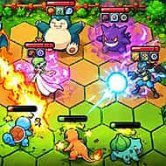
Every match plays out on a hex-tile arena with a bench below it and a shop above it, and that layout teaches the whole loop. Units on the board fight automatically, so your real work happens between rounds: buying, selling, rerolling, and choosing which hex each Pokémon stands on. Early in the game the rounds are neutral wave clears, which gives you room to experiment before trainers start punishing mistakes.
Gold is the quiet spine of every run. Spending everything at once feels strong, but it starves the interest curve, the reward for sitting on a reserve of coins. Players who arrive from Teamfight Tactics already hoard gold by instinct, which is the one place where veterans clearly beat newcomers. XP and rerolls compete for the same coins, so every reroll costs you a level you did not buy.
Beginners tend to reroll for one dream unit and then reach the next trainer round with a thin board. A wide team of average Pokémon usually survives longer than a single perfect carry with nobody guarding it. Learn to read the shop for what it offers now instead of what you wish it offered.
Three-Copy Fusion and Type Synergies
Evolution runs on one rule: merge three copies of the same Pokémon and it evolves. Three Charmeleon become a Charizard, and the change can trigger in the middle of a fight, which is the moment that makes players grin the first time it happens. Bench space matters more than it looks, because copies waiting to be merged need somewhere to sit.
Type synergies sit on top of that. Fire and Poison lines reward you for stacking the same type across the board, while a trait like Flying shifts how the team behaves once your roster supports it. Players who love theorycrafting tend to disappear into this layer, testing which mix of types turns a messy bench into a coherent comp.
Items add a third layer. Components drop between rounds, you combine them into stronger gear, and you decide whether that gear goes on a frontline tank or a backline hyper-carry. The system will feel familiar to anyone who has played an auto battler before, though many players call the item pool bland and wish it offered more creative options.
Where Kanto Tactics Runs Fall Apart Before the Indigo Plateau
The first real wall arrives on the gym routes. Trainer rounds hit harder than the wild waves, and boards without a proper frontline get erased long before the Indigo Plateau comes into view. The classic failure is a team of fragile damage dealers with nobody in front, which looks great in the shop and collapses the moment a trainer lineup walks in.
Readability is the other honest complaint. Once several units fire off abilities at once, the 3D-styled sprites pile up and the board turns cluttered, so it is hard to tell which fusion just triggered or why a fight went wrong. It is not a dealbreaker, but it makes studying a lost round harder than it should be.
Casual players who just want to watch a Charizard carry a run will have an easier time than competitive grinders chasing perfect boards, because the campaign structure tends to reward steady economy over flashy gambles. A run that reaches the Indigo Plateau usually got there by staying calm through the gym routes, not by hitting a lucky reroll.
Questions Players Ask Before Their First Run
How does evolution work in Kanto Tactics?
Buy three identical copies of a Pokémon and they merge into the next form, so three Charmeleon become Charizard. The merge can happen mid-fight, so keep an empty bench slot ready when you are chasing a fusion.
Is Kanto Tactics just Teamfight Tactics with Pokémon?
The economy, shop, and reroll logic will feel familiar, but the structure is different. You face neutral waves and a trainer gauntlet on fixed hex boards instead of an eight-player lobby, and three-copy fusion triggers thematic evolutions instead of star tiers.
Which synergies should I chase first?
Start with whichever type line you can actually field from your early shops, whether that is a Fire core, a Poison core, or a Flying trait. A smaller synergy you can complete beats a bigger one you are still hunting for when the first gym route arrives.
Kanto Tactics rewards the player who keeps calm gold habits, protects a sturdy frontline, and times that Charizard fusion before the Indigo Plateau. The game is still rough around the item pool and the cluttered clashes, but a run that holds together through the gym routes is a satisfying thing to pull off.