










Interdimensional Vending Machine
 (1 оценок, среднее: 5.00 из 5)
 Loading...
Similar Games



Description
The vending machine in Interdimensional Vending Machine does not run on electricity, and that single detail explains almost everything strange about how it behaves.
Begging for Coins Under a City That Forgot How to Be Normal
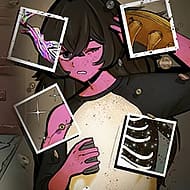
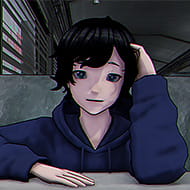
You play as a homeless girl surviving a distorted city, and the loop starts on the street: sit down, watch people pass by, and hope one of them drops a coin instead of saying something unsettling. It’s a quiet, almost meditative opening stretch for a game that gets considerably stranger once you have enough money to approach the machine itself. Every coin genuinely matters here, since the amount you feed into the slot directly shapes what comes back out.
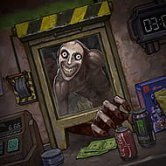
The machine accepts yen and, once fed, dispenses a random item from somewhere that clearly isn’t supposed to intersect with this city. Some items restore hunger normally. Others don’t behave like food at all, and figuring out which is which without a manual is a deliberate part of the game.
What the Machine Actually Does to You
Interdimensional Vending Machine borrows its central idea from SCP-261, a well-known piece of the SCP mythos about an unpredictable vending machine, and builds an entire survival loop around that same unpredictability. Every item you consume can help, harm, or quietly change you, and those changes aren’t cosmetic — the game tracks separate transformation lines that shift depending on what you’ve eaten, and progress on one line actively regresses whatever line you were previously building toward.
New players consistently misjudge the coin amounts. Community discussion has settled on the idea that specific values, rather than random spending, produce better odds at certain items, and going in with a flat “more money equals better results” assumption tends to waste coins that could have been spent more precisely.
Transformation lines are the game’s core system for tracking how far you’ve drifted from your starting human form — each line advances independently, and once you’ve committed progress to the hunger line specifically, you lose the ability to transform along any other line until that’s resolved.
Begging Is the Divisive Part
The part of the game most consistently criticized in community discussion is the begging mechanic itself. There’s genuinely very little to do while waiting for a passerby to drop a coin — no events to react to, no way to influence who stops and who doesn’t — and for a game built around discovery and consequence everywhere else, that stretch feels comparatively thin. It’s a fair criticism, and one the small team behind the game has openly acknowledged didn’t get much polish before release.
What keeps people playing through that rough patch is almost entirely the payoff at the machine. Early in the game, most of what you pull out feels close enough to normal food to seem safe. By the time you’ve cycled through a dozen or more purchases, the items dispensed start defying biology outright, and that shift is where most players say the game actually earns its horror tag.
How Far You Can Push Before You Stop Being Human
There’s no fixed ending state the game walks you toward — survival itself is the goal, and the transformation system means every player’s version of the homeless girl ends up looking and behaving differently by the time a run wraps up. Players who lean into aggressive experimentation tend to see the more extreme transformations early, while players who play cautiously and stick to safe-seeming amounts see a slower, subtler drift.
- Does the amount of yen you insert affect what the vending machine gives you? Yes — the amount dispensed and the type of item are tied to how much you feed the machine, and specific amounts have been identified by the community as consistently better for pulling certain item types, like seeds, than arbitrary spending.
- Can you undo a transformation once it starts? Some effects ease off naturally as their line resets, but the game treats most transformations as a trade-off rather than something you cleanly reverse, which is central to the tension around every purchase.
- Is Interdimensional Vending Machine based on a real story or mythos? It draws directly from SCP-261, an established piece of collaborative fiction about a vending machine that dispenses unpredictable items, reworked here into a full survival loop set in a distorted city.
Interdimensional Vending Machine isn’t really about the city or even the girl begging on its streets — it’s about that machine hunched in its liminal little alcove, humming like it doesn’t belong anywhere, and the fact that you keep feeding it yen anyway because the alternative is starving in a world that’s already stopped making sense.