









Getaway Shootout
 (1 оценок, среднее: 5.00 из 5)
 Loading...
Similar Games






Description
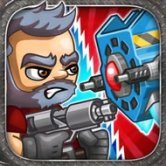
Getaway Shootout looks like a goofy party game about hopping across cartoon rooftops, but it plays like a genuinely tense survival scramble where every weapon pickup can decide who actually reaches the getaway point first. The cute character select screen undersells just how sharp the competition gets once the round starts.
| Genre | Action, party |
| Players | Single player or local 2-player |
| Controls | Two-button hop movement |
| Content | 20+ unlockable characters |
The Hop Mechanic That Defines Every Match
There’s no walking or running in Getaway Shootout — every bit of movement comes from holding a direction to charge up a hop, then releasing to launch yourself forward. It’s an unusual choice for a race-to-the-finish game, and it’s the single mechanic that makes the whole thing click once you stop fighting it.
The charge-and-release timing means short taps produce small, controlled hops while a full charge sends you flying across a gap, sometimes further than intended. Overcommitting near a ledge is one of the most common ways to lose a round you were otherwise winning.
Players often call the rapid-tap technique for closing small gaps “hop-spamming,” and it shows up constantly in community clips of tight finishes.
Weapons and Power-Ups Along the Getaway Route
Every map scatters weapons and power-ups along the route to the getaway point, and grabbing the right one at the right moment often matters more than raw hopping speed. Pistols and shotguns handle close encounters, while a rocket launcher can end another player’s run from a distance if you land it clean.
The grappling hook and jetpack change the equation entirely, letting you skip sections of a map that would otherwise require careful hop-chaining. Grabbing one early is often worth the detour, even if it costs you a few seconds of lead.
Grenades reward patience — tossing one into a group of hopping opponents bunched near a doorway can wipe out a lead in one throw, which is exactly the kind of chaos the game is built around.
Rocket launchers are the one item most players agree feels overtuned in tight spaces, and that complaint comes up often enough in community discussion that it’s clearly a shared frustration rather than a one-off gripe.
Solo Matches Against the Computer
Playing solo pits you against computer-controlled opponents who hop and grab weapons with reasonable consistency, though they’re noticeably less chaotic than a real second player. It’s a fine way to learn map layouts and weapon spawn points without the added pressure of split-keyboard controls.
The computer opponents do get more aggressive about contesting weapon pickups as a match goes on, which is usually the first sign that a round is heading toward its final stretch.
Casual players tend to stick to solo mode to get comfortable with the hop timing before risking a local match against a friend.
Local Two-Player Chaos on One Keyboard
Two-player mode splits the same keyboard, and it’s here that Getaway Shootout earns its reputation as a party favorite. Fighting over a rocket launcher spawn point while both of you are still learning your hop timing produces exactly the kind of slapstick chaos the game is going for.
The physical closeness of shared controls adds a layer of real-world competition on top of the in-game race, since you’re both watching the same screen and reacting to the same weapon spawns in real time.
Comeback players who hang back and let two leaders fight over a contested item tend to sneak through in local matches more often than the leaderboard would suggest.
Unlocking New Characters in Getaway Shootout
Coins earned from completed rounds go toward unlocking new characters, and there are more than twenty to work through. None of them play differently in terms of hop mechanics — the appeal is purely cosmetic, which keeps the core competition fair regardless of who you’ve unlocked.
Completionists tend to grind casual rounds specifically to unlock the full roster, even though doing so has no effect on actual match performance.
Reading Different Maps and Getaway Objectives
Each map sets a different getaway objective, whether that’s a vehicle waiting at the end of a rooftop run or a boat docked past a water-heavy stage. Learning where the objective actually sits changes how aggressively you should be grabbing weapons versus just hopping toward the finish.
Maps with more vertical sections tend to favor players who’ve mastered precise, short hops over players who charge every jump to maximum distance.
Once you’ve reached the objective on a given map a few times, the optimal weapon-versus-speed balance for that specific layout becomes obvious.
Ragdoll Physics and Why Falls Matter
Getting hit by a weapon or an explosion sends your character into a ragdoll tumble rather than a clean knockback, and recovering from that tumble costs precious time in a race that’s often decided by a second or two. Players sometimes call getting caught in an extended tumble a “ragdoll clip,” and it’s one of the more demoralizing things that can happen mid-round.
The physics are exaggerated enough to be funny even when you’re on the losing end of one, which is part of why the game holds up for repeated local sessions rather than getting frustrating.
Advanced Hop Control and Corner Positioning
Beyond basic movement, experienced players learn to control their hop arc to land on narrow platforms or clip the edge of cover without overshooting into open ground. This kind of precision hopping is the clearest sign of a player who’s put real hours into the game.
Corner positioning near weapon spawns also matters — camping a corner near a rocket launcher respawn is a viable, if slightly cheap, strategy that comes up often enough in community discussion to count as a known tactic rather than an exploit.
What does it actually take to unlock every character in Getaway Shootout? It comes down to grinding coins across enough completed rounds, since there’s no faster shortcut built into the unlock system.
Why Getaway Shootout Rewards Patience Over Panic
The instinct in any race is to charge every hop to maximum distance, but Getaway Shootout consistently punishes that instinct with overshoot mistakes and ragdoll tumbles at the worst possible moment. Slower, more controlled hopping usually beats reckless speed once opponents start contesting weapon spawns directly.
That tension between the urge to rush and the benefit of control is really the whole game in miniature.
Whether you’re grappling across a gap to steal a lead or getting caught in a ragdoll tumble two hops from the finish, Getaway Shootout keeps every round unpredictable in a way that a straightforward foot race never could.