










FNaTI – A Week At Castaway Cay: Broken Chains
 (1 оценок, среднее: 5.00 из 5)
 Loading...
Similar Games







Description
What does a point-and-click horror game feel like when the danger is not only outside the building but also inside your own body? FNaTI – A Week at Castaway Cay: Broken Chains builds its fear on that question, putting you in a situation where something else is steering the body you used to control. It belongs to the FNaTI fangame scene, the Five Nights at Treasure Island community, and its story is about being left behind, angry and running out of time.
Two Nights Inside FNaTI – A Week at Castaway Cay: Broken Chains
The game shows two nights of gameplay, and that compact structure defines how it plays. Two nights is a small window, so the tension is compressed rather than stretched across a long campaign, and each night has to establish its rules quickly. If you have played other point-and-click horror, expect the familiar rhythm of waiting, checking and reacting, with jumpscares as the payoff when a check goes wrong.
Small scope changes what matters.
Players who enjoy short horror sessions get a full loop in one sitting, which makes it easy to try again with a different approach. The natural way to play is to spend the first night learning what is happening around you and the second night applying it under pressure. Players who want a long week of escalating nights should adjust their expectations, because the scope here is deliberately narrow.
Host in the Trapdoor and the Body You Do Not Control
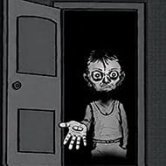
The premise centers on a body being steered by something else while you sit in the dark and try to understand what happened. You were left behind, your once happy face is now the only thing between you and the dangers of the outdoors, and it feels as though you died not long after. The horror comes from the uncertainty of that state rather than from a simple monster chase, and it gives the fear a personal edge that a standard security-office setup rarely has.
Shown mockups feature Host in the Trapdoor, a character whose name alone suggests the threat can come from below rather than from the direction you are watching. Beginners who stare at one spot the whole time are the ones most likely to be caught off guard, so widening your attention is the first skill worth building.
Detailed documentation is still thin, so many players lean on walkthroughs to learn what to expect. That is a fair way to prepare, but it spoils the surprise for anyone who wants to go in cold, and the story lands harder when you piece it together yourself.
The Burning Building and the Clock on Your Life
Escape is the goal. You can reclaim your body and live out what little time remains before the building goes up in flames, taking the rest of you with it. That fire hangs over every decision, because the danger is not only what stands in front of you but the certainty that time is running out and that there is no safe place to wait.
A few habits help across both nights:
- Take a quiet moment at the start of each night to work out what is threatening you and from where.
- Avoid repeating the same check pattern, since a predictable routine is easy for a horror game to punish.
- Keep the burning building in mind and do not stall, because waiting is never a safe option.
The tension between patience and urgency is what makes the setup work. A slow, careful player and a hasty one will feel very different kinds of fear, which is why the same short game can feel calm to one person and brutal to another.
Jumpscares, Extras and Why Players Watch Before They Play
Search for the game and you will quickly find full walkthroughs and videos dedicated to every jumpscare and extra. In the FNaTI community that is part of the culture, because many fans want to see a fangame’s scares and unlockable bonuses before they commit to sitting through the nights themselves.
Watching first has a real cost. Jumpscares work because you do not know when they are coming, and a compilation removes that dread, so players who care about the fear tend to save the videos for after their own attempt.
Extras give the short game a little replay value for collectors and lore hunters, while players who only want the main story can finish both nights and stop there. Either approach is valid, and the balance suits a game this compact.
How FNaTI – A Week at Castaway Cay: Broken Chains Differs From the Earlier Week Games
Earlier entries in the series follow a full week of nights around an office layout with a flashlight, a vent and a camera monitor, and the Remastered entry expanded the cast and mechanics. Broken Chains trims that structure down to two nights and moves the fiction toward possession and a body you cannot fully control.
Players comparing the games usually weigh three things:
- Scope, since two nights is far shorter than a week.
- Fiction, since being trapped in your own body differs from a visitor checking an empty park.
- Presentation, since jumpscares and extras are what many viewers search for first.
The honest debate is about depth. Some fans of the longer games will want a fuller arc, while newcomers may appreciate that this entry is quick to finish and easy to approach without knowing the earlier nights.
FNaTI – A Week at Castaway Cay: Broken Chains packs a possessed body, a Host in the Trapdoor and a burning building into two nights, and the result is a compact horror game best judged by how well it keeps you nervous while the clock runs out. Newcomers can start here, and series veterans can compare it against the office-and-flashlight structure of the earlier entries.