
















Big Ice
 (1 оценок, среднее: 5.00 из 5)
 Loading...
Similar Games
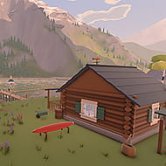










Description
You swing a stone tool at a wall of ice, a piece breaks loose, and now you have to carry it back to camp before anything else matters. That is the whole loop of Big Ice, a co-op incremental about a caveman, a hammer and a very big problem. The mountain of ice does not move, so everything you do comes down to finding a better way through it.
| Genre | Incremental |
| Players | 1–4, co-op |
| Session length | 60–120 minutes |
| Controls | Keyboard and mouse, desktop browser |
The Core Loop of Big Ice: Chip, Haul, Melt, Spend
A mountain of ice stands between you and whatever is frozen inside it. You start with a stone tool, chip away at the wall, and bring the pieces you break off back to camp. Melting that haul releases the flint trapped in the ice, and flint is what you spend at the tool bench. Every run through the loop is short, which keeps it easy to start another.
- Chip pieces off the wall with your stone tool.
- Carry them back to camp.
- Melt the haul to collect the flint.
- Spend the flint at the tool bench on stronger equipment and upgrades.
Early in the game the haul itself is the bottleneck, because moving broken ice from the wall to camp takes more time than breaking it. Collecting tools and a sled are what ease that burden, and once you unlock them the pace of the loop changes noticeably.
Incremental fans often split on whether the stone-tool phase is charming or slow. With a total playtime of 60–120 minutes, it is a short enough commitment that the slow start is easy to forgive.
Flint, the Tool Bench, and Bigger Tools for Tougher Ice
Flint is the currency that drives everything. You spend it at the tool bench on stronger equipment and upgrades, and bigger tools let you break tougher ice. Keys 1, 2 and 3 pick the tool in your hand, and E picks things up and uses stations like the bench.
Players who enjoy upgrade trees will like how every purchase changes what a swing can do. A new tool is not just a bigger number, because it decides which parts of the wall are worth attacking next.
By the time you push deeper into the frozen mountain, the stone tool you started with feels like a different era of the game.
Charged Swings and Choosing Where to Strike in Big Ice
Big Ice is not a game you play by clicking one button. Left click swings or uses your tool, right click charges a swing, WASD moves you, Shift sprints, Space jumps and V switches to third-person view. Because you aim at the wall yourself, the physical feel is part of the appeal.
The real skill is working out where to strike. The idea is to bring down larger sections, and that means picking your spot instead of chipping at random. Players who like hands-on, aimed play will enjoy this more than a click-and-wait idle loop, although anyone expecting a purely passive incremental may find it more active than they planned.
Between hauls you can explore the snowy valley around camp, and the game rewards that wandering with a sense of place. Keyboard and mouse are required, and the game is designed for a desktop browser, so it is not a casual phone pick-up.
Playing Big Ice With 1–4 Players
The game supports co-op for one to four players, so you can go solo or bring friends along. A group can split the work between the wall and the camp, with some players striking and others hauling and melting, and that division of labor suits an incremental where the loop has several distinct jobs.
Sessions run 60–120 minutes, which fits a single evening with friends without demanding a long campaign. Relaxed groups will like that, and the sled makes the hauling part feel less like a chore when more than one person is moving ice.
What lies beneath the ice is the thing that keeps the whole loop going. You never forget that something is frozen in there, and the flint, the tool bench and each bigger tool are simply the price of getting closer to it.
Big Ice is a small, focused incremental where a stone tool, a sled and a tool bench are enough to carry a caveman through a mountain. Dig at your own pace, spend your flint wisely, and see what is really frozen at the bottom.