












Don’t Drain The Lake
 (1 оценок, среднее: 5.00 из 5)
 Loading...
Similar Games








Description
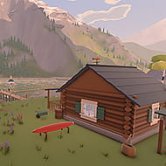
In Don’t Drain The Lake you begin with almost nothing but a bucket and a family warning you plan to ignore, which matters because the whole game is built on the gap between an instruction and a temptation. You are staying in a cabin beside Hollow Creek Reservoir, a loan is due before the first frost, and a mill downstream pays by volume. That leaves one obvious way to make money, and it is the thing Grandpa told you not to do.
Why Emptying Hollow Creek Reservoir Feels Different in Don’t Drain The Lake
This is a first-person incremental, but it does not hide its numbers behind menus. The reservoir holds roughly half a million cubic metres, and the game treats that volume as something physical. Early in the game you work with a bucket, and the shoreline slowly retreating is your only proof that anything is happening.
The mill pays one dollar for every cubic metre you send over the dam, so each load you move turns directly into money. That income is what lets you afford better equipment, and it is also the story’s quiet pressure, since the loan sits behind every decision you make. Even so, the tone stays calm, and the game is tagged as relaxing and wholesome by its players.
Incremental fans will recognize the pleasure of watching a slow job speed up. What is unusual is that your progress is the landscape itself, not a counter in the corner.
Choosing Where Pumps Go as the Water Falls
The mid-game is a small engineering puzzle, and it stays readable because each method has a clear job.
Bucket work. This is where everyone starts. It is slow, but it never stops being useful, because a bucket of lake water is also what you need to get other equipment started.
Pumps. You place them in the water yourself, and where you put them matters. Pumps have to lift water up and over the dam, so the lower the reservoir drops, the harder each one must work.
Siphons and the dam notch. A siphon has to be primed before it flows, and a notch cut into Grandpa’s dam changes how the water leaves. Both reward players who plan instead of simply buying more pumps.
Series and manifold layouts. Linking pumps one after another or gathering them on a shared line lets several machines act as one stronger setup. A layout that worked at a full lake may need rebuilding later, and that is the part puzzle-minded players enjoy most.
A Valley That Changes Shape and Mood as the Level Sinks
As the water drops, the reservoir stops being a single body of water. A reed bay, a flooded quarry and a whole arm of the valley become cut off behind their own low ridges, each turning into a separate pond that you have to deal with on its own. The map you started with is not the map you finish with.
The game has no progress bar. Instead the sky tells you how far you have gone: a full reservoir sits in morning fog, each metre lost pushes the sun along its path, and somewhere near the bottom it is night. Music and weather shift with it, from wind rolling across the surface to rain tapping on the pumps, while birds pick over the mud the water has just left behind.
In the middle of all this stands a bell tower where no bell tower should be. From a lookout with Grandpa’s brass telescope you can study it closely, and the lower the water gets, the harder it is to treat it as scenery.
Pier Time: Fishing, Stone Skipping, and the Mill’s Cook
When draining wears you out, Grandpa’s rod is waiting at the end of the pier. Most bites end up as dinner, but some fish fight back: you let them run, reel steadily and take care not to snap the line. There are six kinds of catch, ranging from a modest everyday fish to the one Grandpa insisted was real.
The mill’s cook sends written requests for specific fish and rewards you with a bonus when you deliver, which gives fishing a purpose beyond relaxation. Players who like to take things slowly will treat the pier as the best part of the day.
There are other quiet ways to stall. You can skip stones, with Grandpa’s best throw of eleven carved into the bench, hop across the old ferry pilings, or sit in his rocking chair and let the lake drop without you. The break is useful, though players who only care about the fastest drain may call it a detour.
What Grandpa Left Behind in Don’t Drain The Lake
More than fifty finds lie on the lakebed, and bottled notes from Grandpa turn up a little further down each time. The valley also hides places you are never pointed toward, including a grotto, a rope swing and a wrecked pickup overtaken by a tree. His clock still runs, and his radio still plays, though the static grows louder the further you walk from the cabin.
The game ends. It plays out over a single evening and offers two endings, one of which Grandpa hoped you would never see. That is the real answer to why he left the warning: he knew you would be tempted, and the story wants you to find out why.
Lore readers and explorers will enjoy digging through the notes, while anyone wanting an endless idle loop will not find one here. That limit divides players, but it also makes the ending matter more than it would in a longer incremental.
Questions Before You Pick Up the Bucket
How do you drain the lake faster?
Start with the bucket, then add pumps, and remember that each pump works harder as the water drops. Series layouts, manifolds, a primed siphon and a notch in Grandpa’s dam all help, and mixing them tends to beat stacking one.
How many endings does Don’t Drain The Lake have?
There are two, and the game ends after a single evening. One of them is the ending Grandpa hoped you would never discover, so it pays to read his bottled notes on the way down. They hint at why the warning existed.
What can you do apart from draining?
You can fish for the mill’s cook, skip stones, hop the ferry pilings or rest in the rocking chair. There is also plenty to explore, from the grotto and the rope swing to the lookout with the brass telescope. More than fifty finds are waiting on the lakebed.
Don’t Drain The Lake takes a bucket, a debt and a note on a table, and turns them into a slow evening at Hollow Creek Reservoir with a bell tower waiting at the bottom. Set your first pump, read the bottled notes as they appear, and decide whether Grandpa’s warning was kind or just stubborn.