










BACKROOMS: PRIMAL
 (Пока оценок нет)
 Loading...
Similar Games








Description
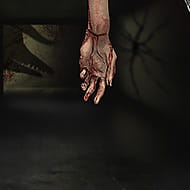
BACKROOMS: PRIMAL looks like another yellow-hallway horror game riding the current Backrooms trend, but it plays like something stranger once the first prehistoric creature steps out of the shifting walls.
| Genre | Analog survival horror, adventure |
| Protagonists | Player character and Stracy |
| Setting | Infinite yellow complex |
| Core Loop | Puzzle-solving combined with survival horror encounters |
Waking Up Beside Stracy
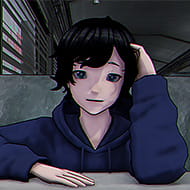
You wake up alongside your girlfriend, Stracy, inside an unknown, shifting location, and the relief of not being alone doesn’t last long once you both realize you’re trapped in the infinite yellow complex — a boundaryless black-site the game frames as a government construction meant to secretly contain prehistoric specimens and unidentified hybrid monstrosities away from public knowledge. Walls, floors, and doorways destabilize without warning, which means memorizing a layout the way you might in a traditional maze horror game simply doesn’t work here.
Dinosaurs Inside the Backrooms Concept
The core hook that separates BACKROOMS: PRIMAL from the wider Backrooms trend is exactly what it sounds like: dinosaurs and prehistoric hybrids roaming a liminal-space horror setting normally associated with empty office carpet and buzzing fluorescent lights. Community reaction leans heavily on how unexpected that combination feels the first time a creature actually appears, since most Backrooms-inspired games stick to more abstract or humanoid threats rather than anything explicitly prehistoric.
Beginners tend to treat every encounter as pure stealth-and-run, when several sections actually reward puzzle-solving over evasion — reading environmental cues about the complex’s instability matters as much as tracking where a creature last moved. The atmosphere draws heavily from Silent Hill in tone, with a soundtrack style clearly inspired by that series’ approach to unsettling ambient sound rather than constant jump-scare stings.
Sound Design and the Volume-Over-Timing Approach to Scares
One honest criticism that comes up in early player reactions: the game’s scares often rely more on sheer volume than on precise timing, meaning a loud sudden noise does a lot of the heavy lifting compared to more surgical, dread-building horror design. It’s a fair point of debate — some players find the loudness effective regardless of technique, while others feel it can come across as a blunt instrument compared to the more careful atmospheric buildup the rest of the game clearly aims for.
Is BACKROOMS: PRIMAL connected to the wider Backrooms mythos?
It uses the general shifting, boundaryless yellow-complex aesthetic associated with the broader Backrooms concept, but grounds its own specific threat in prehistoric creatures and hybrid monstrosities rather than the more commonly seen entities from other Backrooms-inspired projects.
Do you play alongside Stracy for the whole game?
Stracy appears alongside you from the opening moments as a familiar face within the shifting complex, grounding the horror in a relationship dynamic rather than pure solitary survival, at least through the sections available so far.
Is the gameplay more about combat or puzzle-solving?
The developers describe it as blending puzzle-solving with survival horror rather than leaning on direct combat, meaning reading the complex’s instability and managing encounters carefully matters more than confrontation.
BACKROOMS: PRIMAL earns its place in an increasingly crowded genre by refusing to stay abstract — once Stracy grabs your arm and a creature that has no business existing steps out of a wall that wasn’t there a second ago, the yellow-hallway aesthetic stops feeling familiar and starts feeling genuinely dangerous.