






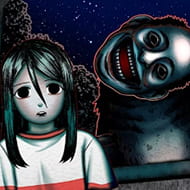
ASWANG HUNTER
 (Пока оценок нет)
 Loading...
Similar Games

Description
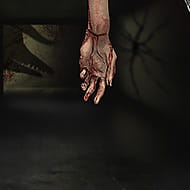
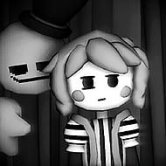
A polite conversation on a bamboo porch is not what people picture when they hear the word horror battler, yet that’s exactly how most sessions of ASWANG HUNTER begin. Give it until midnight, though, and the same house turns into a cramped arena where both of your hands are fighting for their lives independently of each other.
| Genre | Real-time horror battler mixed with house-defense pressure |
| Setting | Isolated barangays in the Philippine countryside |
| Core mechanic | Left arm and right arm mapped to separate hotkeys |
| Status | Early, still-evolving build |
Your role is a hunter working outside official channels, sent to homes where the authorities keep filing missing livestock under wildlife activity. The families living there already suspect otherwise, and a single evening in ASWANG HUNTER is usually enough to convince you they’re right.
Reading a Household Before the Sun Goes Down
Each mission splits cleanly into two halves. Before midnight, you’re walking through a home, talking with whoever lives there, and quietly cataloguing anything that might matter later. After midnight, that same house becomes a battleground the moment something claws through a wall. Treating the first half as throwaway dialogue is the single most common mistake new players make, since it’s the only window where you learn which heirloom weapon a grateful family might hand over and which parts of the structure are actually going to fail first.
Walk into the fight without paying attention during those quiet hours and you’ll be improvising blind the second a Wakwak or Tiktik makes its entrance — and ASWANG HUNTER isn’t generous about handing you that intelligence back once the chaos starts.
Splitting Attention Between Blade and Bamboo
Weaponry stays deliberately old-fashioned: bolos, kitchen knives, hammers pulled from a shed, bamboo spears passed down out of gratitude — nothing modern, nothing imported. That choice fits both the setting and the folklore the game is drawing from. Every swing and every raised guard pulls from one shared pool of stamina, so throwing attacks without a plan leaves you standing there empty-handed exactly when a hit is about to connect.
Anyone arriving from a more forgiving action title tends to burn through that stamina bar faster than expected, particularly once a Manananggal takes to the air and forces you to keep repositioning instead of standing your ground.
- Players who open aggressively and lean on Heavy strikes often find themselves gassed before a fight’s second phase even starts.
- Players who default to blocking with both arms at once end up with no way to punish an opening when one appears.
- Players who divide the labor — guarding with one arm, cutting with the other — tend to walk away from encounters with stamina left over.
Making the Dual-Arm Hotkeys Feel Natural
What sets ASWANG HUNTER apart from most horror games built around a single attack input is that your left and right arms answer to separate commands entirely. Coordinating a guard on one side while striking with the other is a skill you build across several fights rather than something the controls hand you on your first attempt.
There’s a real adjustment period where the two-handed setup feels like it’s fighting you as much as any monster is. Push through it, though, and combinations open up that a single unified button never could offer.
This is also where most early deaths happen — panic tends to send both hands toward the same command instead of splitting duties, right as a Tiktik closes the distance.
Telling the Wakwak, Tiktik, and Manananggal Apart
The Wakwak and Tiktik come from the same folkloric branch, both winged cousins of the broader threat, and the sound design plays with an old piece of oral tradition: the Tiktik’s scratching call is supposed to sound loudest when the creature is actually farthest away, a detail the pre-midnight hours hint at before you ever lay eyes on it. The Manananggal needs no introduction for most players — the torso splits from the legs, wings unfold, and it goes hunting for whoever is sleeping.
None of these three behave like mindless attackers. Push one to the edge of death and it turns cowardly, breaking off to flee rather than pressing the fight, which triggers a short, high-pressure execution sequence instead of a clean kill.
Win that sequence and the threat is gone for good. Miss it and the creature slips away to recover, meaning a fight that felt finished can come storming back minutes later at full strength.
The Unfinished Edges Players Keep Bringing Up
The most consistent complaint in community spaces is straightforward: ASWANG HUNTER is an early build, and what’s playable right now sets up the loop without fully delivering on the scope the concept is clearly reaching for. Given how strong the atmosphere already is, some players find that gap genuinely frustrating.
Others see the rough state as part of the draw, sticking around specifically because the folklore research and the split-arm combat already stand out from the genre even before the game is finished.
Are the Wakwak, Tiktik, and Manananggal fought the same way?
Not at all — each demands its own spacing and timing, and treating them like interchangeable enemies is one of the quickest ways to burn through your stamina bar mid-fight.
What happens when I miss the execution minigame?
A creature that reaches execution range will bolt back into the darkness if you whiff the rapid-fire prompt, and it comes back later at full strength instead of carrying over any of the damage you’d already done.
Does the conversation phase actually affect the combat that follows?
It does — whatever information and weapons you pick up from a family before midnight, spears and bolos included, directly determine what you’re working with once the aswang start breaking through.
ASWANG HUNTER never tries to dress up a generic siege mechanic in Filipino set dressing; the way the Manananggal splits apart or the way the Tiktik’s sound lies to you about distance isn’t atmosphere layered on top — it’s the actual skeleton the combat is built from.