










Deferral
 (1 оценок, среднее: 5.00 из 5)
 Loading...
Similar Games







Description
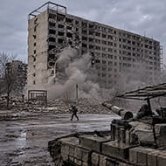
What happens when the same person has to survive a ninth-floor flat by day and a tank turret by night? Deferral answers with seven days of story horror inspired by H. G. Wells’s The War of the Worlds, then hands you a crew and a city to fight over. It is two kinds of play sharing one week, and the seam between them is where the best moments live.
| Genre | Story horror with a tank co-op sandbox |
| Perspective | First person |
| Structure | Seven days and seven nights |
| Co-op | Up to 15 players through Dynamic Campaign |
| Setting | Fictional city and country |
| Platform | Windows PC |
Seven Days in a Ninth-Floor Flat
The story half is about a civilian who cannot fight the war and cannot leave it. Everything happens inside one ninth-floor flat and its stairwell, and the world changes every day. The tale reaches you through dialogues, cutscenes, the radio in the tank and your parents in the phone’s messenger. A war cult runs the country, and for one week you watch it take your neighbours.
Daylight follows a rhythm you quickly learn:
- Explore the building and its stairwell.
- Work for pay.
- Go out for pills.
- Talk to neighbours, then answer the knock.
The loop sounds domestic, which is the point. Small errands become tense when sirens, drones and explosions sit just outside the window, and the demo’s early days work hard to make the stairwell feel like a place you do not want to leave.
The Knock at the Door in Deferral
The central decision arrives with a knock. You can pay, refuse or fight, and none of the three comes without cost. The first choice buys time, the second invites trouble and the third turns a quiet flat into a small battlefield. Beginners often treat the day sections as downtime between the tank missions, but the neighbours you talk to now shape what the knock means later.
The tone is heavy on purpose. The content warnings list violence, blood, suicidal themes, self-harm and war crimes, plus flashing lights, so it is not a casual evening pick.
It helps that the country, the city and every emblem are fictional. That distance lets the story stay about ordinary people under pressure, and horror fans who prefer slow dread over jump scares will recognise the pacing.
Night Shift in the Commander’s Seat of Deferral
At night you stop being a bystander and become the one who gives orders. The driver drives, the gunner lays and fires, and the autoloader loads on its own count, so your job is to direct rather than do everything yourself. Your sight holds its line while the hull rocks beneath it, and you work with a thermal sight, a roof machine gun, drone radar and the radio.
The tank also has to be kept running by hand. Between orders you manage the machine as much as the fight, which gives the night sections a very different texture from the day.
A synthesizer built into the game plays the tank’s own band, following the engine, the loader and the fight. The effect is odd and memorable, because the soundtrack reacts to the same crew you are shouting at. The district’s dark industrial score covers the daytime, so each half has its own sound.
Crew Zombies and Other Hard Lessons
One mechanic surprises almost everyone. Everything slows down completely for crew members after they die: they turn into zombies, you can hear it in their voices, and your gunner’s head goes empty. It is a grim detail that teaches you to protect the crew before you protect the plan.
Healing happens at a resupply station, and a tutorial is being prepared for the updated demo. A trigger bug has also been noted that forces players to back up until a station appears, so some lost players simply never drive far enough.
The criticism is worth knowing. One player recorded a moment when the driver took ten seconds to start moving, and others say the gunner struggles to track moving targets, so the interaction pacing feels unsuited to tank-to-tank combat. These are the parts that still feel like a work in progress, and anyone who expects a polished simulator should adjust expectations.
Tripods, Shields and Knees
The tripods are the war’s monsters, and they do not die like ordinary enemies. In the sandbox they walk through New Belgrade, try to step over houses and go straight through them when that fails. They carry out the Staff’s orders, and shooting one many times is not the way to kill it.
Instead you break them in stages. Overload the shield, shatter the knees with high explosive, put out the lens with a dart, or hit the lens while the ray is gathering to break the ray itself. They bleed, and they fall.
Sandbox tinkerers love this puzzle layer, because it rewards trying different rounds and angles. Story-horror fans will find the same tripods more frightening in the story half, where you cannot do much but watch them move.
Drawing Your Own Tank in the Vehicle Designer
The vehicle designer is a full workshop. The hull and the turret are built from three silhouettes (the side, the top and the front), armour is set edge by edge, and the designer tells you what it weighs. You also pick the gun, the loading, the suspension, the power pack, the optics, the crew stations and the interior.
Fuel tanks are placed with a button and sized by dragging their edges. Ammunition is your own mix of dart, shaped charge and high explosive, and a proving ground lets you fire at your machine before you take it out.
What you build drives and fights as itself, so its armour, its gun and its rounds are the ones that count when it is hit or fires. Newer additions include a tracked infantry fighting vehicle and a wheeled carrier you can draw and sit in, with benches, firing ports and hatches in the troop compartment.
Dynamic Campaign and Three Seats in One Tank
Co-op gives the tank three seats, and friends can join a fight already under way and swap seats mid-battle. That makes the crew system feel social rather than scripted, because a bad gunner can become a very good driver by the next engagement.
Dynamic Campaign stretches that idea across a whole city. It is an endless war in which several crews, each in its own tank, play through a shared room, and up to 15 players can crew the same team. Both sides plan operations: they gather, drive in columns with infantry aboard, lay ambushes and assault, and you command your side from the map.
Infantry now fights for buildings, which changes how you support them. Squads take windows, storm houses and clear rooms, and tank fire through a window is what breaks the defenders. Every building has rooms, stairs and doors inside, so a held house is truly held.
What Deferral Does Well and Where It Still Breaks
The strongest quality is ambition. A single person made all the art, and the destruction physics run on the graphics card, so walls and rooms give way in a satisfying manner. The soundtrack, the tank band and the stairwell dread give the project a clear identity, and the two halves reinforce each other more than you would expect.
The weak points are also clear. The demo is incomplete, with the story covering days one, two and six, the morning of day seven and the first two nights in the tank, while the full structure is seven days and seven nights. The crew pacing, the resupply bug and the thin early tutorials need work.
Deferral is best approached as a promising work in progress with a distinct voice. The knock at the door, the tripods striding through New Belgrade and the crew that falls silent after death give this game a strange, memorable shape. If you want a war story that treats the civilian and the commander as two halves of the same week, it is worth watching closely.