
















Finals Week
 (1 оценок, среднее: 5.00 из 5)
 Loading...
Similar Games











Description
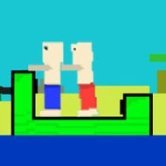
You peek at your neighbor’s answer sheet in Finals Week and the teacher’s next eraser is already in the air. That one moment explains the whole game: a first-person co-op cheating simulator for one to four players, where you and your friends skip the studying and try to graduate on stolen answers. The rule is pass together or fail together, and every exam makes that rule harder to live with.
| Genre | Co-op cheating simulator |
| Players | 1–4 |
| Perspective | First-person |
| Setting | School final exams |
Squad Roles and Answer Sharing in Finals Week
The loop is easy to explain and messy to run. Each exam drops your squad into a classroom full of questions nobody studied for, and the answers sit somewhere in the room. Your job is to move them to everyone who needs them without the teacher noticing, and because the group is scored together, one clueless friend can sink all four of you.
The toolkit goes beyond a pencil. Textbooks can be passed around, and walkie-talkies, cellphones and binoculars all help you find and share answers. The store page strongly recommends a microphone, which says plenty about how much of the game runs on callouts.
Copying an answer for yourself and moving on is the classic beginner habit. It fails because an exam only counts when the whole squad gets through, so write down what you find and hand it off before you hunt for the next one.
Classmates Who Actually Studied
Not everyone in the classroom is as unprepared as your squad. Some students actually studied, and their papers are the most reliable answers in the room. You can peek, or knock them out if they do not feel like sharing.
Choosing between the quiet peek and the loud knockout is a risk decision, and the teacher is always part of the math. A peek keeps things calm, while a knockout is the blunt tool you reach for when time is running out.
Stealth-minded players will enjoy timing a peek around the teacher’s patrol, while chaos-minded friends will find the knockout nearly impossible to resist. Mixing both types in one squad covers both approaches.
Dodging the Teacher and His Erasers
The teacher patrols the classroom for the whole exam and throws erasers with suspiciously deadly accuracy. Early in the game that is almost funny, because the first exams forgive sloppy cheating. By the later exams the difficulty climbs enough that one mistake can sink the squad.
Getting caught has a price beyond the eraser. Misbehaving students face various restraints, and yes, one of them is the Cone of Shame. A restrained student is far less useful to the answer chain, so the rest of the squad has to cover for them.
Opinion on the game is split in a telling way. It sits at Mostly Positive, and the design explains why: rounds lean heavily on communication. A coordinated squad feels like a heist crew, while a quiet group can feel like four people failing separately.
Drawing on Everything: Paper, Walls and Faces in Finals Week
Answers do not have to travel by voice alone. You can write them on sheets of paper and pass them around, or on the wall, or even on your friends’ faces. The world is your canvas, and in practice that turns the whole classroom into a communication tool.
Each surface changes your strategy. A sheet of paper is portable and quick to hand off, while a wall is permanent and readable by anyone standing in the right spot. Faces are as much a joke as a method.
Players who love physics-driven sandbox comedy will find this the most rewarding part, since the drawing tools reward improvisation. One natural system is a scribe-and-spotter split, where one student writes while another watches the teacher. The game prescribes no method, which is why no two squads cheat the same way.
Hanging Out in the Hall Between Exams
Between exams, the hall is your hangout spot. You can play basketball, throw baseballs, decorate statues and plan the next cheating strategy while the stress of the last exam wears off.
This downtime matters more than it looks. After a tense exam the hall gives the squad a place to laugh, argue about who got caught and agree on a plan. A group that spends all its time on basketball walks into the next exam without one, which is fun right up until the erasers start flying.
The physics play well here too. Thrown baseballs and basketballs bounce around the corridor, and decorated statues give the hall a sense of place the classroom never has. It is a small detail, but it is part of why the game feels like a hangout with friends as much as a stealth test.
Unlocking Outfits and Proving Who Carried the Squad
Passing exams unlocks new outfits and accessories for your character. The store page sums up the philosophy by saying cheating is temporary while drip is forever, and that is a fair description of the progression loop.
In squad vocabulary, the carry is the player who found the most answers, and the outfits are how that player makes sure everybody knows it. A drip-heavy look in the hall after a rough exam is half trophy, half taunt. It gives every student a visible reason to care about passing.
Solo players are covered too, since the game lists single-player alongside co-op. Going alone means doing every job yourself, from scouting the studied students to dodging erasers, and it plays quite differently from a coordinated squad. Most of the comedy still comes from friends sharing one classroom.
Can you play Finals Week alone?
Yes, single-player is listed, so you can take on the exams without a squad. You will have to find answers, handle the teacher and avoid restraints like the Cone of Shame all by yourself, which is a very different pace from the 1–4 player co-op the game is built around.
How do you avoid the teacher’s erasers?
Treat the patrol as a timer. Peek, write and pass notes when the teacher’s attention is elsewhere, and spread the tasks across the squad so no single student stays exposed for long. Getting caught misbehaving brings restraints such as the Cone of Shame, which pulls that student out of the answer chain.
What tools help share answers with your squad?
Textbooks can be passed around, and walkie-talkies, cellphones and binoculars all help with finding and sharing answers. You can also write on paper, walls or friends’ faces, so the room itself becomes a message board. A microphone makes the whole system work better.
Finals Week works because the classroom is a shared problem: a squad of four, a teacher with a deadly eraser arm and a Cone of Shame waiting for anyone sloppy. Every exam tests whether you can pass answers faster than the teacher can spot them, and the hall between rooms is where the plans get made. If you have friends, a microphone and no study habits, this game was built for you.