















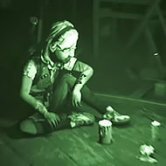
Summer of ’58
 (1 оценок, среднее: 5.00 из 5)
 Loading...
Similar Games









Description
You arrive at the abandoned Soviet camp Yunost as Alex Morton, a video blogger who investigates paranormal places for his followers, and the summer of 2008 feels very far from the stories waiting inside the buildings. Summer of ’58 is a first-person psychological thriller in the walking simulator mold, built around a slow search through empty rooms for the truth about what happened there in 1958. It takes about 90 minutes to finish, which is long enough to build real dread and short enough to play in one night.
| Genre | First-person psychological thriller, walking simulator |
| Protagonist | Alex Morton, paranormal video blogger |
| Setting | Abandoned pioneer camp Yunost, Russia, summer 2008 |
| Mystery | The events of one night in 1958 |
| Average playtime | About 90 minutes |
Alex Morton and the Abandoned Camp Yunost in Summer of ’58
Alex Morton makes a living showing viewers places the world has abandoned, and this time his followers ask him to investigate Yunost, a Soviet pioneer camp where children were once sent for the summer. Locals say restless souls live there, and the reason Alex has to find out is simple: it makes for the video his audience wants. That motive keeps the horror grounded, because he is not a hero or a soldier, only a man with a camera and a reputation to maintain.
The setup works because the camp is a real kind of place. Pioneer camps were common, and the idea of a children’s summer retreat gone silent is unsettling before anything supernatural happens. Players who enjoy abandoned-location horror will recognize that quiet from the first corridor.
Your job is not to fight anything. You walk, observe and piece together a story, so the tension has to come from what the camp shows you rather than from what attacks you.
What Happened in 1958: The Story Under the Walkthrough
The legend behind Yunost is blunt. One day in 1958, residents and counselors were killed at the camp, and one of the children was accused because souvenirs of the deceased were found among his belongings. He was never found, the camp was closed, and no one opened its doors again.
That backstory gives every room a second layer. Once you start reading the camp as the scene of a crime instead of an abandoned building, ordinary objects take on weight. The story rewards players who like building a theory from scattered clues and then checking it against what the next room reveals.
Be aware the mystery is told slowly. If you want a quick explanation, you will get it only by exploring the camp patiently, and that pace suits people who like mystery more than action.
Walking Room to Room and Noticing the Changes
The core loop is simple: move from one room to another and notice what has changed. The genre is a walking simulator, so there are no weapons and no inventory juggling. Once you notice the first change in a room, you begin to distrust every space you enter, and that low-level suspicion is the real engine of the game.
Linear design keeps you moving forward, which helps if you dislike getting lost. It also means the experience depends on your attention, because the tension disappears if you rush. Slow explorers who read every detail will get far more from the camp than those who sprint through.
For newcomers, the biggest mistake is treating it like a puzzle game. There is little to solve in the usual sense, and the satisfaction comes from piecing together the story, not from unlocking doors.
Hidden Objects and Listening to the Camp
Hidden objects are scattered through the camp, and finding them deepens the atmosphere by showing what life was like in those days. They are not strictly required to move forward, but completionists will want to look in corners and behind clutter. Every object reads as a small piece of the past.
Audio matters just as much. The camp is described as full of natural sounds and rustles that convey the effect of presence, so headphones are the best way to play. A creak or a distant noise often does more to unsettle you than anything you can see.
That reliance on sound is why the game works at night with the lights low. The camp becomes a place you listen to as much as you look at.
Where Summer of ’58 Divides Players
The reception is strong. The page shows Very Positive English reviews, with 89 percent of 1,748 positive, and recent reviews are even warmer. Even so, the walking simulator format is not for everyone, and some players find the lack of mechanics too thin.
The other split is content. The developers warn that the game includes scenes of violence, as well as alcohol and drug use, and that flashing images may affect people with light sensitivity. Please consider these before you play:
- Possible flashing lights and images
- Violent scenes
- Scenes with alcohol or drug use
If you want action or branching choices, you may be disappointed. If you want a brief, atmospheric trip through an abandoned camp, the game delivers it.
Questions Before You Enter Yunost
How long is Summer of ’58?
The average completion time is about 90 minutes. Because it is a linear walking simulator, your time depends mostly on how carefully you search Yunost’s rooms for hidden objects and how long you stop to listen.
What happened at Yunost in 1958?
Residents and counselors were killed, and one child was accused after souvenirs of the victims were found in his things. He was never found and the camp was closed, which is the mystery Alex Morton is trying to uncover.
Is Summer of ’58 an action game?
No. It is a first-person psychological thriller where you walk, observe the changes in each room and follow the story, with the fear built on sound and atmosphere instead of combat. Players who need constant threats may find it slow.
Summer of ’58 trusts you to walk through Yunost slowly, listen to the rustles and read the changes in every room until Alex Morton’s investigation meets the truth of 1958. If you like horror that earns its dread through patience, this camp is worth the 90 minutes.