














Slice & Dice
 (1 оценок, среднее: 5.00 из 5)
 Loading...
Similar Games











Description
What do you do when your entire party is five six-sided dice and the face you need keeps landing blank? That question defines every turn of Slice & Dice, a tactical roguelike where each hero is a die, each fight is a puzzle of rerolls, and one bad floor can end a run that looked safe three turns earlier.
| Genre | Tactical dice roguelike |
| Platforms | PC and Android |
| Party | Five heroes, one die each |
| Run length | 20 levels ending in a final boss |
| Hero classes | Over 100 |
Five Dice, Five Heroes: Starting a Run in Slice & Dice
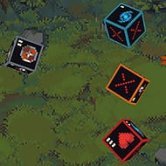
Every run begins with the same five heroes: Thief, Warrior, Defender, Acolyte, and Adept. Each one carries a custom die, and the faces cover sword hits, bow shots, shields, healing, and magic. Because your whole party acts at once, the real decision each turn is not who attacks but which faces to keep. That is where the game separates players who guess from players who count.
New players usually treat the Warrior as the star and the Acolyte as optional. That works for a floor or two, then falls apart when damage starts spreading across the party. In most situations healing prevents more damage than extra offense, so a living Acolyte often produces more total damage than a Warrior who kills one monster a turn faster.
Early in the game, the Thief is the hero to protect. It is fragile, and many runs are decided by whether the Thief survives the next monster turn.
Rerolls, Thresholds, and the Undo Button
Rerolling is the heart of the system. You roll all five dice, keep the faces that fit the turn, and spend limited rerolls on the rest. The skill is thinking in thresholds: how much shield or damage does the party need this turn to keep the Thief alive and the fight moving? Once that number is clear, most rolls either clear it or they do not, and the reroll decision becomes simple.
A common mistake is rerolling too aggressively and ending up with a pile of blanks. If the current roll already covers the threshold, stop. Community advice also stresses using Undo whenever it is available, since checking whether your current roll is enough costs nothing, and a hasty reroll can cost a hero.
Faces are also read against what monsters are about to do. Damage is best spent against swarms of small monsters, weakening or poison pays off against big ones, and dodge matters when a specific hero is being targeted. Min-max players will notice quickly that the same five dice want different faces every turn, which is why no two floors play alike.
Slimer, Slimelets, and the Early Floors
The first floors teach the vocabulary. Small monsters die to a single sword face, shields blunt the first hits, and the party feels generous. Then the Slimer appears, and its Slimelets turn a simple fight into a spawning problem: every extra body is another source of damage, and ignoring them for even a turn leaves the party outnumbered.
What works is clearing the Slimelets quickly rather than chipping at the Slimer itself. Among the first monsters that really punish sloppy play, the Slimer is the one most players remember. It is a good lesson that damage assigned to the wrong target is a wasted turn, and players picking up the Android version will meet that lesson just as fast.
Items matter here too. Something as simple as a +2 sword bonus on the Warrior changes which faces are worth keeping, so each pickup is best read as a change to your dice rather than a number on a sheet.
Curses and Difficulty Modes in Slice & Dice
Beyond the standard run, players use mode names constantly: Classic, Brutal, Hell, and Unfair. Curses such as Undying Monsters, Armour 4, and Barricade modify each run and change which plans are even viable. Combining them is where experienced players start planning before the first roll.
One piece of community wisdom concerns conflicting curses. Curses that prevent eliminating monsters should not be paired with curses that punish failing to eliminate them, because the run then contradicts itself. Reading curse descriptions carefully before committing saves runs that could never have been won.
This is also where the game is most divisive. Luck plays a visible role, and in Brutal or Hell a bad streak of rolls can sink a good plan. Experienced players talk about low-roll avoidance, a style that only pays off once your win rate sits around twenty percent. Some players find that variance exciting, while others find it frustrating.
Reaching the Lich: Late-Floor Planning
By the time you reach the upper floors, every earlier decision is on display. The hero classes you chose, the items you stacked, and the levels you spent on the Thief all decide whether the party can survive the Lich. With 20 levels to climb, the run is long enough for mistakes to compound and short enough for a single reroll to feel like the entire run.
Players often point to the Lich fight as the real test of what the party became. Since the game offers over a hundred hero classes, mid-run class choices are best treated as a plan for the Lich rather than a reaction to the last floor.
Whether to leave a weak hero behind is a debate players keep having. Dropping one can sharpen a plan, but it also shrinks the number of faces you can choose from each turn, and the Lich is rarely forgiving about missing options.
Quick Answers for New Dice Rollers
- Which heroes should a new player protect first in Slice & Dice? Protect the Thief, because its low survivability makes it the hero most likely to cost you a run. After that, keep the Acolyte alive, since healing faces are what let the Warrior and Adept keep rolling damage across many turns.
- How do rerolls work? Each hero’s die is rolled at the start of the turn, and rerolls are limited, so they are best spent on faces that miss your shield or damage threshold. Undo lets you step back when a reroll goes wrong, which makes checking your current roll before rerolling a habit worth building.
- How do you handle curses like Undying Monsters and Barricade? Read each curse as a rule that rewrites the fight, then choose heroes and items that answer it. Avoid pairing curses that stop you from eliminating monsters with curses that punish failing to eliminate them, since that combination can lock a run in place.
Slice & Dice is a game where a Thief with one hit point left, a well-timed Acolyte heal, and a die that finally lands the face you need can turn a lost floor into a win. Learn the thresholds, respect the curses, and the Lich will feel like the end of a plan rather than a coin flip.