















Otherside Tapes: Favela
 (1 оценок, среднее: 5.00 из 5)
 Loading...
Similar Games











Description
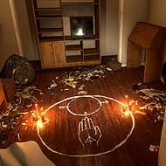
Street 7 in Otherside Tapes: Favela is a place Cláudio da Silva spends the whole story looking for, and the game never lets that search stay simple. He is an urban explorer and content creator who walks into Favela das Almas in 2006 with a recording in mind, and what he finds is a community where the same places keep changing shape around him.
| Genre | First-person psychological horror |
| Style | Realistic found-footage aesthetic |
| Setting | Favela das Almas, 2006 |
| Mode | Single-player |
| Full audio | English and Brazilian Portuguese |
Cláudio da Silva and the Search for Street 7
The setup begins with rumors. Cláudio da Silva is already a content creator who films his explorations, and he hears talk of mysterious disappearances in a nearby favela. Instead of letting it go, he decides to investigate himself. His goal is the infamous Street 7, a place wrapped in stories about people who vanished and linked to a devastating fire that destroyed the favela years earlier.
That framing explains why the game looks the way it does. A creator who films everything gives the story a natural reason to be told through a recording, and the whole project is presented as a lost tape from an abandoned place, a mystery that was supposed to stay buried. You are not watching a documentary but living inside the footage as it is being shot.
This is also the first episode of a new anthology called Otherside Tapes. That means Favela works as a self-contained story, and you do not need to know anything else to start.
Favela das Almas Through a Found-Footage Lens in Otherside Tapes: Favela
Found-footage horror lives or dies on whether the picture feels believable, and this game goes for realism. Reviewers point out that shooting through period-correct video is more than a filter pasted over a modern image. The result is a 2006 recording look that makes every alley feel like something captured by someone who should not be there.
The pressure is atmospheric rather than action-driven. Steam flags frequent violence or gore and general mature content, so expect disturbing moments, but the dread comes mostly from where you are rather than from combat. Players who enjoy slow, uneasy exploration will be more at home than players who want a shooter.
Fans of found-footage films will recognize the logic immediately: a limited point of view, a recorder that sees only part of the world, and a growing suspicion that the camera is not safe either. The setting in Rio, with its cramped streets and layered buildings, gives that idea a strong sense of place.
Loops, Rituals and Shifting Streets: What Actually Happens
Once Cláudio da Silva is inside, he becomes trapped in a loop of distorted realities, rituals and a supernatural presence that seems to control everything in Favela das Almas. The same places transform as he moves through them, and the game says reality seems to shift with every step. That is the central trick: you cannot simply learn the map once and trust it.
Early in the story the favela feels like an abandoned neighborhood you can read. Once the same places begin to transform, familiarity turns into a liability, and a landmark you memorized stops being reliable. That shift from orientation to disorientation is where the horror really starts.
Players talk about the story in terms of the loop and the two endings, usually written as ending A and ending B. That vocabulary shows how much of the appeal is in working out what happened in Favela das Almas rather than just surviving it.
Documents, Two Endings and What Players Chase
A lot of the history of the favela reaches you through documents you can read in the world. They fill in what happened before the fire and why Street 7 carries so much fear, and they reward players who slow down. The game gives completionists several clear targets:
- Readable documents that explain the favela and its disappearances.
- Two endings, ending A and ending B.
- Nine Steam achievements tied to your choices and progress.
- Adjustable difficulty for repeat runs.
Not everything worked smoothly at the start. An early patch fixed a localization problem where a document showed the English word instead of the Portuguese one even when the language was set to Portuguese. At least one player also reported that achievements did not unlock after finishing ending A, so check that before judging a replay by your achievement count.
Players who like seeing every outcome will want both endings, and they will probably compare notes on how a run changed between ending A and ending B.
Difficulty, Accessibility and Who Should Play Otherside Tapes: Favela
Difficulty is adjustable, so the same story can be a quiet walk or a serious test. Some players have already finished the game on the hardest setting, called insane difficulty, which suggests there is room to push yourself. Others will prefer a lower setting and focus on the story.
The store page also lists a solid set of accessibility options, including adjustable text size, camera comfort settings, color alternatives, custom volume controls and subtitle options. Full controller support is listed too. That level of care matters in a horror game, where a single uncomfortable setting can ruin the mood.
Full audio is available in both English and Brazilian Portuguese, which matters for a story so tied to a specific place. Horror streamers will find plenty to react to, and players from Brazil get a story set in their own backyard rather than a generic location.
Where Players Push Back on the Tape
The first debate is size. This is the opening episode of an anthology, so some players want a longer story, while others like a contained one that does not overstay its welcome. Your answer depends on how much horror you want in one sitting.
The second is intensity. Frequent violence and gore are part of the package, and the dark, grainy found-footage look can be hard to read at times. If you prefer clean visuals and mild horror, this may feel too rough.
Fresh releases also bring bugs, and early patches are a normal part of that story. Still, early reception is strongly positive, and most of the complaints so far are about polish rather than the core idea.
Otherside Tapes: Favela succeeds because it takes a single reporter, a single missing street and a favela that will not stay the same, and turns them into a story you have to piece together yourself. If you want a tense, atmospheric found-footage horror game where Cláudio da Silva chases Street 7 through Favela das Almas, it is an easy pick for an evening.