










It’s Chopping Time!
 (1 оценок, среднее: 5.00 из 5)
 Loading...
Similar Games




Description
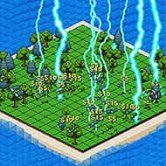
It’s Chopping Time! looks like a quiet little chore on a secluded island but plays like a contest of timing, upgrades, and well-aimed natural disasters. There is no need to click anything: you hover your cursor over trees to chop them, and when the right moment arrives you call down the forces of nature to flatten the forest even faster. The result is an incremental game that sits somewhere between a relaxed idler and a small speed challenge.
| Genre | Incremental idle |
| Players | Single-player |
| Controls | Hover over trees to chop, no clicking needed |
| Currencies | Money and colored wood logs |
| Forces of nature | Earthquakes, sunbeams, tornadoes, hail, lightning strikes, tidal waves |
| Progression | Permanent upgrades in the skill tree |
| Competition | Leaderboards |
Hover, Chop, and Repeat in It’s Chopping Time!
The loop starts small. Trees stand on a secluded island, your cursor drifts over them, and each tree you hover goes down without a single click. Felling trees feeds the two currencies behind the skill tree, money and colored wood logs, so the heart of the game is turning simple cursor movement into steady progress. It is a cozy, hand-drawn setup, and the pace feels closer to a relaxed idler than to a reflex test.
Early in the game, that cursor is almost all you control.
Newcomers who expect to click and wait often realize within a few minutes that position is the real skill. Sweeping across a thick cluster of trees naturally covers more ground than lingering on one, and keeping the cursor moving while you watch for the next interest point is the rhythm that separates a lazy run from an efficient one. Veterans of incremental games will recognize the shape of the loop immediately, which makes it easy to settle in.
Forces of Nature and Interest Points in It’s Chopping Time!
Chopping alone would be a pleasant idle loop, but the forces of nature give the game its personality. There are six of them: earthquakes, sunbeams, tornadoes, hail, lightning strikes, and tidal waves. Each one is triggered by hovering the matching interest point when it appears, so you are not digging through a menu, you are reacting to a prompt in the scene.
Because the forces are tied to interest points that show up on the island, part of every minute goes to watching for the next prompt while your cursor keeps working. Player clips tend to focus on how destructive the effects look, with one viewer delighting in an earthquake tearing through a stretch of trees and another praising fire as well.
Players who like a little spectacle will find this layer the real hook, because it turns a quiet chop-fest into small moments of controlled chaos. The common reaction in community videos is that the whole thing is simply satisfying, and the skill tree is what keeps that feeling growing.
Skill Tree Spending: Money, Colored Logs, and Permanent Upgrades
The skill tree is where every run turns into long-term progress. You spend money and colored wood logs on permanent upgrades, which means the effort of one session carries forward instead of resetting to zero.
Once the colored logs begin to pile up, the decision changes shape. Early in the game almost any purchase feels like a win, but later each choice competes with others, and the question becomes which upgrade actually changes the pace of the island rather than adding a small bonus.
A useful rule is to spend in line with what you want from each run. Broad purchases make the island feel richer, while a tighter, deliberate order is better when every second counts.
Leaderboard Runs and Racing the World’s Fastest
For anyone who wants more than a cozy session, the game has a competitive side. Leaderboards track the fastest times, and you can race friends or the world’s best players across the game’s various boards.
Speed-minded players will quickly stop admiring the island and start planning, since a fast run means deciding which upgrades to buy first and when to react to an interest point. The achievement list pushes in the same direction: 57 achievements, with names like 1001 trees, They will snap like twigs, and The earth is alive hinting at milestones built around chopping volume and the forces of nature.
Those boards also give the idle genre something it often lacks, a reason to replay with a plan. Two runs on the same island can feel completely different when one is relaxed and the other is a race.
Wave Movement Modes and Comfort Options
Accessibility gets real attention here. The options menu offers a wide range of settings, including a wave movement mode with three states: normal, gentle, and flat.
That wave setting is aimed at players who are sensitive to motion sickness, and it matters on an island where water is always part of the scene. Switching to gentle or flat calms the on-screen motion, so nobody has to trade comfort for access to the skill tree or the forces of nature.
The soft, colorful art and gentle pace make it easy to settle into short sessions, and the comfort options keep longer ones from becoming tiring. It is a rare incremental game where the visual calm is treated as a feature rather than an accident.
Idle Rhythm, Repetition, and Who This Island Suits
No incremental game is for everyone, and the shape of this one is clear from the first few minutes. The loop of hovering, chopping, and buying upgrades is repetitive by design, and players who want constant active input may find hover-only chopping too passive between interest points.
That is also why the forces of nature matter so much. Without earthquakes, tidal waves, and lightning strikes breaking up the rhythm, the island could blur into a single repeating motion.
Reception so far has been very positive, and the praise tends to center on how satisfying the destruction feels and how clean the upgrade loop is. Players looking for deep strategy or story should adjust their expectations, but anyone who enjoys watching numbers climb will find a lot to like.
It’s Chopping Time! earns its place by making a simple idea feel good: hover the trees, watch for the next interest point, and let a tidal wave or a lightning strike do the heavy lifting. Whether you are spending colored wood logs in the skill tree or racing the leaderboards, the island keeps rewarding smart cursor work.