







The Cat in the Hat – Analog Horror
 (Пока оценок нет)
 Loading...
Similar Games


Description
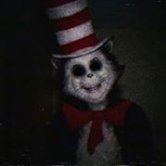
A normal evening spent watching television takes an unsettling turn after you decide to order a bizarre product shown during a commercial. In The Cat in the Hat (Analog Horror), that seemingly harmless purchase becomes the beginning of a nightmare. The delivery arrives, familiar rooms begin to change, and a warped version of the famous Cat eventually appears inside your home. Rather than offering separate stages, the game presents one continuous first-person horror story that gradually becomes more dangerous as the night unfolds.
| Genre | First-person analog-inspired story horror |
| Structure | Linear narrative presented through several scenes |
| Main locations | The house and the maze |
| Key controls | Directional keys for movement, mouse for looking, Shift for sprinting in the maze, V to unlock the cursor |
| Goal | Make it through the night and obtain the good ending |
How the Television Commercial Begins the Nightmare
The beginning intentionally feels like an ordinary evening. You receive objectives through messages on the screen, approach different objects to trigger interactions, and move through the house as the next parts of the story become available. The television commercial provides the strange premise, while the decision to place the order becomes the event that starts changing everything.
There is no immediate monster chase, and that slow introduction is an important part of the atmosphere. The longer the house remains quiet, the more obvious it becomes that something is eventually going to go wrong.
Moving too quickly can also make the opening more confusing than it needs to be. Several doors and interactive objects only become usable after the corresponding objective has been triggered. If you rush through the house, you may end up checking the same areas repeatedly because the next event has not happened yet. During these calmer sections, explore the rooms that are already available and pay attention to anything that looks different from before.
What Changes Inside the House After the Delivery
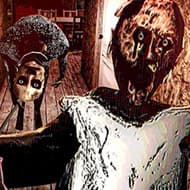
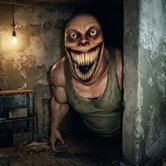
The arrival of the package marks the point where the house begins to feel genuinely unsafe. The atmosphere changes through altered sounds, lighting and misplaced objects, while scripted events gradually reveal that the visitor from the package is not something you can simply ignore. Conversations and cinematic moments move the narrative forward, with encounters involving the distorted Cat becoming increasingly difficult to predict.
The environment itself becomes part of the horror. A room that looked completely familiar earlier may contain different objects when you return to it, creating the impression that the house has been changing while you were somewhere else. These environmental details can be more unsettling than an obvious jump scare because they make you question what you actually saw before.
The game is particularly suited to players who enjoy analog horror, found-footage aesthetics and story-driven experiences. The first portion deliberately takes its time, so anyone looking for constant action may find the opening relatively slow. Another limitation is the short overall length: the experience follows one night from beginning to end rather than providing a large collection of levels or a lengthy campaign.
Getting Through the Maze Chase
The final part changes the rhythm considerably when the maze becomes the setting for the main escape sequence. Exploration is no longer the priority. Instead, you need to keep moving, choose your turns quickly and maintain enough distance from the Cat to avoid being caught.
- Use Shift to sprint immediately once the chase starts, because maintaining speed is crucial in the maze.
- Choose a direction at intersections and keep moving instead of turning around when the Cat gets close.
- Pay attention to recognizable sections of the maze so you can improve your route after each failed attempt.
Getting caught does not force you to replay the entire game. The dangerous sequence can be attempted again, which makes the maze much easier to learn through repetition. Every failed run gives you another chance to recognize the correct route, and after several attempts the path becomes considerably more familiar.
The controls also include a small but useful interface shortcut. When a prompt requires direct mouse interaction, pressing V releases the cursor. Without knowing this, it can be easy to mistake the transition for a technical problem or assume that the game has stopped responding.
Common Questions About The Cat in the Hat (Analog Horror)
- How long is the game? The experience is designed as one continuous horror story rather than a collection of independent stages. The opening takes place around the house, while the final section focuses on the maze, allowing most players to complete the entire story in one sitting.
- Can you get a good ending? Yes. The good ending is connected to successfully completing the final objectives and finding the correct way through the maze. If you are struggling to reach it, the escape sequence is the section worth practicing.
- Why are some doors or objects unavailable? Many interactions are controlled by the current story objective. If something refuses to open or respond, the next event may simply not have been triggered yet. Follow the latest instruction and explore the rooms that are currently accessible.
The Cat in the Hat (Analog Horror) builds its entire experience around a straightforward idea that gradually becomes disturbing. A strange television advertisement leads to an unexpected delivery, the familiar house begins behaving differently, and the Cat turns what should have been an ordinary night into a fight to escape. Explore carefully before the package arrives, pay attention to environmental changes afterward, and keep your sprint ready for the maze when the final chase begins.