









Legally Distinct, Planetary Based, Suika Game Clone for Playdate
 (1 оценок, среднее: 5.00 из 5)
 Loading...
Similar Games





Description
Legally Distinct, Planetary Based, Suika Game Clone for Playdate looks like a joke from its title alone, but it plays like a serious crank-driven puzzler made for short sessions on a handheld. You slide a planet across the top of the container, drop it, and hope two matching neighbors meet before the pile reaches the line. It is the addictive Suika loop reshaped around orbiting rocks, and the crank changes how every drop feels. Most sessions last only a few minutes, yet players regularly find themselves starting another run right after a game over.
Crank Positioning and Drop Timing in Legally Distinct, Planetary Based, Suika Game Clone for Playdate
You position each planet with Left and Right or with the crank, and you drop it with Down, B, or A. The crank is the reason many Playdate owners choose this puzzle over a plain button-based one. It allows much finer placement than a D-pad, and every drop feels deliberate because your hand is physically steering the planet before release. Turning slowly gives you pixel-level control, while a fast spin sends the planet flying across the container.
Beginners drop planets too quickly and stack mismatched sizes in the middle, which leaves gaps that never close. A common early mistake is releasing a planet the instant it appears, before checking what is already sitting below it. Slow down, look at the drop line, and see exactly where the planet will land before you commit.
Players who commute or play in short bursts tend to favor the crank, since it keeps their thumbs free to hit A or B the moment the position looks right.
A technique many players miss is anchoring your largest planets in a corner and stepping smaller ones down toward the opposite wall. It keeps the pile readable, and it saves you when the container gets tall and every pixel of space matters. If you keep one side clean for the next drop, a bad planet never forces a bad merge.
Reading the Merge Tree Before You Drop
The menu button shows a few options and also displays the merge tree, which lists the order of planets from smallest to largest. Checking it early is worth the pause, because the entire strategy of the game depends on knowing which merge comes next and which planet you need to keep space for. Newcomers who skip this screen usually spend their first several runs guessing which planets combine into which.
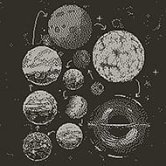
The black hole sits at the top of that tree, and reaching one is the milestone players talk about most. One player was so excited by their first black hole that they took a screenshot, and another reports popping two pairs of black holes in a single run. Those stories show how rare and satisfying the top of the tree feels, even for people who play often.
Try to keep your planets in stepped order from one wall to the other. A big planet sitting between two small ones blocks merges and wastes space, and that is where most runs start to collapse. Early in the game the pile is forgiving, but by the time mid-sized planets crowd the container, one misplaced drop can decide the whole run.
Combo Chains and Score Chasing
Combo chaining is where the real points come from. Each merge that triggers another merge raises your combo, and keeping that chain alive multiplies your score far beyond what single merges give. Score chasers plan two or three drops ahead, arranging planets so one merge cascades into the next instead of stopping.
Highscore Version is the extra download you get by tipping at least 2 dollars. It saves your highscore and max combo, while the standard download plays exactly the same, with no gameplay changes at all. If you enjoy competing against friends or against your own earlier runs, saving your best result makes the small tip worthwhile.
Restart rhythm matters more than it sounds. Because a run lasts only a few minutes, the most successful players treat a bad start as a reason to begin again rather than fight a doomed pile. It keeps the game light, and it keeps the combo attempts coming.
One-Bit Look, Crank-Reactive Background, and Art Mode
The game uses a crisp 1-bit pixel style with high contrast, which suits the Playdate screen well. Planets are easy to tell apart at a glance, so you can read the container even when the pile is crowded. The dynamic background also moves with the position of the crank, which adds a small but pleasant sense that your hand is part of the scene.
A hidden art mode offers an alternate art style unlocked with a cheat code on the menu screen. The changelog hints at a classic Konami-style input, and the whole thing is played for laughs, matching the joke of the title. It is a fun secret for anyone who enjoys hunting through menus for something extra.
Some players report that the code does not always register, and that can be frustrating when you know the secret exists. Try again from a fresh menu screen and enter the sequence carefully before assuming it is broken.
Physics Quirks and Divisive Details in Legally Distinct, Planetary Based, Suika Game Clone for Playdate
The physics are the most discussed part of the game. Planets sometimes clip into each other, jiggle in place, and even stack on top of one another when the pile gets heavy. It is an expected quirk rather than an intended feature, and it gives you a little extra room for merging, but it can also make it hard to reach the exact planet you need.
Players who remember earlier versions say the planets now bounce more, which costs some of the precision that made the first releases feel tight. Some would like a setting with more gravity to bring that steadiness back. Occasional crashes and a rare glitch on the game over screen, where invisible planets let a player keep going, have also been reported, so the game is not perfectly polished.
Even so, ratings sit at 4.8 out of 5 from a small group of players, and the general verdict is that it is a lot of fun for a few minutes at a time. If you want a quick, cheerful puzzle and can forgive some jitter, that is enough. Players who need flawless physics may be less patient than those who simply enjoy watching planets tumble.
Legally Distinct, Planetary Based, Suika Game Clone for Playdate stays a pocket-sized puzzler at heart. Learn the merge tree, keep your combo alive, and chase that first black hole with the crank in hand, and the occasional physics wobble becomes part of the charm.