



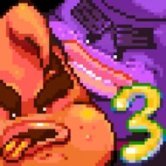






Kick The Piñata!
 (1 оценок, среднее: 5.00 из 5)
 Loading...
Similar Games


Description
You swing, candy explodes across the screen in a satisfying burst, and somewhere in the back of your mind a small voice notes that the piñata’s eyes seemed to follow you right before it popped. Kick The Piñata! wants you to ignore that thought completely, and for the most part, the game’s cheerful pixel-art surface makes that easy to do. It is only once the candy piles up and the home starts filling with things you do not quite remember unlocking that the reassurance starts to feel less like a joke and more like a dare.
| Genre | Casual Incremental |
| Style | Pixel art |
| Core Mechanic | Smashing piñatas for candy and upgrades |
| Progression | Rebirth system with home building |
Smashing Your Way Through Kick The Piñata!
The loop starts about as simple as an incremental game gets. Grab a weapon, smash piñatas, collect the candy they scatter, and pour that candy back into upgrades that make the next swing hit harder. Every improvement compounds fast, and within a short stretch of play the satisfying pop of a single piñata bursting turns into a steady rhythm of chained hits and growing candy totals. The pixel-art presentation keeps the whole thing readable even once the screen gets busy, with each hit landing on a distinct little crunch of sound that players describe as one of the most addictive parts of the entire loop.
Beginners sometimes treat the early upgrades as optional, holding onto candy instead of spending it, but the game rewards reinvestment aggressively. Piñatas scale up in toughness quickly, and players who hoard resources instead of upgrading tend to hit a wall where their weapon simply cannot keep pace with what is standing in front of them. The fix is almost always the same: spend candy the moment you have enough for the next meaningful upgrade rather than saving toward some later purchase that may never arrive at the rate you are collecting.
Weapon choice adds a small but real layer of decision-making on top of the core smashing. Different tools trade off swing speed against raw power, and players tend to gravitate toward one of two approaches early on, either favoring a fast weapon that racks up hits constantly or a heavier one that clears tougher piñatas in fewer, harder swings.
Rebirth and the Strange Home in Kick The Piñata!
Once progress slows, the rebirth system offers a way forward. Resetting your run gives up your current candy total in exchange for permanent advantages that make the next run faster from the very first swing, and this is where the incremental structure of the game really opens up, since each rebirth unlocks new pieces to add to your home.
- Push a run as far as you comfortably can before diminishing returns set in.
- Rebirth to lock in permanent bonuses rather than clinging to a single long run.
- Use the fresh unlock to add another strange addition to your home and see how the space keeps shifting between runs.
That home-building piece adds a layer most piñata-themed games skip entirely. Watching your space fill up with odd new additions run after run gives the rebirth grind a visible payoff beyond a bigger number on the candy counter, and it is one of the details players bring up most often when describing what makes the loop feel worth repeating. Early rebirths tend to add fairly ordinary furniture and decorations, but later unlocks start introducing pieces that feel distinctly out of place, and the community has taken to comparing notes on exactly when the home stops looking cozy and starts looking like evidence of something.
By the third or fourth rebirth, a session that started as a straightforward candy grind has usually turned into something closer to a collection hobby, with players resetting specifically to chase the next home addition rather than to push their candy total higher.
Everything Is Fine, Probably
What sets Kick The Piñata! apart from a purely cheerful incremental is the running joke sitting just underneath the surface. The game repeatedly insists that everything is normal, that nothing strange is happening, and that the piñatas are absolutely, definitely not alive, and the more often that reassurance shows up, the less convincing it becomes. Players who enjoy a light layer of unease under their idle games tend to lean into this tone deliberately, replaying with an eye for small details the pixel art hides in plain sight, while players who came purely for the numbers-go-up satisfaction can largely ignore it and still get a full run’s worth of enjoyment. A third type of player treats the whole thing as a scavenger hunt, deliberately slowing down each run to check whether a piñata’s expression has changed since the last time they looked.
That said, some players find the horror undertone too subtle to register at all during a normal playthrough, treating it as flavor text rather than something the game meaningfully builds toward, and that split in how seriously to take the joke is one of the more common points of discussion around the game. Does every piñata pop in Kick The Piñata! actually mean nothing beyond a candy payout, or is the growing pile of strange additions in your home quietly telling a different story? The game never fully answers that question, and it is better for leaving it open.
Community vocabulary around the game has already started forming, with players referring to the odd little asides scattered through menus and loading screens simply as “the notes,” a shorthand for the game’s habit of reassuring you about something nobody asked it to reassure them about in the first place.
What Actually Fills Three Hours of Smashing
On paper, a game built around one repeating action could run thin fast, but Kick The Piñata! stretches its roughly three hours of content by layering rebirths, home additions, and weapon variety on top of the core smash-and-collect rhythm rather than leaving that rhythm to carry everything alone. Whether that pacing feels generous or padded is something players disagree on, since a handful of reviews note that later rebirths start to feel repetitive even with new home pieces unlocking, while others argue the shrinking novelty is intentional, mirroring how mundane the whole ritual has become to whoever keeps insisting it is all perfectly normal.
Whether you finish that stretch chasing the fastest possible rebirth or slowing down to notice every unsettling detail tucked into the pixel art, Kick The Piñata! keeps handing you the same reassurance after every satisfying swing, and it keeps landing a little less convincingly each time you hear it.