









BrokenLore: DON’T LIE
 (1 оценок, среднее: 5.00 из 5)
 Loading...
Similar Games





Description
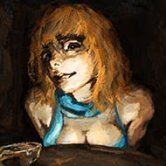
You dial Shinji’s number for the third time this week, and the wallpaper behind you has changed since the last call — not dramatically, just enough that you can’t prove it happened. That small, deniable wrongness is the engine of BrokenLore: DON’T LIE, a first-person psychological horror game that keeps you inside Junko’s apartment and inside her head at the same time, until you stop trusting the difference.
| Genre | Psychological Horror, First-Person |
| Platforms | PC, Xbox Series X|S, PlayStation 5 |
| Setting | Junko’s apartment and shifting liminal spaces |
| Release | September 10, 2026 |
Junko’s Apartment and the Shape of Isolation
Junko doesn’t leave. That single fact does more work than any jump scare in the game, because everything you learn about her comes filtered through four walls, a phone, and a medicine cabinet she keeps returning to. The apartment is small enough to memorize in the first ten minutes, which is exactly the point — once you know every corner, the game can start moving them.
What makes this section land is restraint. Nothing screams at you early on. A door that used to open onto a hallway now opens onto a room you don’t remember owning, and the game trusts you to notice on your own.
Players who come in expecting constant scares often misjudge the pacing here, and that’s one of the more divisive things about BrokenLore: DON’T LIE — some find the slow domestic stretch essential, others want it trimmed.
Medication, Memory, and What the Game Doesn’t Explain
Junko’s reliance on medication is never treated as a side detail. Doses tie directly to how reliable her perception is in a given stretch, and the game never puts a clean marker on screen telling you when she’s slipping. You infer it from small cues: dialogue repeating itself, a lamp that’s suddenly on the wrong side of the room.
This is where the word ambiguous stops being a compliment and starts being a genuine design choice, because the game rarely confirms which version of a scene actually happened.
Shinji and Hideo: Connection as Mechanic
Junko is trying to reconnect with Shinji and Hideo, two patients she once knew at the rehabilitation center, and those calls function as the closest thing the game has to a scoring system. How you answer, what you admit to, and what you withhold shifts how each man responds the next time he picks up.
- Early calls are cautious, testing whether Junko will lie.
- Mid-game calls start referencing details from rooms you’ve explored, blurring conversation and environment.
- Later calls with Hideo in particular grow sparse, and their tone changes based on earlier honesty.
By the time you reach the second round of calls with Hideo, the game stops treating dialogue as flavor text and starts treating it as consequence.
Liminal Spaces and the Exploration Phases
The exploration phases send Junko out of the apartment and into spaces built from memory rather than geography — a rehabilitation center hallway that doesn’t end where it should, a room shaped by a feeling instead of a floor plan. This is where BrokenLore: DON’T LIE earns its liminal-space reputation among horror fans who already know the term from forums and video essays.
These sequences reward attention rather than reflexes. There’s no combat to speak of; the tension comes from realizing a space has changed while you were looking directly at it.
Community discussion around these sections tends to focus on how deliberately unclear the internal logic is, and that vagueness is intentional rather than a gap in the game’s design.
Echoes of DON’T WATCH
BrokenLore: DON’T LIE positions itself as a spin-off of DON’T WATCH, part of the same fragmented mythology without demanding you’ve played the earlier entry. References surface in objects and overheard phrases rather than exposition dumps, rewarding returning fans without punishing newcomers.
New players sometimes worry they need prior knowledge of the wider BrokenLore saga going in. They don’t — Junko’s story is written to stand on its own, even if longtime followers will catch more.
Do you need to play DON’T WATCH before this game?
No. BrokenLore: DON’T LIE is written as a self-contained story about Junko, Shinji, and Hideo, though references to the earlier entry are woven in for players who want the fuller picture.
Is BrokenLore: DON’T LIE about Junko losing her mind or something external?
The game deliberately keeps that ambiguous. Medication, isolation, and the shifting apartment all point toward a mental unraveling, but it never fully rules out something acting on Junko from outside her own perception.
How much of the horror in this game is jump scares versus atmosphere?
Most of the tension comes from environmental wrongness and the conversations with Shinji and Hideo rather than sudden shocks, which is consistent with how Wired Productions has framed the game’s psychological focus.
What stays with you after finishing isn’t a single scare but the accumulation of small betrayals — a hallway that shouldn’t exist, a call with Hideo that goes quiet at the wrong moment. BrokenLore: DON’T LIE asks you to sit inside Junko’s unraveling apartment long enough that you stop being sure which version of it was ever real.