









Wheelie Life
 (1 оценок, среднее: 5.00 из 5)
 Loading...
Similar Games







Description
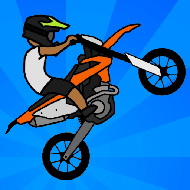
You lean back half a second too long, the front wheel already three feet off the asphalt, and everything about the run now depends on how steady your thumb stays on the throttle. That single moment of tension is the entire game of Wheelie Life, and it never really lets up no matter how many runs you complete.
| Genre | Physics-based motorcycle stunt game |
| Platforms | iOS and Android |
| Core Objective | Hold a wheelie as long as possible without tipping |
| Progression | Unlockable bikes and custom paint jobs |
Balance as the Only Real Mechanic in Wheelie Life
Most stunt games hide their difficulty behind combos or timing windows, but Wheelie Life strips everything down to one input relationship: throttle against lean angle. Push too hard and the bike flips backward. Ease off too soon and the front wheel drops, ending the run instantly. There is no shooting, no opponents, and no collectible currency floating in the air — just a rider, a road, and the constant negotiation between speed and gravity.
This simplicity is exactly why the game holds up over long sessions. Every crash feels earned rather than random, because the physics engine reacts consistently to the same inputs. Players who treat the throttle like a light switch rarely last past the first stretch of road, while those who learn to feather it in small increments start seeing their runs stretch from a few seconds into full minutes.
A casual player might open the game expecting something closer to an endless runner, only to realize within the first attempt that Wheelie Life rewards patience over reflexes. Speedrunners, on the other hand, tend to push the lean angle right to the edge of a flip, because the fastest long-distance runs come from riding that edge rather than staying safely upright.
Reading the Road Before It Reads You
The road itself is not flat, and that detail catches new players off guard constantly. Slight dips and gentle rises change how much throttle is needed to keep the wheel lifted, so a rhythm that works on a straight section can fall apart the moment the terrain shifts. Veteran players in the community often talk about “reading the tarmac,” a bit of slang that basically means anticipating these micro-changes before they happen rather than reacting after the bike has already started to wobble.
Beginners typically make the same mistake early on: they stare at the wheel angle indicator instead of the road ahead, which means they are always one beat behind the terrain. By the time a rider reaches the longer open stretches, ignoring the indicator and watching the horizon instead becomes the more reliable habit.
Unlocking Bikes and Why Paint Jobs Matter
Progress in Wheelie Life is measured through distance rather than levels, and that distance slowly unlocks new motorcycles with different handling profiles. A heavier bike resists flipping but takes longer to correct once it starts drifting off balance, while a lighter frame snaps back quickly but punishes overcorrection almost immediately. Choosing a bike is less about appearance and more about matching a rider’s own timing instincts.
Paint customization exists mostly for personal expression, but it also doubles as a soft milestone system. Long-time players treat a fully painted garage as proof of hours loged in Free Ride mode, the practice space where crashes carry no penalty and the goal is simply repetition until the throttle timing becomes automatic.
What makes Wheelie Life different from other bike balancing games?
Unlike arcade-style bike games that rely on scripted ramps and tricks, Wheelie Life keeps the challenge entirely in continuous balance rather than staged stunts, which is why long, unbroken runs feel more satisfying than short bursts of tricks.
Why does the bike flip even when the wheel angle looks fine?
Momentum carries over from the previous few seconds, so a rider who was already leaning back slightly will flip sooner than the current wheel angle alone would suggest, which is a detail many new players miss until they slow down their inputs.
Is there a best bike for beginners in Wheelie Life?
Heavier starting bikes tend to forgive small timing mistakes better, making them the more common recommendation for players still building a feel for the throttle before moving to lighter, twitchier frames.
Wheelie Life never asks for more than one skill, but it asks players to keep refining that skill long after the first few runs feel comfortable, and the moment a rider finally clears a stretch they had been failing for days in Free Ride mode is the closest thing this game has to a real reward.