










Cover Orange Level Editor
 (1 оценок, среднее: 5.00 из 5)
 Loading...
Similar Games









Description
The acid rain cloud in Cover Orange never changes its behavior, which is exactly why the Level Editor variant is so unforgiving — every hazard placement has to account for a physics system that plays by the same strict rules the base game always used.
What the Level Editor Actually Changes in Cover Orange
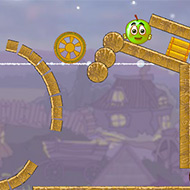
Cover Orange built its reputation on protecting a handful of oranges from a poisonous rain cloud using boxes, barrels, wedges, and wheels dropped into place before the storm arrives. The Level Editor variant hands that entire toolkit over to the player, letting them place the oranges themselves, decide how many objects are available, and design the shape of the terrain the cloud will rain down on.
This shift changes the entire relationship a player has with the game. Instead of solving someone else’s puzzle, the player becomes responsible for making sure a solution even exists, which sounds simple until the first attempt at building a level accidentally makes it impossible to fully shield every orange.
Compared with the original level packs, the editor mode is noticeably harder to master in the first few minutes, not because the controls are complex but because testing a level requires switching between building and playing repeatedly to confirm it actually works.
Physics Constraints Every Builder Learns the Hard Way
Boxes and barrels still obey gravity and momentum exactly as they do in the standard levels, which means a level designed with objects stacked too precariously will collapse on its own before the rain even starts. New builders commonly discover this the first time they place a wedge at an angle just slightly too steep, watching it slide away from the orange it was supposed to protect.
Community discussions around the editor frequently use the term “solvability,” meaning whether a built level can actually be completed at all once published, a concern almost unique to editor-style spin-offs rather than the base game.
Sharing Levels and What Players Argue About
Once a level is built, players can share it for others to attempt, and this sharing loop is what gives the editor its long-term audience compared with the fixed level counts of the original Cover Orange. Some players treat the editor purely as a design tool, spending far longer building than playing, while others use it mainly to recreate scenes from the main campaign with harder object limits.
- Builders who enjoy strict logic puzzles tend to limit themselves to very few objects per level.
- Players who prefer chaos often overload levels with barrels just to watch the physics engine struggle.
One divisive point that keeps coming up in player discussions is difficulty balance — a level that feels perfectly fair to its builder can feel nearly unsolvable to someone approaching it cold, since the editor gives no built-in difficulty rating.
Can a level built in the Cover Orange Level Editor become unsolvable by accident?
Yes — because the physics engine allows objects to shift or collapse under their own weight, a level that looked complete in the editor’s build screen can turn out to be unwinnable once actual gravity and the rain timing are tested in play mode.
Do custom levels use the same oranges and hazards as the original game?
The editor draws from the same core assets, including the oranges and the rain cloud mechanic, but gives full control over how many oranges appear and how the surrounding terrain and objects are arranged.
The Level Editor keeps the same oranges and the same relentless rain cloud from the original Cover Orange, but it hands the responsibility for fairness to the player building the level instead of the original designers, and that shift alone explains why so many builders keep tweaking a single wedge placement long after most players would call the level finished.