














Pokemon Legends: Z-A


 (2 оценок, среднее: 3.50 из 5)
 Loading...
Similar Games










Description
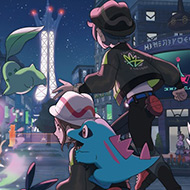
What happens when a Rogue Mega Evolution erupts in the middle of Lumiose City while your partner is still waiting on a move cooldown? Pokemon Legends: Z-A is built around that tension, swapping turn-based menus for real-time battles in a single city where you climb the Z-A Royale at night and fill your team in Wild Zones between fights.
| Genre | Action RPG |
| Setting | Lumiose City |
| First partners | Chikorita, Tepig, Totodile |
| Core loop | Z-A Royale battles at night, Wild Zone catching in between |
| Headline feature | Mega Evolution and Rogue Mega encounters |
Real-Time Battles and Positioning in Pokemon Legends: Z-A
You command your Pokémon while moving your trainer around the fight, and moves come back on cooldowns instead of waiting for turns. Distance and angles suddenly matter, because sidestepping a charging attack can be worth more than a type advantage. Early scraps with wild Pokémon feel gentle, but the rhythm changes once Z-A Royale opponents start pressuring you directly.
Veterans raised on turn-based menus usually need a few battles before cooldown tracking becomes automatic.
The biggest adjustment is realizing the strongest move is not always the right one. A heavy attack with a long cooldown can leave your partner idle while a Rogue Mega closes the gap, so many players pair one big hitter with quicker moves that fill the downtime. Mega Evolution shifts the pace again, because a Mega-evolved partner changes both damage and matchups in the middle of a fight.
Climbing the Z-A Royale From Rank Z to Rank A
The Z-A Royale is the night-time battle ladder that gives the city its name, and every trainer starts at Rank Z. The alphabet countdown gives a very readable sense of progress, with twenty-six letters standing between a newcomer and Rank A. Your rival, Urbain or Taunie depending on your save, runs the same ladder and sets the pace for much of the story.
Ranking up is where the real-time system gets tested hardest. Trainers in Battle Zones punish careless approaches, and a partner left exposed while you are still repositioning can lose a fight you should have won. Players who treat each Battle Zone as a small map to scout, rather than a corridor to sprint through, climb noticeably faster and waste fewer healing items.
Not everyone loves the loop. A common complaint is that the stretch between rank-ups can feel repetitive, especially for players who already out-level the local competition. Competitive-minded players tend to enjoy it anyway, because a rank letter gives them a clear target every single night.
Hotel Z, Team MZ and the Rogue Mega Problem
Early in the game Urbain or Taunie brings you to Hotel Z, where you meet its owner AZ and officially join Team MZ alongside Naveen and Lida. From that point the story turns from a ranking climb into a city-defense campaign, because Rogue Mega Evolutions begin appearing all over Lumiose City.
Rogue Mega encounters are the closest thing Lumiose City has to boss fights, and they are where movement skills stop being optional. Standing still to admire the animation is the fastest way to lose a partner. Throughout these events you also keep crossing paths with a man called L and with Zygarde, which hints that the city’s problems run deeper than the Royale.
The community mostly calls these fights Rogue Megas, and they are the moments players clip and share most. They also carry the story’s biggest reveals, which is why many people slow down their ranking to see every Team MZ scene before pushing on.
Ange Inside Prism Tower
Once you and your rival reach Rank A, Team MZ turns to Ange, a device AZ built 2,000 years ago inside Prism Tower. Mega-evolving Eternal Flower Floette controls it only briefly before it becomes Hyperrogue Ange Floette, and the finale leans on every trainer you befriended in the Royale plus Zygarde Complete Form.
Wild Zones and Catching Around Lumiose City
Wild Zones are fenced-off pockets of the city where wild Pokémon live, and they are where most of your team gets built. Approaching carefully makes a real difference, since a Pokémon that has not noticed you is far easier to catch than one already reacting. Pokédex completionists spend a surprising amount of time here, circling the same zones while hunting for species they missed.
The zones also double as training grounds. Because battles are real-time, a Wild Zone is where you practice dodging and cooldown timing without rank pressure.
Many players deliberately test new movesets there before bringing them into a Battle Zone at night, which saves a lot of frustration once rival trainers enter the picture. It is also the best place to learn how each Pokémon’s reach and speed feel, something no stat screen fully explains until you see a move land or miss from a few steps away.
Choosing Between Chikorita, Tepig and Totodile
Your first partner comes from Urbain or Taunie on arrival, and the choice shapes the opening hours more than the endgame. Each starter covers a different corner of the type chart:
- Chikorita brings Grass coverage.
- Tepig brings Fire coverage.
- Totodile brings Water coverage.
No starter locks you out of anything, and the full team quickly fills out from Wild Zones. The choice mostly changes which early Royale matchups feel easy and which ones force you to lean on catches instead.
Players who replay usually rotate starters, because the early Battle Zones feel noticeably different depending on which type leads the charge. Swapping from Totodile to Tepig on a second save, for example, turns matchups that were comfortable into ones you have to plan around, and that alone makes the opening ranks feel fresh.
After the Credits: Infinite Z-A Royale and Legendary Hunts
The ending is not the end. After the credits, Quasartico Inc. keeps the Z-A Royale running indefinitely as the Infinite Z-A Royale, and you team up with Mable and Team Flare Nouveau to track down Xerneas and Yveltal, both drawn to Lumiose City by Ange.
Zygarde becomes the final prize, recognizing you as worthy once the rest of the postgame is handled. For many players this is where the Pokédex push really starts, since the legendary hunts send you back across the whole city.
The divisive part is the setting itself. Keeping everything inside one city gives Lumiose City a lot of detail, but some players miss the open fields of earlier adventures and feel the rooftops and plazas start to blur together by the postgame. Others argue that a single dense city is exactly what makes the real-time battles and Rogue Mega chases work.
Pokemon Legends: Z-A Questions From New Trainers
- When do Rogue Mega Evolutions start appearing? They become the focus once Urbain or Taunie takes you to Hotel Z and you join Team MZ with Naveen and Lida. From there, Rogue Megas pop up across Lumiose City alongside your Z-A Royale climb, and encounters with L and Zygarde start weaving into the story.
- What unlocks after reaching Rank A? Rank A opens the Prism Tower finale against Ange and Hyperrogue Ange Floette. After the credits you get the Infinite Z-A Royale, work with Mable and Team Flare Nouveau to catch Xerneas and Yveltal, and finally earn a chance at Zygarde.
- Which first partner makes the early Royale easiest? Chikorita, Tepig and Totodile all clear the opening ranks, and the difference is type coverage rather than raw power. Pick the one whose type your early Wild Zone catches do not already cover, and the first Battle Zones become much smoother.
Pokemon Legends: Z-A is at its best when you treat Lumiose City as an arena that never switches off, reading Rogue Mega attacks, ranking up beside Urbain or Taunie, and returning to Hotel Z with a sharper team each night. Master cooldowns and movement, and the road from Rank Z to Prism Tower feels earned rather than handed over.