















Iron Snout
 (Пока оценок нет)
 Loading...
Similar Games





Description
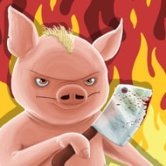
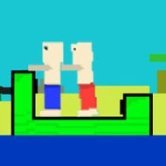
Why would anyone pick a fight with a whole pack of wolves while standing perfectly still? Iron Snout never explains how its pig ended up in that spot, and it does not need to, because the moment the first wolf sprints in from the edge of the screen your fingers are already busy deciding between a jump, a jab and a sidestep. The pig never walks anywhere, so every bit of survival comes from reading what arrives next and answering it before it lands.
| Style | Side-on survival brawler |
| Input | Arrow keys only |
| Stages | City and Forest |
| Ways to play | Classic, Sudden Death, Wolfieball for two |
A Pig That Never Leaves Its Spot
Most brawlers let you roam the arena, but here the hero is rooted to the centre and the attackers come to him. That design turns the whole screen into a kind of rhythm track. Left side, right side, low, high: each wolf has a lane and a moment, and your arrow presses have to match both.
The beauty of it is how quickly it becomes readable. After a dozen rounds the brain starts sorting wolves by their run-up long before they reach striking range, and the pig’s reactions begin to look almost choreographed.
It also means there is nowhere to hide. Players used to backing off and resetting a fight have to unlearn that instinct, because retreat simply is not on the menu.
Wolves, Their Toys and the Things They Throw
The pack escalates its arsenal as a round goes on. Early attackers rush in with small blades, while later ones show up swinging much heavier tools, all the way up to roaring chainsaws that punish a late answer instantly. The weapon in a wolf’s paws is the best clue to how early you need to react.
Thrown objects are a separate headache. Something tossed from off screen can arrive at the same moment as a charging wolf on the other side, and that double pressure is where most long runs crack.
A habit worth building is glancing at the screen edges rather than at the pig. The pig will always be in the middle; what matters is whatever is about to appear at the borders.
Iron Snout Modes for Different Moods
Classic is the everyday mode, a gradual climb where mistakes cost health rather than the whole attempt. It suits warming up and learning new enemy patterns without much stress.
Sudden Death strips that cushion away entirely. One clean hit and the round is over, which makes it the mode streamers and score hunters love to show off, and the one casual players tend to quit after five minutes.
Wolfieball brings a second person onto the keyboard and swaps survival for playful competition. Couch players and siblings sharing a laptop usually end up here, laughing more than they concentrate.
City Streets Versus the Forest
Switching stages is not just a change of scenery. The urban map and the woodland one mix their threats differently, so a rhythm that feels comfortable among the buildings can fall apart between the trees.
Many regulars admit they have a favourite and avoid the other, which is a shame, since alternating keeps reflexes honest and stops muscle memory from becoming lazy.
Some players also grumble that the visuals get hectic late in a round, when several attackers and projectiles overlap and it becomes hard to tell which one will connect first. That clutter is the most common criticism of the game, and fair enough.
Iron Snout Answers for New Players
- Which key does what in Iron Snout? All four arrows are used, and their effect depends on the direction of the incoming attack, so you press toward the incoming wolf or upward to hop over it. Spending a few calm rounds in Classic is the quickest way to make that mapping feel natural.
- Why do runs fall apart after a strong start? Later waves combine charging wolves with thrown objects from the opposite side. Watching both screen edges instead of the pig gives you the half second needed to handle them in the right order.
- Is Wolfieball worth trying alone? It is built for two people on one keyboard, so it shines with a friend. Solo players get more out of Classic and Sudden Death.
Iron Snout squeezes a full brawler into four keys and one stubborn pig, and whether you are surviving chainsaw-wielding wolves in the Forest or trading laughs over Wolfieball, the real skill is spotting trouble at the edge of the screen before it reaches the snout.