



Five New-Fangled Nights
 (1 оценок, среднее: 5.00 из 5)
 Loading...
Similar Games






Description
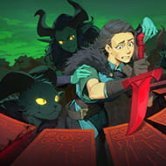
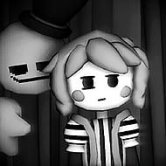
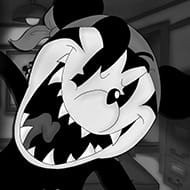
What actually happens once the ghost children realize you’re not the person they’ve been hunting for? That question sits at the center of Five New-Fangled Nights, a fangame that takes the familiar nightguard setup and filters it through a 1920s silent-cartoon aesthetic, complete with rubberhose animation and a cast of animatronics who look like they wandered out of an old reel of film. You’re hired to watch over Freddybear’s Pizza Parlor overnight, and it doesn’t take long to realize the animatronics are the least complicated part of what’s going on.
| Genre | Retro horror survival game |
| Core Mechanic | Camera-based nightguard shifts using the faz-puter system |
| Setting | Freddybear’s Pizza Parlor, styled after 1920s silent cartoons |
| Roster Size | Over ten named animatronics |
| Notable Modes | Story nights and a Custom Night |
The Faz-Puter and Camera Management
The faz-puter is the terminal you use to flip between camera feeds, and it’s less forgiving than it looks at first glance. Rather than giving you a simple grid of static rooms, Five New-Fangled Nights expects you to actually learn how each animatronic paths through the building, since the terminal doesn’t hand you shortcuts once the later nights start layering threats.
Freddy-Bear, the game’s stand-in for the genre’s usual bear mascot, moves along a relatively predictable route early on, which makes him a good gauge for whether you’re checking cameras often enough. Bonnie T. Bunny is less forgiving, especially during segments like Nightguard Season, where his approach punishes players who fixate on a single feed for too long.
Chica the Chicken and Foxy the Pirate round out the core four, and both reward players who treat the faz-puter as a rhythm to maintain rather than a panic button to mash. New players consistently make the mistake of checking cameras reactively instead of on a steady cycle, and that habit tends to be exactly what gets them caught.
Meeting the Roster of Five New-Fangled Nights
Beyond the core four, the roster expands to include Carl the Cupcake, Popgoes the Weasel, Kou the Cow, Friedrich, Rat, and Mr. Moose, each introduced gradually as the story nights progress. Every new addition typically gets its own title card at the start of the night it debuts in, a small touch that longtime fans point to as one of the more thoughtful presentation choices in the game.
Rat in particular has become something of a community favorite thanks to a title-screen easter egg where he flips off the player, and moments like that have shaped a lot of the lighter fan discussion around an otherwise tense game.
Casual players often stick to clearing the story nights once and moving on, while completionists chase every unlockable animatronic in the Custom Night, and speedrunners treat early routing decisions on the faz-puter as the real skill ceiling.
Yell’r Bear and the Overarching Threat
Yell’r Bear functions as the game’s overarching antagonist, distinct from the roster you actively manage on camera. Rather than following a fixed patrol like the others, a different version of Yell’r Bear gradually emerges from a poster near Freddy-Bear over the course of a night, and noticing that slow visual change before it becomes a real threat is one of the more talked-about “aha” moments among players discussing early runs.
Unlike the rest of the roster, Yell’r Bear can’t be toggled on in the Custom Night, which keeps that particular threat tied specifically to the story mode experience.
By the time you reach the night Yell’r Bear becomes fully active, most players have already built a camera routine around the core four, and having to fold in an unpredictable fifth threat is where a lot of Normal-difficulty runs fall apart.
Ghost Children and the Story Behind the Nights
What separates Five New-Fangled Nights from a lot of games in its genre is how much weight it puts on the ghost children possessing the animatronics. Between nights, cutscenes show characters like Cassie and Gabe piecing together theories about who’s actually responsible for what happened to them, often suspecting the nightguard, whose nametag reads Charlie, of being connected to their deaths.
These cutscenes don’t just pad the runtime. They reframe the animatronic attacks less as random horror-game aggression and more as a specific, personal grudge, which is part of why the writing gets brought up almost as often as the gameplay in community discussion.
It’s worth being upfront that not everyone finds the narrative pacing perfectly balanced against the survival mechanics. Some players feel the early nights lean too heavily on visuals and story setup before the camera-management game really tightens up, and that criticism shows up regularly enough in fan spaces to be worth acknowledging rather than glossing over.
Difficulty Progression Across the Story Nights
- Early nights introduce one or two animatronics at a time, letting you learn faz-puter routing without much pressure
- Mid-game nights add overlapping threats, forcing you to prioritize which camera feeds actually matter moment to moment
- Late nights fold in Yell’r Bear’s gradual emergence on top of an already full roster, which is where most first-time players lose their run
- The Custom Night removes narrative pacing entirely, letting players stack difficulty settings for every unlocked animatronic at once
Advanced players generally treat the demo-era nights as a foundation and push straight into aggressive Custom Night combinations once they’ve cleared the story, since that’s where the community consensus places the real skill test.
Community Reception and the Extrees Menu
The Extrees menu functions as the game’s extras hub, and clicking on different character portraits there links out to related media, fan songs, and callbacks that reward players who’ve spent time in the wider fangame community. It’s a small feature, but it’s frequently cited as one of the reasons Five New-Fangled Nights built goodwill quickly after its demo released.
Forum and comment discussion tends to circle back to the art style first, with players consistently comparing the rubberhose visuals to 1930s cartoon shorts rather than the high-poly or found-footage aesthetics common elsewhere in the genre right now.
That said, some of the same players praising the visuals are candid about the gameplay itself, noting that the core camera-and-door loop, while solid, doesn’t reinvent the format so much as present it with a distinctive coat of paint.
- How do you unlock Yell’r Bear’s full appearance? Yell’r Bear emerges gradually from the poster near Freddy-Bear as a story night progresses, rather than being unlocked through a menu, so paying attention to background details on repeated nights is the only way to notice the change happening in real time.
- Why does the nightguard’s identity matter so much to the story? The ghost children driving the animatronics believe the nightguard, identified only by the name Charlie on a nametag, is connected to what happened to them, which is why cutscenes spend so much time on Cassie and Gabe debating that theory between nights.
- What’s different about the faz-puter compared to a normal camera system? The faz-puter doesn’t simplify pathing information for you the way some fangames do, so learning how Bonnie T. Bunny, Chica the Chicken, and the rest actually move through the building is a manual process rather than something the interface hands you.
Between the ghost children’s slow-burn story and Yell’r Bear quietly stepping out of his poster while you’re busy watching Bonnie T. Bunny, Five New-Fangled Nights builds tension out of details rather than jump scares alone. It’s a game that rewards players who treat the faz-puter as something to master rather than a formality, and once you’ve sat through a full Custom Night with everyone active at once, Freddybear’s Pizza Parlor stops feeling quaint pretty quickly.