










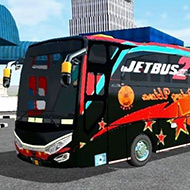
Bus Simulator Indonesia
 (Пока оценок нет)
 Loading...
Similar Games











Description
You start a shift in Bus Simulator Indonesia with an empty route sheet, a bus parked at the depot, and a fare meter sitting at zero. Nobody’s waiting at the first stop yet. The engine’s idling, the mirrors need adjusting, and the only thing standing between you and a finished route is however many stops and turns lie between here and the terminus.
| Genre | Public-transit driving simulation |
| Platform | Browser and mobile |
| Core loop | Pick up passengers, follow the route, park clean |
| Bus roster | 16 unique coaches |
| Game modes | Career, open drive, parking challenge, time trial |
Getting a Feel for the Cab in Bus Simulator Indonesia
The controls take longer to settle into than the genre usually admits. Movement runs on standard keys, but the camera switch and the separate vehicle-entry command decide whether a session feels natural. New players forget the vehicle-mode input and spend their first minutes wondering why the horn and indicators aren’t responding, before realizing the bus was never properly entered.
Once the cab settles in, the bus in Bus Simulator Indonesia handles with a weight that punishes late braking. A coach carrying a full load doesn’t stop like an empty one, and the game tracks that difference in how far you drift past a stop line. Career-focused drivers learn to start braking earlier the moment the passenger count climbs, since a late stop costs them a time penalty they can’t afford.
Night driving changes the calculation again. Headlights illuminate a shorter stretch of road than daylight allows, forcing a reaction to a turn or a pedestrian crossing with less warning than at noon. It’s a deliberate difficulty layer, not a cosmetic one.
Reading Passengers and the Fare Loop
Passenger pickup is timed, not instant — pull up short of the marked stop and a waiting rider won’t board, which quietly fails a route with no obvious warning until the fare total comes up short. Time penalties stack from small mistakes rather than big crashes; missing a stop or overshooting a curb costs more than one rough turn ever does. Fuel management sits in the background of every route, and letting the tank run close to empty on a mountain stretch turns a shift into a slow crawl toward the depot.
Weather layers on top of all three. Rain cuts visibility and stretches braking distance while fuel and timing already compete for attention, and a snow route through the mountains combines every pressure into one stretch of road. Parking accuracy matters too, and players drawn to the parking challenge mode chase that marked-line grade obsessively, one stop at a time.
Career progression ties this together by unlocking new coaches as routes are completed cleanly, not just finished. A driver who clips curbs and misses stops can reach the terminus every time and still find the roster locked far longer than one who drives slower but cleaner.
When the Mountain Roads and Snow Routes Turn Ugly
The desert and mountain routes are where Bus Simulator Indonesia stops feeling like a city job. Switchbacks narrow enough that a coach’s turning radius becomes the actual obstacle, and a bus that handled city intersections fine will clip a guardrail on its first tight hairpin. Desert stretches trade that for long, featureless straightaways where fuel and heat pressure build slowly instead of all at once.
Community discussion tends to circle the same complaint: collision detection on tight mountain shoulders can feel inconsistent, occasionally registering a clip that looked clean or missing one that looked bad. It’s a fair criticism, and cautious open-drive explorers tend to slow down on switchbacks far more than strictly required, just to stay on the safe side of it.
What you notice only after real time on these routes is the creak-and-settle sound the suspension makes when a loaded coach crests a mountain rise, right before the road drops into the next switchback. It’s a small detail, but a recognizable cue for players who react before the turn is even visible.
Does Bus Simulator Indonesia Include a Walking Mode?
Yes — players can step out of the cab and walk around depots and terminals rather than staying locked to the driver’s seat between routes.
What’s the Difference Between Career Mode and Open Drive?
Career mode ties route completion to unlocking new buses and progressing a driving career, while open drive removes objectives entirely and lets you explore any region without a fare timer running.
Why Do the Buses Handle Differently at Night?
Reduced headlight range and low-visibility rural stretches force earlier braking and slower cornering, which is a deliberate difficulty layer rather than a bug.
Bus Simulator Indonesia earns its keep through small, compounding details rather than one flashy system. It’s the way a coach settles after a switchback, or a missed pickup at one stop quietly costs you before the route even ends.