





Geometry Dash Scratch
 (Пока оценок нет)
 Loading...
Similar Games





Description
What happens when you hold the jump key through three spikes instead of tapping each one, in Geometry Dash Scratch? The cube clips the second spike and the run ends before the beat changes. That habit is the fastest way new players lose a run in ten seconds.
Reading the First Jump in Geometry Dash Scratch
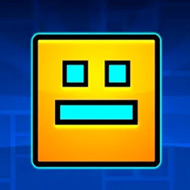
Every run starts in cube form, and the first ten seconds set the habit that decides the game. A tap sends the cube into one clean arc over a spike; holding the key chains jumps together, which overshoots once a spike sits right after another. New players hold through nervousness and clip obstacles a tap would clear.
Obstacles stay simple but combine fast:
- Spikes, single-hit hazards that end a run on contact
- Saw blades, which punish careless holds
- Jump pads, which override timing and launch the cube regardless of input
- Rings, which grant a mid-air jump inside a narrow window
Cube and Ship Controls in Geometry Dash Scratch
Controls stay simple: arrow keys, space bar, or a mouse click trigger a jump. Cube form treats input as a discrete arc, one tap equals one jump no matter how long held.
Ship mode flips that logic: holding lifts, releasing drops, with no arc to fall back on. Beginners carry cube habits into the ship section and tap instead of hold, clipping a spike.
Memorizing the Pattern Before You Beat It
Like the genre it recreates, this build treats death as an instant restart, so beating a level means memorizing its pattern one attempt at a time. A stretch that plays clean in fifteen seconds can take far longer to learn, since a mistake sends the run to the first jump.
That loop is what regulars mean by muscle memory carrying a run — hands hit the jump key on rhythm before eyes register the next spike. It filters casual players from ones who keep a level open all week.
Rhythm, Spikes, and the Sound Every Regular Recognizes
The geometry is built to the music, not laid over it, and that sync is only noticeable from playing rather than watching a clip. Once the ship section appears, the track shifts register the exact frame the terrain opens, and regulars talk about feeling the next spike cluster a half-second early.
A player chasing a clean run cares about that sync most; a player just trying to finish tunes the music out and leans on pattern memory. Both approaches work but produce different runs of one level.
Questions Players Ask About Geometry Dash Scratch
- Is the build the same every time you load it? As a community remix, you get whatever version the creator last published.
- Why does ship mode feel harder than cube mode? Ship swaps discrete arcs for continuous lift, so small timing errors turn into flight-path drift.
- Why does the cube die on a landing that looks clean? Hitbox forgiveness is tighter than the sprite outline, so it can still clip a spike’s corner.
Geometry Dash Scratch strips the genre to its core loop of cube, ship, and spikes set against a soundtrack that never stops. Every restart is a small bet that this attempt is the one where the timing finally sticks.