









Omori
 (Пока оценок нет)
 Loading...
Similar Games








Description
You open a bedroom door that has been shut for a long time, and the hallway on the other side isn’t the hallway you remember. In Omori, that gap between ordinary and wrong is the entire pitch: a quiet teenager named Sunny hasn’t left his house in years, and stepping into his dream world means carrying two versions of the same story at once, one soft and colorful, one considerably heavier.
| Genre | Turn-based RPG with psychological horror elements |
| Platform | Browser |
| Core Mechanic | EMOTION-based turn combat layered over dual dream and reality exploration |
| Playable Party | Omori, Kel, Aubrey, and Hero |
| Typical First Playthrough | Roughly 15 to 20 hours |
What Omori Actually Asks You To Feel
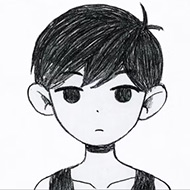
Omori splits its world into Faraway Town, the sleepy neighborhood where Sunny’s childhood friends still wait around for him, and Headspace, the dream layer where those same friends turn into brighter, sillier versions of themselves. Kel is louder in Headspace, Aubrey is gentler, and Sunny’s dream self stands in for him as a near-silent figure exploring rooms that shift shape whenever the story needs them to. The split isn’t just cosmetic; it’s the mechanism the whole game runs on, because what happens in one layer keeps leaking into the other.
Most of the plot’s forward motion comes from the search for Basil, a friend who vanished, and the party’s excuse to go looking for him doubles as an excuse for the dream world to keep testing what Sunny is willing to remember. Early hours lean cute and low-stakes on purpose, full of joke enemies and soft music, so the tonal shift when Headspace stops cooperating lands harder.
None of this needs graphic description to work, and the game mostly agrees with that instinct. Grief, isolation, and guilt sit under the character designs rather than being spelled out in cutscenes, which is part of why players recommend going in with patience rather than expecting a straightforward horror pacing curve from minute one.
Reading the Room: Happy, Sad, and Angry in Omori
Every character in a fight, yours or the enemy’s, sits in one of three core emotional states, and those states beat each other the way a hand game does: Happy wins out over Angry, Angry overwhelms Sad, and Sad quietly undoes Happy. Ignore this and Omori plays like a slower, less forgiving JRPG. Manage it and even rough fights start to open up.
- Happy raises Speed so a character acts sooner, but it also lowers Defense, which punishes anyone standing in front of a hard-hitting enemy.
- Angry increases Attack, favoring stab-focused skills, at the cost of Defense dropping in longer fights.
- Sad cuts Attack but adds a heavy Defense boost, which is why Hero usually ends up wearing it against tougher bosses.
Enemies carry these same states, so reading an opponent’s current emotion before committing to a skill matters more than raw damage output does in most encounters. A boss sitting in Happy is one bad guess away from a punishing counter, while the same boss in Sad can shrug off attacks that would otherwise chip it down fast.
Skills that flip an emotion outright often do more work than raw damage skills once the triangle clicks, and regular players will say ignoring emotions is the biggest reason a run feels unfairly hard. It’s a small adjustment in thinking that changes how every fight from that point forward gets approached.
Follow-Up Chains and the Energy Bar Most Players Ignore
Basic attacks in Omori feed an Energy meter, and once it’s charged, the game offers a Follow-Up prompt right after the hit connects. New players tend to skip these because the window is short and the game never forces you to engage with it, but Follow-Ups are where emotion manipulation, bonus damage, and party healing all live.
- Land a basic attack with any party member to add to the shared Energy meter.
- Watch for the Follow-Up prompt that appears immediately after the hit resolves.
- Pick a Follow-Up that shifts an emotion, extends the combo, or restores health, depending on how much Energy is banked.
Ignoring Follow-Ups doesn’t break Omori, but fights get slower and shakier than needed, since a full meter wasted on a weak enemy is Energy a tougher fight later could have used. Timing it around whichever enemy is closest to a status swap pays off most.
By the time a player reaches one of the game’s Phobia encounters, skipping Follow-Ups usually means eating an Afraid status that locks skills entirely and leaves the party swinging basic attacks until it wears off. Learning the rhythm before that point saves a lot of frustration later.
Where New Players Misjudge Basil’s Trail
A common early mistake is treating Headspace like a normal RPG map to be cleared as fast as possible. Basil’s disappearance is the excuse for exploration, and skipping the optional conversations in Faraway Town, the phone calls, the visits to friends’ houses, means missing the texture that makes the eventual reveal land instead of just registering as a plot beat.
The same rushing habit shows up in combat. Players who mash the same attack every turn regardless of emotion state tend to hit a wall the moment a boss stops being a pushover, then assume the fight is unfair rather than under-prepared for.
It’s a fair complaint from newcomers that the game doesn’t explain any of this directly. Omori trusts players to notice emotion icons and Follow-Up prompts on their own, and that hands-off design is exactly the kind of thing regular players bring up when a friend asks for tips.
The Sweetheart Wall and Other Difficulty Spikes
Difficulty in Omori isn’t a straight line. Faraway Town’s early fights are closer to tutorials, and then the dream world introduces Sweetheart, a boss that punishes players for not managing emotions and status effects the way earlier fights let them get away with. Sweetheart is usually the first fight where a party that’s been coasting has to actually plan turns.
Past the main story, there’s postgame content for players who want something harder, and it gets considerably tougher than the critical path. Most players never touch it, which is fine, since Omori is built to be finished without it.
One thing regularly comes up in player discussion: the fishing minigame tucked into one of the dream world areas. Some players enjoy it as a change of pace; plenty of others call it the one stretch of Omori that overstays its welcome. It’s a small, honest crack in an otherwise tightly paced game.
Deeper Well, White Space, and the Places Players Talk About
By the time a player reaches the Deeper Well, Omori has usually shifted its tone again, trading Faraway Town’s warmth for something colder and more maze-like. It’s one of the areas players bring up most when describing how the game’s atmosphere changes without ever announcing that it’s changing.
White Space, Omori’s own personal blank room, works as the opposite pole: nothing there but a bed, a sketchbook, and whatever the player chooses to interact with. Longtime players describe it less as a level and more as a mood the whole game keeps circling back to.
Community vocabulary around Omori leans heavily on route talk, since a first playthrough and a run aimed at the true ending can look and feel like different games depending on the choices made along the way. That replay incentive is a big part of why the game still gets discussed well after a single ending.
Is Omori scary for the entire game?
Not consistently. Early hours lean gentle and even comedic, and the tone gets heavier the deeper the story goes, so the horror elements build rather than sit at one intensity throughout.
How long does a first playthrough of Omori take?
Most players land somewhere around 15 to 20 hours for a single ending, with a true ending run typically requiring a second pass through parts of the story.
Do I need any prior context to start Omori?
No, though it helps to know going in that the game deals with grief and isolation under a soft art style, so pacing yourself through the heavier stretches is a reasonable approach.
What keeps players returning to Omori isn’t the fights so much as the details that click into place days later, a line Basil says that reads differently once his silence makes sense, or the moment White Space stops feeling like a blank page and starts feeling like a room you’re locked inside. Whichever ending a playthrough lands on, it earns that ending by making you sit with Sunny’s choices instead of just watching them happen.