








Family Secrets 1: Empty Plate
 (Пока оценок нет)
 Loading...
Similar Games







Description
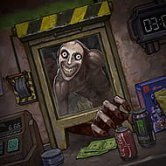
What happens when the flashlight beam in Family Secrets 1: Empty Plate starts flickering with no switch touched and no obvious cause? That single moment sets the tone for the rest of the game, a retro, low-poly horror title built around walking through a cramped, dimly lit house and deciding whether a given room is safe to linger in.
Rooms That Repeat Themselves in Family Secrets 1: Empty Plate
The house doesn’t announce its layout up front. Hallways loop back on themselves enough that new players lose track of which door leads where, and the chunky, dithered textures common to this visual style make different rooms feel more alike than they are.
Players used to cleaner, modern 3D horror often misjudge distances here, since the low-poly geometry hides detail a sharper engine would show clearly.
Slower players who actually look at each room’s furniture navigate better than players sprinting through on instinct, since small visual differences are usually the only landmarks available.
Reading Static Instead of Trusting the Beam
- Watching for flicker patterns before entering a new room
- Listening for shifts in ambient static near doorways
- Treating a sudden quiet room as a warning rather than relief
The flashlight is the main tool for reading a room, but it’s unreliable, prone to dimming at moments that feel too convenient to be accidental. That’s one of the more divisive parts of the design — some find it builds dread, others find the light cutting out more frustrating than scary.
Newer players tend to treat the beam as a guarantee of safety, checking a room once and moving on, while cautious players re-check corners before crossing.
The static itself is worth trusting more than the light.
Why the Table Setting Never Looks the Same Twice
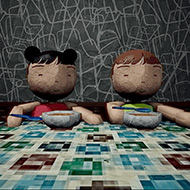
A dining table with an untouched place setting recurs enough through the house that it starts to feel less like set dressing and more like a marker of progress, even without any explicit label saying so.
This is the detail most worth mentioning to anyone about to start: the empty plate motif that gives the game its subtitle shows up in more than one room, easy to walk past the first time without registering why it matters.
Players wondering what the actual objective is in a slow interior horror game like this are usually looking for exactly this kind of environmental cue rather than a marked quest list, since the house does most of the storytelling.
Doors in Family Secrets 1: Empty Plate That Only Open One Direction
Not every door behaves the way a player expects. Some open without resistance, some resist until a specific room has been checked, and a few don’t open again once passed through, forcing a level of commitment new players don’t anticipate.
Players wondering why they can’t backtrack through an already-cleared route are running into this same choice, and it’s a fair frustration players raise, since nothing signals a one-way door beforehand.
Once a player learns to treat every doorway as a decision, movement through the house slows considerably, which is exactly the pacing shift this kind of game is going for.
How long does a typical run through this kind of house take?
A slow-paced interior horror game built around a single house layout typically plays out over a short session, closer to a handful of explored rooms than a long campaign.
Is there a specific ending to reach in Family Secrets 1: Empty Plate?
The house points toward a clear endpoint, generally reached once the recurring table and its place setting have been encountered enough times to complete whatever pattern the rooms build toward.
What should a new player do if the flashlight cuts out completely?
Standing still and listening rather than continuing to move blind is usually the safer instinct, since the sound design signals more about a room’s state than blind movement would reveal.
Family Secrets 1: Empty Plate doesn’t rely on much beyond a flickering light, a looping house, and that recurring untouched place setting, but those few elements make the slow walk through it stick with players longer than the runtime would suggest.