










Fortune Mill
 (Пока оценок нет)
 Loading...
Similar Games







Description
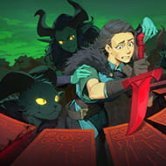
What happens when six battlers are swinging, casting, and dying on the same screen faster than you can track any single one of them? That’s the question Fortune Mill answers almost immediately, dropping you into a bullet-heaven auto-battler where your job is less about landing individual hits and more about building a team that survives the chaos on its own.
| Genre | Idle, Survival |
| Style | Auto-Battler, Roguelite |
| Mode | Single Player |
Fully Auto, All Manual, or Somewhere Between
Fortune Mill doesn’t force one control style on you. You can let a run play out fully automatically, take direct manual control of your battlers, or split the difference and only step in when a fight goes sideways. That flexibility changes how the whole game feels — players who want a background idle loop and players who want tighter moment-to-moment control are both accommodated by the same core systems.
Early runs are forgiving enough that either approach works fine. It’s once the screen starts filling with hundreds of enemies at once that the difference between watching passively and nudging your team’s positioning becomes obvious.
Meteor, Cataclysm, and the Abilities Filling the Screen
The ability list is where Fortune Mill’s identity really shows. Skills like Meteor, Cataclysm, Blaze, Bolt, Beamfire, Poison Ball, Ice Ball, and Flamethrower stack across your six battlers, and watching the screen fill with over a thousand simultaneous effects during a chaotic stretch is exactly the spectacle the genre is known for among players who use the term “bullet heaven” to describe it.
Saw and Flamethrower in particular reward thinking about spacing rather than raw damage, since overlapping instances of either can waste their own coverage if your battlers cluster together carelessly. Beginners tend to ignore positioning entirely at first, assuming the auto-battling handles everything, and that assumption breaks down once enemy density outpaces what a handful of overlapping abilities can clear.
Walking the Thousand-Node Passive Tree
Progress between runs feeds into a passive tree with more than a thousand nodes, and it’s genuinely one of the more overwhelming systems in the game the first time you open it. New players commonly admit to picking nodes almost at random early on, which is a fair criticism — the tree rewards planning a route toward a specific build far more than it rewards clicking whatever’s nearest.
By the time you’ve run through several attempts, the passive tree stops feeling like a maze and starts feeling like the actual game underneath the game — the part that determines whether your next six battlers survive twice as long as the last group did.
Crafting Gear Between Runs in Fortune Mill
Loot collected during a run feeds a crafting system used to build gear for your battlers before the next attempt. With more than fifty items available, gearing choices compound with passive tree choices rather than replacing them, so a run that felt weak with one loadout can feel completely different once better gear closes the gap.
Picking Ability Rewards After Every Boss
Beating a boss doesn’t just clear a stage — it opens a choice between ability-altering rewards that reshape how your existing skills behave for the rest of that run. This is where individual runs start diverging from each other even when you start with the same six battlers and the same opening abilities.
- Clear the enemies leading up to a boss encounter
- Defeat the boss itself once your battlers are positioned well
- Choose one of the ability-altering rewards on offer
- Carry that altered ability into the next stretch of the run
Why the Ninety Percent Crit Cap Matters
Critical hit chance in Fortune Mill is capped at ninety percent rather than allowing a build to reach guaranteed crits, which keeps even a heavily optimized team facing a small amount of unpredictability. It’s a small number, but it’s the kind of detail min-max players notice and discuss immediately, since it closes off a certain style of build that would otherwise dominate every run.
Where Fortune Mill Actually Gets Harder
Difficulty in Fortune Mill isn’t about a single spike — it’s the gradual layering of more enemies, denser ability effects, and tighter timing around boss reward choices. Once you’re managing forty or more abilities firing simultaneously across six battlers, the challenge shifts from “can you clear the stage” to “can you read what’s happening on screen fast enough to intervene when it matters.”
How many classes and abilities does Fortune Mill have?
The game supports up to six battlers on a team at once, drawn from a roster of playable classes, with more than forty abilities available to mix across a run — including named skills like Meteor, Cataclysm, and Beamfire.
What happens after you defeat a boss?
Beating a boss opens a choice between ability-altering rewards that modify how your existing skills function, letting each run diverge meaningfully even from an identical starting team.
Is Fortune Mill idle or does it need manual input?
Both approaches work. You can run it fully automatically, take manual control of your battlers, or mix the two, which is why it appeals equally to players who want a background loop and players who want direct control over positioning.
Fortune Mill earns its chaos honestly — between the thousand-node passive tree, the crafted gear, and abilities like Cataclysm and Ice Ball overlapping across six battlers at once, it’s a game that keeps handing you more systems to master long after the first run ends.