







Librarian: Tidy Up The Arcane Library!
 (Пока оценок нет)
 Loading...
Similar Games







Description
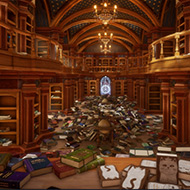
You drag a magnifying glass across a dust-covered study in Librarian: Tidy Up The Arcane Library! and the view locks on a shape half-hidden under a desk — and the game doesn’t tell you what it is, it hands you a pencil and waits for you to draw it yourself. That single demand, repeated across every room, is what separates this from a typical point-and-click mystery.
| Genre | Horror, Puzzle, Point-and-Click |
| Setting | Early 20th Century |
| Mode | Single Player |
A Missing Body and a Case Only a Sketchbook Can Solve
The case underneath Librarian: Tidy Up The Arcane Library! centers on Richard Green, a veteran, husband, and father whose body has gone missing under circumstances nobody in the household will explain. You play an unnamed investigator working through his study, and the deeper you dig, the clearer it becomes this was never a clean disappearance — his wife’s affair sits underneath almost everything you uncover.
Richard’s son, Timmy, becomes the emotional center of the case rather than a background detail. References to him surface in diary fragments long before the game explains how deeply the family’s collapse affected him.
Early rooms keep the horror understated — dim lighting, an uneasy quiet, nothing overtly supernatural yet. That restraint is deliberate, since the game is building toward a late reveal rather than spending its opening minutes on shock value.
Drawing the Evidence Instead of Just Finding It
Most detective games let you click an object and move on. Librarian: Tidy Up The Arcane Library! stops you there and asks you to physically recreate what you found — a discarded object’s position, the shape of a mark, an outline left behind. Getting it roughly right matters more than getting it artistically right, but the game genuinely checks the sketch before letting the scene continue.
The loop that repeats through most rooms breaks down into a small, consistent sequence:
- Sweep the magnifying glass across the scene until something catches
- Zoom in to study the detail closely before committing to anything
- Sketch the object’s shape or position using the pencil tool
- Let the sketchbook confirm the drawing before the next clue unlocks
Evidence varies scene to scene rather than repeating one prop, and it falls into a few recurring types:
- Weapons, like a gun left where it shouldn’t be
- Restraints, such as a length of rope discarded mid-room
- Other strange objects placed in a deliberately wrong way
Timmy, the Notes, and the Words You Have to Supply Yourself
Alongside the drawing puzzles, Librarian: Tidy Up The Arcane Library! leans on incomplete text — suicide notes and diary entries missing key words you fill in from context gathered elsewhere. It’s quieter than the sketching, but it’s where most of the story about Richard, his wife, and Timmy gets delivered.
Players moving too quickly through the sketching puzzles often miss smaller textual clues nearby, then find the fill-in-the-blank notes harder than they should be. Slowing down at each scene pays off here.
Where Librarian: Tidy Up The Arcane Library! Gets Fussy About Your Drawing
Not everything about the sketch recognition is smooth, and it’s worth saying so. Some drawings that look correct still get rejected, and a handful of players report input lag making precise shapes harder to land. Redrawing the same rope a second time is a common frustration.
The Twist Librarian: Tidy Up The Arcane Library! Doesn’t Warn You About
What keeps people talking about this one afterward isn’t the drawing mechanic but the late plot twist tied to Richard’s disappearance, which recontextualizes nearly everything gathered from Timmy’s notes and the fragmented conversations. It lands hard because the earlier scenes play it so straight.
How long does it take to finish Librarian: Tidy Up The Arcane Library!?
A single playthrough runs short, usually somewhere between five and ten minutes for players moving efficiently through the sketching and note puzzles, though careful players who read every fragment closely often take longer.
What exactly do you draw in the game?
You sketch the physical evidence found while investigating Richard Green’s disappearance — objects like guns and rope left in the house, along with other strange items whose position or shape has to be recreated by hand before the case can move forward.
Is there a twist ending?
Yes, and it’s the detail most players bring up first. The reveal reframes the family tragedy involving Richard, his wife, and Timmy in a way the earlier notes and diary fragments only hint at.
Librarian: Tidy Up The Arcane Library! turns a short investigation into a memory you have to physically reconstruct, and it’s the act of drawing Richard Green’s last hours by hand, rope and all, that makes the eventual twist land.