



Animal Hospital Anomaly

 (2 оценок, среднее: 4.00 из 5)
 Loading...
Similar Games




Description
Animal Hospital Anomaly looks like a cozy veterinary sim built for younger players, but it plays like a co-op survival horror game where letting the wrong patient through your window can end the shift for everyone. That contrast is exactly why it exploded on Roblox this year.
The Reception Window and the Three-Step Screening Process
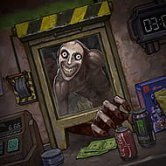
Every shift puts you behind the check-in window of a night clinic, where patients approach one at a time and you have to decide whether to let them in. The game never tells you outright who’s safe, so screening relies on three separate sources: direct appearance through the window, a developing Polaroid photo, and a CCTV feed covering the lobby.
Skipping any one of those checks is the fastest way to let something dangerous slip past you, and the game leans on that redundancy instead of a single obvious tell.
Newer players tend to rely too heavily on appearance alone early on, since it’s the fastest check, and that habit is usually what gets a first shift cut short.
Skinwalker and the Anomalies That Look Perfectly Normal
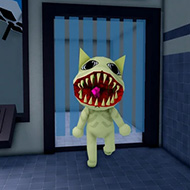
Skinwalker is the most dangerous anomaly type in Animal Hospital Anomaly precisely because it gives nothing away at the window or in the photo. The only reliable tell shows up on the lobby camera feed, where sharp teeth and bloody eyes briefly become visible — a detail players only catch once they know to expect it.
Other anomaly types are easier to spot once you know the patterns, such as poorly drawn-on eyes visible through the window or a fuzzy, distorted photo that develops incorrectly. Community trackers currently place the number of confirmed anomaly types at around a dozen or more, and that number keeps growing as the developers add content.
Learning these tells is less about memorization and more about pattern recognition built up over repeated shifts, which is part of why veteran players can screen patients far faster than someone on their first run.
Bed Monster, Stalker, and Threats That Skip the Window
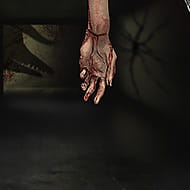
Not every threat in Animal Hospital Anomaly comes through the check-in process. Bed Monster hides beneath hospital beds and gives itself away through long black arms reaching out from underneath — the fix is oddly specific, since offering it Maple Syrup is what gets rid of it.
Stalker takes a different approach entirely, appearing as a fully black silhouette that lurks in peripheral vision rather than confronting players directly. Both threats force you to divide attention between the reception window and the rest of the clinic, which is where most of the game’s tension actually comes from.
Horror-genre veterans often point out that these roaming threats do more to build dread than the anomaly screening itself, since they turn every hallway into a potential risk even during a quiet shift.
Sanity as the Real Countdown in Animal Hospital Anomaly
Sanity functions as the clinic’s hidden failure condition. Looking directly at certain anomaly photos, encountering roaming threats, or making repeated screening mistakes all chip away at it, and once it bottoms out the consequences cascade quickly.
This turns Animal Hospital Anomaly into more of a resource-management horror game than a pure reflex test, since managing sanity means occasionally accepting a slower, more cautious screening pace even when patients are stacking up at the window.
Completionist-minded players tend to treat sanity management as its own skill to optimize, separate from simply learning anomaly tells.
Shift Structure and How Difficulty Escalates
Each shift generates a random number of patients, with an unknown portion turning out to be anomalies, so no two shifts play out identically even once you’ve learned every tell in the game. Later shifts increase the volume of patients arriving at the window, compressing the time available for a full three-step check.
Once roaming events start layering on top of a busy check-in line, the difficulty spike becomes noticeable, and it’s usually where new players lose their first run.
By the time a shift wraps successfully, the payoff comes through hospital expansion, letting the clinic take on more patients in future runs.
Playing Solo Versus Running a Full Shift With Friends
Animal Hospital Anomaly supports up to 30 players per server, and running a shift with a coordinated group changes the experience considerably. Splitting responsibilities — one player focused on screening, others handling roaming threats — takes pressure off any single person trying to track everything at once.
Solo play is still fully viable, but it demands faster multitasking between the window and the rest of the clinic, since there’s no one else to flag a Bed Monster sighting or a Stalker in the hallway.
What the Community Still Argues About in Animal Hospital Anomaly
Even with a 95.8% positive rating across a huge player base, discussion around the game isn’t universally glowing. Some players feel the anomaly detection leans too heavily on camera-based tells that are easy to miss without prior knowledge, making early shifts feel unfair rather than genuinely challenging.
Others argue that’s exactly the point, and that the learning curve is what gives later shifts their tension once the patterns finally click.
Expanding the Clinic and Long-Term Progress
Since its release, the game developed by the Roblox group Animal Anomaly has surpassed 45.2 million visits, with a recorded peak of 135,000 concurrent players during its busiest stretch. That kind of sustained traffic has kept updates coming at a near-daily pace, expanding both the anomaly roster and the clinic itself.
Long-term players tend to treat hospital expansion as their main progression goal, since a larger clinic means more patients — and more risk — per shift.
Whether you’re relying on a coordinated team of 30 or working the window alone, Animal Hospital Anomaly keeps its tension rooted in the same idea: the difference between a normal patient and a Skinwalker is never as obvious as it should be, and that uncertainty is what keeps players coming back for another shift.