








Tag
 (Пока оценок нет)
 Loading...
Similar Games




Description
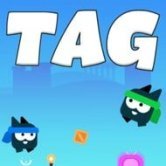
In Tag you start as either the chaser or the runner, marked by a small arrow above your head, and that single visual cue is the entire premise: whoever has the arrow is “it,” and the moment they touch someone else, the arrow — and the pressure — instantly switches.
The Core Chase Mechanic Behind Tag
Tag supports two to four players on a single screen, which immediately sets it apart from most browser games built around solo high scores. There’s no separate scoring system beyond the timer itself; the entire objective is to avoid being the one holding the arrow when time runs out. That simplicity is deliberate, and it’s what makes the game work as a genuine party experience rather than something you’d sit down and grind alone.
Once the round starts, whoever is “it” has to physically touch another player to pass the role along. The instant that happens, the chaser becomes the runner and the former runner becomes the one under pressure, with everyone else immediately adjusting their movement to avoid becoming the new target. This role reversal happens without any pause or cooldown, so a single tag can flip the entire dynamic of a match in a split second.
Because the arrow is the only real information the game gives you, reading player movement becomes the whole skill. Watching where opponents are heading, rather than just where they currently are, is what separates players who consistently avoid getting tagged from those who get caught in the last few seconds of a round.
Map Variety and Why It Changes Tag’s Pace
Different maps introduce different tools for escaping or catching opponents, most notably bounce pads and teleporters that can completely reverse a chase in an instant. A cornered runner who finds a bounce pad at the right moment can suddenly be halfway across the map, while a chaser who anticipates that escape route can cut it off before it happens. Learning each map’s specific escape routes is a meaningful part of getting good at the game, since a map with a central teleporter plays very differently from one built around open platforming.
- Sudden direction changes force the chaser to react rather than predict, which is often more effective than pure speed.
- Bounce pads reward players who memorize their exact placement rather than stumbling onto them mid-chase.
- Keeping awareness of all players at once, not just the current chaser, prevents accidentally running toward danger.
Group players tend to fall into a few recognizable roles during a session. Some players default to defensive play, sticking near escape routes and rarely taking risks, while others chase aggressively even when they’re not “it,” trying to bait the current chaser into a bad position. Both approaches work, and the back-and-forth between them is usually where the funniest and most chaotic moments of a match happen.
Local Multiplayer as Tag’s Defining Feature
Tag was built specifically for shared-screen play, and that local multiplayer focus, rather than online matchmaking, shapes almost every design decision in the game. Four players crowding around one keyboard changes the energy of a round in a way that solo browser games simply can’t replicate — there’s shouting, blame, and immediate visible reactions from the people sitting next to you when the arrow lands on their head.
One aspect players occasionally debate is balance in four-player matches, where the chaser can sometimes struggle to close distance on multiple runners spread across a large map. It’s a fair criticism, and the game leans into short round timers partly to compensate, since even an inefficient chaser still has a decent chance of tagging someone before the clock runs out.
Frequently Asked Questions
Can Tag be played with only two people?
Yes, the game supports anywhere from two to four players on the same device, and a two-player match tends to be far more intense since there’s nowhere to hide the chase behind other targets.
What happens when the timer runs out while someone is still “it”?
Whoever is holding the arrow when the round timer hits zero loses that round outright, which is why runners often play more cautiously in the final seconds rather than taking risky shortcuts.
Do all maps in Tag include bounce pads and teleporters?
No, map layouts vary, and some rely purely on platforming and open space rather than special traversal tools, which changes the pacing significantly between a teleporter-heavy map and a straightforward one.
Tag doesn’t need complicated systems to stay fun; the arrow above someone’s head, a ticking timer, and a handful of players crowded around a shared keyboard are enough to produce genuinely memorable chaos. Once that arrow lands on you with five seconds left on the clock, you understand exactly why this simple format has stuck around.