








VHOLUME
 (Пока оценок нет)
 Loading...
Similar Games




Description
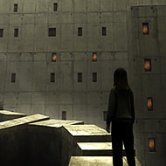
Robert’s bureaucratic errand in VHOLUME does not work the way a normal fetch quest would — what starts as restoring his family’s annulled food stamps turns into a full-speed sprint across a decaying brutalist city, and the paperwork is almost beside the point.
| Genre | First-person parkour |
| Protagonist | Robert |
| Setting | Derelict capital of Afro-Eurasia |
| Modes | Singleplayer campaign, multiplayer, Steam Workshop levels |
Momentum, Sliding, and the Ministry’s Bureaucrats
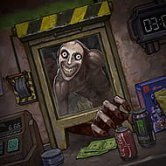
Every level in VHOLUME is built around chaining jumps, wall-runs, climbs, and slides into one continuous flow, and the game’s checkpoints aren’t simple flashing lines — they’re clay-faced bureaucrats you have to visit in sequence, each demanding invisible paperwork before letting Robert continue toward the next stretch of the Ministry-controlled city. New players consistently slow down to admire these checkpoint characters on a first run, but speed is genuinely everything here, and the fastest players barely register them as anything more than a waypoint to slide past.
Crouch Hopping and Momentum Tech Players Discovered
One piece of movement tech the game never explains outright is the crouch hop, a technique players figured out largely by accident that lets skilled runners chain slides together in a way that visually resembles constant sliding animation rather than discrete jumps. Watching a ghost of another player’s run zooming through a level using this technique is often how newer players first realize the mechanic exists at all, since VHOLUME leans on player discovery rather than an in-game tutorial for its deeper movement tricks.
- Speedrun-obsessed players chase leaderboard placement on the game’s rotating weekly level.
- Casual explorers enjoy simply wall-running through the brutalist city without chasing a specific time.
- Community level builders use the Steam Workshop integration to design and share entirely new routes for others to master.
The Kreedz Level and Its Divisive Reputation
Few pieces of content in VHOLUME generate as much debate as the Kreedz level, a B-side stage that forces players to engage with the movement system in a completely different way than the main campaign. Some players call it deliberately frustrating and poorly designed, while others — often after enough repeated attempts to master its unusual demands — count it among their favorite levels in the entire game once the unconventional flow finally clicks. That split shows up constantly in community discussion, and it’s one of the more honest disagreements players have about the game’s harder content.
What is crouch hopping and how do you perform it?
Crouch hopping is an undocumented movement technique that lets skilled players chain slides in rapid succession, creating the appearance of a constant sliding animation rather than separate jumps, and it’s typically discovered by players experimenting with slide timing rather than through any in-game explanation.
Is multiplayer required to experience the full game?
No — the singleplayer campaign following Robert’s bureaucratic mission is fully playable alone, though multiplayer lets friends tackle the same levels together and compare ghost runs for a more competitive layer.
Why is the Kreedz level so controversial among players?
It demands a different engagement with the movement system than the rest of the campaign, which some players find artificially frustrating while others, once they adjust, consider it one of the most rewarding levels once mastered.
VHOLUME turns a joke of a premise — restoring annulled food stamps — into one of the more satisfying movement-focused games around, and once Robert is bunny-hopping past a bureaucrat’s desk mid-slide without breaking momentum, the paperwork stops mattering at all.