









Therapy with Dr. Albert Krueger
 (Пока оценок нет)
 Loading...
Similar Games


Description
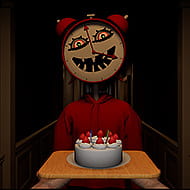
You wake up in an office you don’t remember entering, across from a smiling man who insists you signed up for this, and Therapy with Dr. Albert Krueger spends the next stretch of dialogue making sure you’re never quite sure whether to trust him.
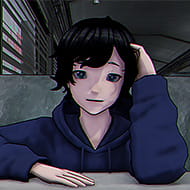
This short horror visual novel puts you in the role of Taylor Lee, a university student pulled into an unwanted “Dream Therapy” session run by the ever-polite, ever-unsettling Dr. Albert Krueger. It shares a universe with the same developer’s Vincent: The Secret of Myers, and longtime fans of that game will recognize a few connective threads once Albert’s sketches come into play.
Albert’s Dream Therapy Sessions
The game structures itself around a handful of mini-games disguised as therapy exercises — a Math and Cups & Balls section, a segment called Gateway to Your Heart, and a Rorschach inkblot test that quietly tracks whether you flip any of the cards. None of these are difficult in a traditional sense, but how you handle them determines which of the game’s three endings you land on, and the game never explicitly tells you that your choices are being scored.
Reaching the Good Ending
Getting the best ending requires answering everything correctly and staying as obedient as possible: perfect scores on the Math and Cups & Balls section, never opening your eyes during Gateway to Your Heart, and never flipping a single inkblot during the Rorschach test. Community walkthroughs are blunt about the order to attempt endings in — most players naturally land the common, worse ending first, since it only takes one wrong answer or one moment of curiosity to trigger it.
Affably Evil: the tone Albert maintains for almost the entire runtime, staying charming and polite even as Taylor argues with or defies him, which is precisely what makes his rare slips into genuine anger land so hard.
Albert’s surname is a deliberate nod to a certain dream-invading horror icon, and once you notice the reference, several of his lines about controlling the environment start reading very differently. There’s no save option on a first playthrough, and losing that safety net is clearly intentional — it forces the horror elements, including the game’s messing with sound volume, to feel more consequential than they would with an easy retry available.
Do choices in the therapy sections actually affect the ending?
Yes — the Math and Cups & Balls accuracy, whether you keep your eyes shut during Gateway to Your Heart, and whether you flip any Rorschach cards all combine to determine which of the three endings you receive.
Why doesn’t the game let you save on the first playthrough?
The lack of a save option is a deliberate design choice tied to the horror pacing; a single save point only becomes available once you reach the second playthrough’s therapy section.
How does Therapy with Dr. Albert Krueger connect to Vincent: The Secret of Myers?
Both games share a universe from the same developer, and a sketch of Vincent appears among Albert’s belongings, giving attentive players a direct link between the two stories.
Therapy with Dr. Albert Krueger doesn’t need a long runtime to unsettle you — by the time the good ending reveals what Albert’s “Dream Therapy” was really doing, the game has already made you complicit in choosing obedience over curiosity.