











High School Simulator
 (1 оценок, среднее: 5.00 из 5)
 Loading...
Similar Games




Description
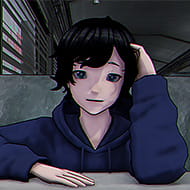
High School Simulator drops you into a sprawling campus with no objective handed to you — you can spend the whole session attending classes and joining the Light Music Club, or you can spend it running from the Police after starting a brawl outside the cafeteria. That split is the entire point of the game, and it’s why the community still argues about whether it’s a life sim or a chaos sandbox at heart.
| Developer Studio | KUMA GAMES |
| Genre | Sandbox / School Life Simulation |
| Platforms | Mobile |
| Player Character | Customizable, male or female |
Life Sim and Chaos Sim in High School Simulator
The core loop splits into two modes players talk about constantly on forums: the “Life Sim” and the “Chaos Sim.” In Life Sim mode you attend classes, keep your reputation intact, and join clubs like the Light Music Club or the Martial Arts Club to build relationships with NPCs such as Mei Yamada and Fumiko Yamamoto. Nothing forces you into either mode — the game just leaves both doors open at all times, which is unusual for a mobile title in this genre.
Newer players tend to get this wrong early: they treat the two modes as separate save files instead of a single continuous state. Reputation and relationship progress carry over even if you switch from attending class to causing trouble, so a single bad decision near the Shrine or the Pool can undo a dozen sessions of built-up goodwill with the cast.
Roleplayers in particular gravitate toward the Life Sim side, using the club system as a framework for their own stories, while players chasing chaos treat the same map as an obstacle course for outrunning NPCs.
The Police Chase Mechanic and Escalation
Once a crime is witnessed — an assault, a fight, anything a teacher or student can report — the Police mechanic kicks in. Officers spawn in growing numbers and pursue the player character relentlessly, and getting caught or defeated functions as the game’s version of a fail state. Community members often just call this “getting TC’d,” referencing the TC Police that patrol as part of the response.
By the time you reach the Town map, the chase mechanic gets a lot more room to breathe, since the Police AI has more terrain to work with than the school grounds alone. Early on, most first-time players underestimate how fast the numbers scale once a chase starts.
This is also where the game’s unpredictable physics and AI come in — players describe glitchy chase resolutions or NPCs behaving strangely as “Kuma-logic,” a term that’s become shorthand across the fandom for anything the engine does that nobody can quite explain.
Clubs, the Student Council, and Social Structure
Each of the 100-plus students in High School Simulator has an assigned ID that determines club affiliation and daily schedule, and the Student Council occupies the highest IDs in that structure, functioning as an informal law-and-order layer within the school. Joining a club like the Computer Club or the Swimming Club isn’t cosmetic — it changes who your character regularly crosses paths with during the day.
This is one part of the game that divides players. Some find the rigid schedule immersive, since it makes the school feel lived-in rather than static. Others find it repetitive once you’ve mapped out where everyone goes at every hour, and say the schedule loop is the first thing that breaks the illusion of freedom the game otherwise sells.
Fans of pure sandbox play tend to ignore club structure almost entirely and treat the cast as set dressing for their own chaos runs instead.
What do the Light Music Club and Martial Arts Club actually do in High School Simulator?
They’re two of the joinable clubs tied to specific NPC groups and locations on campus. Joining shifts which characters you’ll regularly encounter and gives you a consistent in-game reason to visit that part of the school, though neither club changes the core combat or chase mechanics.
Why do players call glitches “Kuma-logic” in High School Simulator?
It’s community shorthand for the game’s unpredictable AI and physics behavior — a reference to developer KUMA GAMES — used whenever an NPC or the Police react in a way that doesn’t match what players expect.
What happens if the Police catch you in High School Simulator?
Getting caught or defeated during a Police chase acts as the game’s fail state, since the Police represent the primary consequence system for committing crimes on campus.
High School Simulator has stuck around for years for a simple reason: it doesn’t force a genre on you. Whether you’re chasing club relationships with Mei Yamada or testing how long you can dodge the Police through the Town map, the game hands you the same open campus and lets your own choices decide which version of the story you get.