









Sabado: Day One
 (1 оценок, среднее: 5.00 из 5)
 Loading...
Similar Games


Description
What happens when the friend walking beside you through Kiwi High School stops sounding like herself halfway down the hallway? That question is basically the entire premise of Sabado: Day One, and the game spends its runtime slowly answering it in the worst possible way, one familiar room at a time.
| Genre | 3D Mystery Anime Horror |
| Platform | Windows |
| Setting | Kiwi High School |
| Core Objective | Revisit old memories while avoiding Chesa |
Returning to Kiwi High School
The opening stretch of the game plays almost like a slice-of-life piece before it turns into anything resembling horror. You walk familiar classrooms and quiet corridors inside Kiwi High School, and the pacing is deliberately unhurried, letting the nostalgia sit before anything unsettling interrupts it. Every room is dressed with small personal details — a desk still arranged the way it was left, posters half-peeled off a wall — that exist purely to make the space feel lived-in rather than staged for a scare.
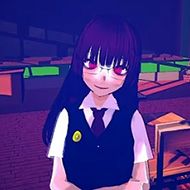
Chesa greets you early on as a cheerful, familiar face, and for a while the game plays it straight — talking, remembering shared moments, uncovering small details left behind by people who used to be there. Players exploring for the lore rather than the horror tend to linger in this stretch far longer than the game technically requires, since most of the optional dialogue with Chesa is tucked into rooms you could easily walk past. That warmth is exactly what makes the tonal shift later in Sabado land as hard as it does, because the game spends real time earning your trust in Chesa before it starts undermining it.
Early in the game the atmosphere carries more weight than any explicit threat does. Soft ambient music and empty classrooms do most of the emotional work before the mechanics of evading Chesa ever come into play, and once you reach Homeroom — one of the first rooms where her voice lines were specifically reworked in a recent patch — the shift in tone becomes noticeably harder to ignore.
Evading Chesa Once the Tone Shifts
Once Chesa stops behaving like a normal classmate, movement becomes the actual challenge. She moves slowly compared to faster horror antagonists on this platform, which players in the community have pointed out changes the tension considerably — outrunning her isn’t hard mechanically, but matching her pace without accidentally overtaking her in a narrow hallway is trickier than it sounds. Some players describe this as “pace-matching,” a term that’s started showing up in community discussion because it captures a mechanic most horror games don’t actually ask of you.
Beginners consistently get caught misjudging distance rather than misjudging speed, since Chesa’s slower movement lulls players into complacency right before a corridor narrows. Players who favor a cautious, methodical approach tend to do better here than players used to fast-reflex horror games, because Sabado rewards patience over quick reaction time in nearly every Chesa encounter.
By the time you reach the television-watching sequence, the pressure ramps up noticeably. That timed segment was adjusted from a 60-second window down to 30 seconds in a recent patch, which players who’d played the earlier version immediately noticed made that scene considerably tighter. It’s a small numeric change, but it reshapes the entire pacing of that room, since the original 60-second window gave players enough slack to glance away from the screen without consequence, and the shorter window no longer does.
Jacob, Beads, and the Details Players Debate
Jacob exists as a supporting figure whose voice work has gone through more revisions than any other part of the game so far, including one patch that pulled all of his lines out entirely to be reworked. That kind of visible iteration is part of what the small but active community around this game tracks closely between updates, treating patch notes almost like part of the narrative itself.
- Chesa’s Homeroom voice lines were specifically revised in a recent patch, and the change matters because that scene is many players’ first real signal that something about her has shifted from the earlier, friendlier introduction.
- An item originally labeled “Beed” was renamed to Beads after players flagged the inconsistency, a small fix on its own, but one the community noticed immediately because item names carry more narrative weight in a mystery-driven game like this than they would elsewhere.
- The camera has a reported stutter issue during walking sequences that several players have linked to engine-level quirks rather than anything specific to Sabado itself, and it matters because the slow, deliberate walking pace is central to how the game builds tension, so any stutter undercuts that rhythm directly.
Story-focused players tend to treat these patch-by-patch changes as genuine plot signals, cross-referencing renamed items and reworked dialogue the same way they’d analyze developer commentary in a longer game.
What Long-Time Players Say About Sabado
The strongest praise the game gets consistently centers on character design and the dreamlike visual style, with several players specifically calling out the atmosphere as the reason they kept playing despite early technical rough edges. The soft, almost hazy color palette used throughout Kiwi High School gets brought up constantly in comments, often described as feeling deliberately dreamlike rather than simply stylized.
Criticism tends to focus on pacing rather than horror execution — long pauses paired with suspense noise that doesn’t always pay off in a jump or reveal, which some players find builds dread and others find simply drags. That’s the most honestly divisive part of the current release, and it’s worth being upfront about: a fifteen-minute stretch of the game can feel considerably longer than that if the pacing isn’t landing for a particular player, and the community is split roughly down the middle on whether that slowness is intentional dread-building or an area still needing tightening.
Dream sequences: a distinct segment type where Chesa’s voice behaves differently than in the main hallway scenes, something the developers have specifically patched audio for more than once, suggesting it’s an area still being tuned. Players hunting for hidden narrative details tend to treat these dream sequences as the most information-dense part of the game, since dialogue delivered here often contradicts or complicates what Chesa says during regular hallway scenes.
What keeps players coming back between patches is watching how much changes update to update — a renamed item here, reworked voice lines there — in a game that’s still clearly being built out from its demo roots.
Sabado: Day One is still early, but Kiwi High School already does what it needs to — it makes you want to stay in a hallway with Chesa a beat longer than you probably should, right up until the television-watching sequence reminds you exactly why that’s a bad idea.