







Kobayakawa-san Is a Soulslike
 (Пока оценок нет)
 Loading...
Similar Games




Description
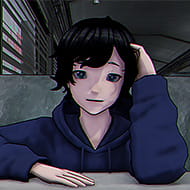
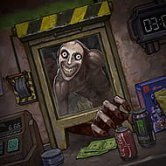
You reread her last line twice, four options blinking under the text box, and somewhere in the back of your head a clock you can’t see is already running out. Kobayakawa-san Is a Soulslike turns a few minutes of conversation with your crush into something closer to a boss encounter than a date, and the first time you guess wrong, there’s no awkward silence to recover from — just a game over screen and Kobayakawa-san’s face frozen mid-question.
| Genre | Romance visual novel framed as action-RPG combat |
| Platform | Browser and PC download |
| Average playtime | Around 5 minutes per run |
| Core mechanic | Choosing Light Attack, Heavy Attack, Parry, or Dodge instead of dialogue |
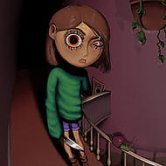
The setup is simple on paper. You spend time after class with Kobayakawa-san, and things are going fine until she learns you were seen with another girl. That’s the moment she stops being a normal love interest and becomes the Twilight Inquisitor, and every line she speaks afterward is really an attack you have to read correctly.
Reading Kobayakawa-san’s Emotional Openings
Beginners tend to treat the four commands like a slot machine, mashing whichever option feels right and hoping the odds favor them. That approach falls apart almost immediately because each of Kobayakawa-san’s questions has exactly one correct response, and the game gives no partial credit for a close guess. The trick players eventually pick up is treating her wording the way you’d read an attack animation — pausing on the specific phrasing rather than the general tone of the sentence.
Once you start noticing that jealousy-coded lines usually call for a defensive option rather than an aggressive one, the pattern starts to click. It’s less about vocabulary and more about emotional weight, which is an unusual thing to ask a player to parse in only a few seconds.
Why the Twilight Inquisitor Fight Feels Different
Players who come in expecting a light dating sim usually aren’t ready for how blunt the punishment is. There’s no health bar draining slowly here — a wrong Parry against the wrong line just ends the run outright, and you’re sent back to try the same exchange again with the memory of your mistake as your only real upgrade. That single-life structure is what earns the soulslike comparison far more than the combat vocabulary does.
It also means repetition becomes the actual content. You’ll hear Kobayakawa-san’s lines several times before you land on the right rhythm of Heavy Attack versus Dodge, and community discussion around the game leans heavily on comparing notes about which line demands which response.
The short runtime keeps this from feeling punishing in the way a longer game might; failure costs you a couple of minutes, not hours, which is part of why players keep going back for another attempt after a death.
What Speedrunners and Casual Players Notice Differently
- Casual players tend to laugh off an early death and treat each run as a fresh joke rather than a setback.
- Players chasing a clean run track the exact sequence of Light Attack, Heavy Attack, Parry, and Dodge across the whole conversation.
- Newcomers unfamiliar with the soulslike label sometimes miss that the genre reference is meant literally, not just as flavor text.
One detail that only lands once you’ve actually played it is how the game holds a beat of silence right before Kobayakawa-san’s tone shifts, a small pause that experienced players learn to treat as their real warning sign rather than the text itself.
How long does it take to beat Kobayakawa-san Is a Soulslike?
A single successful playthrough runs about five minutes, though most players spend considerably longer than that once failed attempts and replays are counted. The short length is part of the design, since the whole game is built around repeating one tense exchange until you get it right.
Is there more than one ending?
The core loop is built around surviving one interrogation from the Twilight Inquisitor rather than branching into multiple story paths, so most of the replay value comes from mastering the correct responses rather than seeking alternate outcomes.
Do Light Attack and Heavy Attack ever have the same correct use?
No — each of the four commands maps to a distinct emotional register in Kobayakawa-san’s dialogue, and treating any two of them as interchangeable is one of the fastest ways to end a run early.
What sticks with people after finishing Kobayakawa-san Is a Soulslike isn’t the length of the experience but the specific tension of watching the Twilight Inquisitor’s expression shift and realizing that your next move, Parry or otherwise, has to be right the first time.