








Shieldwall
 (Пока оценок нет)
 Loading...
Similar Games









Description
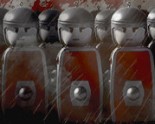
Shieldwall looks like a goofy third-person battle sim at first glance, all wobbly ragdolls and clanging swords, but it plays like a genuine command exercise the moment your line breaks and the enemy general spots the gap.
| Genre | Tactical battle simulator |
| Setting | Roman conquest of Gaul |
| Perspective | Third-person, single controllable unit |
| Modes | Campaign and multiplayer |
Commanding Troops as a Single Character
You never leave your own body in Shieldwall — you’re always controlling one soldier directly, swinging a weapon in real time, while issuing formation orders to the rest of your unit around you. That combination is the game’s defining hook: you’re both a fighter in the shieldwall itself and the officer deciding whether that wall holds, advances, or falls back to regroup near a captured flag.
Flags are the objective structure holding most missions together, and claiming them under Caesar’s banner while your legion pushes through Gaul is the throughline connecting an otherwise loose campaign of standalone battles. Formation commands — hold the line, charge, wheel to flank — carry real weight, since a poorly timed charge against a fresh enemy line can shatter your own formation faster than any single duel would.
Catapults and other siege weapons show up in later missions and became one of the more talked-about additions once players started running into how precise and fast their reload actually is compared to everything else in the game.
Learning the Battle of Alesia and Beyond
The Battle of Alesia, capping Act 1 of the campaign, is regularly cited as the mission where Shieldwall’s difficulty spikes hard enough that new players either adapt their formation tactics or bounce off entirely. Earlier missions, generally the first five or six, ease players into flag control and basic unit commands before throwing anything resembling a real siege at them.
Gold and resource management sits underneath the combat layer — starting funds vary by mission, and outmatched starting gold against a better-funded AI opponent is one of the more consistent complaints in community discussion, since it can make a mission feel unwinnable through straightforward tactics alone rather than through exploiting a specific weakness in the scenario’s setup.
Faction bonuses differ meaningfully once multiple factions become playable, and knowing which bonus your current army benefits from before a battle starts often matters more than raw troop count once the shieldwall actually locks together.
Multiplayer and What Players Debate
Multiplayer strips away the AI’s scripted advantages and turns Shieldwall into a genuinely tense standoff between two human commanders, and it’s frequently cited as the mode where the game’s formation systems shine brightest, since human opponents adapt in ways scripted missions never do. Some players wish the roster of maps available for multiplayer matches was larger, given how good the core loop feels once you’re actually facing another commander.
The most persistent criticism in campaign discussion concerns pacing past the early missions — several players describe a stretch where the game rewards avoiding direct combat entirely rather than engaging with the shieldwall mechanics the whole game is named after, which feels like a mismatch between design intent and how missions actually play out in practice.
Is Shieldwall more about individual combat or troop command?
Both, deliberately. You’re always swinging a weapon yourself while simultaneously issuing formation orders, and missions are balanced around using command decisions to set up favorable individual fights rather than either system working in isolation.
Does gold management affect mission difficulty significantly?
Yes, starting gold determines how many troops and upgrades you can field before a battle even begins, and several missions are noticeably harder when the AI opponent starts with a funding advantage over your own force.
Once the flags at Alesia are finally secured and the legion pushes deeper into Gaul, Shieldwall’s mix of personal swordplay and formation command is what keeps players coming back to multiplayer long after the campaign’s Roman conquest wraps up.