










Dead Plate
 (1 оценок, среднее: 5.00 из 5)
 Loading...
Similar Games





Description
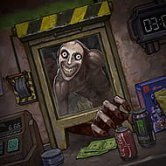
Dead Plate looks like it’s going to be a quiet week of waiting tables — take the order, run the plate, collect the tip — right up until Rody’s dreams start telling him something about his new boss that the daytime shifts never do.
| Genre | Restaurant tycoon / horror visual novel |
| Setting | 1960s French bistro, La Gueule de Saturne |
| Playable character | Rody Lamoree |
| Length | A single in-game week |
Running the Floor at La Gueule de Saturne
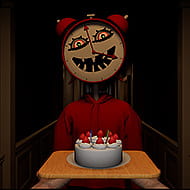
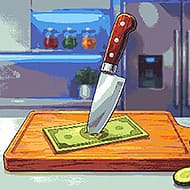
Dead Plate splits its time between two modes: waiting tables as Rody, and slower visual novel scenes exploring what’s actually happening at La Gueule de Saturne. Service itself is a tight little tycoon loop — seat guests, take their order once a dialogue prompt appears, deliver the ticket to Vince in the kitchen, then run the finished plates back out before patience meters drain.
The kitchen preps dishes in a fixed order — dessert, side, main, appetizer — while guests order the opposite way around, appetizer first, and juggling that mismatch under time pressure is the core skill the game is actually testing during a busy shift.
Some interactive objects scattered around the dining room are easy to miss entirely on a first playthrough, and poking at background details rather than only chasing the obvious ticket queue is where a lot of the game’s optional story context lives.
Rody, Vince, and the Nightmares
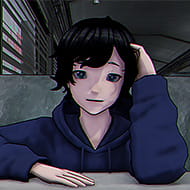
Vince Charbonneau runs the kitchen with a controlled, almost too-smooth confidence, and it’s the contrast between his composure and Rody’s increasingly disturbed dreams that drives the horror rather than any jump-scare-heavy sequence. Manon, a recurring supporting character, ties into the game’s Golden Ending, one of four possible outcomes shaped by dialogue choices made while talking to Vince between shifts.
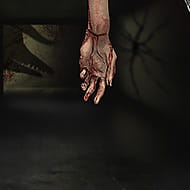
The dream sequences that open most nights aren’t optional flavor — they seed information about the restaurant’s secrets well before the daytime story confirms anything outright, and returning players tend to notice foreshadowing in early dreams that made no sense the first time through.
Endings, Difficulty, and Community Talk
Dead Plate scales its difficulty across the week, with service getting noticeably harder around day five or six as guest volume increases and patience windows tighten, a stretch several players single out as the toughest part of a full run. Four distinct endings branch off primarily from how Rody responds during his private conversations with Vince rather than from service performance alone.
Community discussion often circles the game’s blend of genres — some players love that a restaurant management loop can carry real horror tension, while others feel the tycoon segments occasionally slow down momentum right when the story wants to build dread. Both sides tend to agree the pixel art and the way dialogue text changes sound per speaker do a lot of quiet work for the atmosphere.
A frequent question is whether service mistakes affect the ending — they mainly affect income and pacing rather than locking story branches directly, since the major choices happen in dialogue with Vince. Another common search asks how long a full playthrough takes; a single run generally lands under three hours, short enough that chasing multiple endings in one sitting is realistic. A third question concerns whether the tutorial is worth playing — it can be skipped without consequence, since it teaches only the basic service loop and nothing story-relevant.
What determines which ending you get in Dead Plate?
Choices made during optional conversations with Vince across the week are the primary driver, weighted more heavily than how well or poorly Rody performs during table service on any given night.
By the final night’s ticket queue, Dead Plate has turned a simple restaurant shift into something closer to a slow-burn thriller, and it’s the space between Vince’s calm kitchen and Rody’s unraveling dreams where the game does its best, most unsettling work.