








771 Horror
 (1 оценок, среднее: 5.00 из 5)
 Loading...
Similar Games









Description
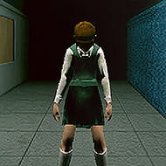
You wake up in your own apartment, except it isn’t quite your apartment anymore. The hallway that led to the kitchen for years now bends somewhere it shouldn’t, the light switches don’t do what they used to, and something about the silence feels rehearsed. That’s the opening minute of 771, and it never really lets go from there.
| Genre | Psychological Horror, Walking Simulator |
| Perspective | First-Person |
| Platform | PC (Windows) |
| Structure | 7 segments, each built by a different developer |
What Makes 771 Different From Other Walking Sims
The premise behind 771 is almost as unsettling as the game itself: seven developers, each given exactly one day, each working without seeing what the person before them had built. Nobody had the full picture until the final segment was stitched into place. That process shows in the finished game, and it’s part of why 771 plays like nothing else in the genre.
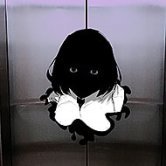
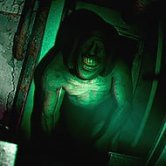
Instead of one consistent horror logic, you get seven. One segment leans into architectural wrongness — doors that open onto impossible space. Another drops the pretense of realism entirely and goes surreal, closer to a fever dream than a haunted house. A third slows everything down until the silence itself becomes the threat. This isn’t a game with one scare mechanic repeated for two hours; it’s seven different artists’ idea of dread, delivered back to back with no warning about which one comes next.
That unpredictability is the point. You can’t pattern-match your way through 771 the way you can with most horror games, because the rules reset every time you cross into a new segment.
The Apartment as the Only Constant
Every version of 771 begins in the same place: an ordinary apartment, on an ordinary night, that stops being ordinary the moment you try to leave your bed. The apartment is the one anchor point players hold onto across the whole game — familiar enough that its slow corruption actually lands. Walls stretch. Interiors repeat with tiny differences. A room you already walked through comes back changed, and you’re never quite sure if it moved or if you did.
Early in the game, before you’ve adjusted to how loosely 771 treats physical space, that apartment is doing a lot of quiet work. It’s teaching you not to trust geometry, which matters a great deal once you’re funneled into the corridors that follow.
Corridors, Doors, and the Logic of Getting Lost
- Corridors rarely lead where their shape suggests they will.
- Doors can close behind you permanently, cutting off backtracking mid-segment.
- Light sources are inconsistent by design — some rooms go fully dark with no warning.
- Sound cues often arrive before anything visual does, which is where most of the game’s tension lives.
Players in the community frequently describe this stretch of the game as “liminal” — a word that gets used a lot around 771, and for good reason. The corridors sit in that uncomfortable space between recognizable and wrong, which is exactly the mood the seven-day format was built to produce.
What Beginners Get Wrong Early On
New players tend to treat the opening segment like a normal exploration game and go looking for collectibles or a clear objective marker. 771 doesn’t reward that instinct. There’s no HUD clutter, no quest log — just the environment, your own movement, and whatever the current segment’s developer decided to throw at you. The biggest mistake is rushing rooms instead of reading them, because several of the segments hide their scares in details you only notice if you slow down.
Speedrunners exploring the game have found that pushing forward too fast in the middle segments actually triggers worse outcomes than moving cautiously, since some of the environmental shifts seem tied to how long you linger rather than a scripted timer.
The Segment That Divides the Community
Not every one of the seven days landed the same way with players, and that’s openly discussed in the 771 community. The more surreal, dream-logic segment tends to split opinion — some players find it the most memorable part of the whole game, others feel it breaks the tension the earlier segments spent so long building. It’s a fair criticism, and it comes up in nearly every discussion thread about the game’s pacing. That inconsistency is baked into the format 771 chose for itself, and whether it works depends a lot on what kind of horror fan is holding the controller.
Who Gets the Most Out of 771
Players who enjoy slow-burn atmosphere over jump-scare density tend to rate 771 highest, since the game leans on discomfort more than shock. Completionists, on the other hand, often replay individual segments specifically to catch details they missed the first time, since the disconnected structure means there’s no single throughline to track. Streamers have also gravitated toward 771 because the segment format gives natural break points for reactions between distinct horror styles in a single sitting.
Does 771 have jump scares?
Yes, but they’re distributed unevenly across the seven segments rather than paced consistently. Some segments rely almost entirely on atmosphere and environmental wrongness, while others use sharper, sound-driven scares. Players expecting a uniform scare rhythm should adjust that expectation going in.
How long does it take to finish 771?
Most players get through the full apartment-to-corridors experience in a single sitting of roughly one to two hours, since the seven segments are each relatively short by design. The compact runtime is part of why so many players describe finishing it in one continuous session rather than splitting it across multiple nights.
Is 771 connected to a larger story?
Not in a traditional sense. Each segment was built independently, so 771 doesn’t resolve into one clean narrative the way a scripted horror game typically does. The connective tissue is thematic and environmental — the apartment, the corridors — rather than a plot that ties everything together with clear answers.
What sticks with players after finishing 771 usually isn’t one specific scare but the accumulation of seven strangers’ nightmares stacked into a single night. The apartment you started in never really explains itself, the corridors never fully make sense, and that refusal to resolve is exactly why 771 keeps getting brought up in horror communities weeks after release.