














MONOCHROME
 (1 оценок, среднее: 5.00 из 5)
 Loading...
Similar Games









Description
MONOCHROME puts you inside a grayscale corridor maze where the route out depends on searching carefully while something watches from the darkness. The immediate objective is straightforward: find four keys, discover the four-digit clue for the elevator, and return to the upper area before the creature catches you. The game works best when exploration and survival are treated as the same problem, because every opened drawer, searched room, and sprint through a hallway can leave you exposed. The starting area gives you the elevator, the four-lock panel, the keypad, and the boarded doorway marked DO NOT ENTER, which becomes the route into the darker search area.
| Genre | Puzzle horror / escape room |
| Platform | Roblox |
| Main objective | Collect four keys and complete the elevator code |
| Core mechanic | Search rooms while avoiding a patrolling creature |
| Escape requirement | Four keys plus a four-digit code |
MONOCHROME and the Four-Key Route
The first important mistake is treating the corridor network like a normal scavenger hunt. The four keys are not simply rewards for reaching obvious locations, so searching furniture becomes part of the route itself. Drawers, dressers, and rooms need to be checked systematically, and leaving a searched drawer open can help you remember where you have already looked. A player who rushes toward the deepest corridor without remembering cleared rooms can waste more time returning to the same places than a careful explorer spends searching them once.
Each collected key has a practical purpose because the escape route uses four deadbolts around the elevator area. Finding a key is therefore only half of the task; it must also be delivered and used at the corresponding lock. This distinction catches beginners who assume that carrying all four keys is enough. A methodical solo player can clear one section at a time, while a coordinated group can divide the search and call out which rooms or furniture have already been checked.
Early in the game, the safest habit is to identify a hiding place before committing to a long search. The corridor layout can make a room feel safe simply because nothing is visible at that moment, but the creature can approach while you are focused on a drawer. Once the first key is found, the objective becomes less about speed and more about maintaining a reliable route back toward the elevator. That change in mindset makes repeated attempts much less chaotic.
Searching Rooms in MONOCHROME
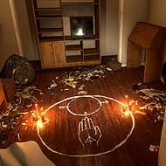
The search itself is deliberately uncomfortable because useful objects are mixed into ordinary-looking rooms. Players often make the mistake of opening furniture randomly, then losing track of which drawers have already been searched. Keeping the environment as a visual record is more useful than trying to memorize every corridor. Opened drawers, cleared rooms, and recognizable junctions become informal landmarks that reduce unnecessary backtracking.
The flashlight, activated with F, is particularly useful when darkness makes furniture and corridor edges difficult to read. Sprinting with Shift can create distance when necessary, but using it constantly is a poor habit because movement should be planned around available cover. The optional Radar and Night Vision Goggles are additional tools associated with the game, while ordinary exploration still depends on reading the rooms and remembering the route. Players who enjoy methodical puzzle solving will usually get more from the layout than players who simply run from room to room.
One divisive part of MONOCHROME is that searching can feel slow when a key does not appear where a player expects it. That tension is intentional to the escape-room structure, but it can also make a failed run feel frustrating when the player has already searched several similar rooms. The useful response is not to search faster; it is to search more consistently, mark completed areas mentally, and avoid repeatedly checking the same dresser because the surrounding corridors look nearly identical.
The Creature and Hiding in MONOCHROME
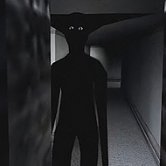
The creature has no confirmed official character name, and the practical vocabulary used by players is simply the monster or creature. It moves through the corridor network rather than functioning like an opponent that can be attacked, so there is no combat solution to learn. The important warning signs are environmental and audio cues, including footsteps and the sound of movement approaching through the halls. When those signs become noticeable, continuing to search a drawer is usually a worse choice than reaching cover.
Wardrobes and closets provide the central defensive mechanic. Press E when the interaction prompt appears to enter hiding, then remain there while the creature passes through the nearby corridors. A common beginner error is waiting until the creature is already at the doorway before deciding where to hide. Players who treat hiding places as planned checkpoints instead can search more confidently because every risky section has a known retreat point.
The creature also creates an important difference between solo and group play. A solo runner has complete control over noise and movement, while a group can accidentally make the search harder by splitting attention and drawing danger toward an area where another player is still searching. Players who enjoy tense stealth should focus on audio cues and controlled movement, whereas puzzle-focused players may prefer memorizing room landmarks first. Once the creature appears nearby, surviving the encounter matters more than finishing the drawer currently in front of you.
Finding the Elevator Code in MONOCHROME
The four-digit elevator sequence is another part of the escape that is easy to misunderstand. It is not a normal promotional code entered through a menu; the number is an in-level puzzle clue that must be discovered during the run. Community walkthroughs have documented different four-digit values, which means players should not blindly rely on a number remembered from another session. The safest approach is to read the clue encountered in your own run and record all four digits before continuing.
The code also does not replace the four-key objective. The elevator sequence requires both parts to be completed, so entering the digits while a deadbolt remains locked will not provide a shortcut. After all four keys have been delivered and the lock indicators are ready, return to the elevator area and use the keypad. Players who prefer solving puzzles themselves should ignore published numbers and treat the visible clue in their current run as the authoritative answer.
A useful advanced habit is to separate code discovery from code entry. Read the digits carefully when you find them, especially when low lighting makes similar shapes easy to confuse, then concentrate on survival and key collection until the elevator is ready. This prevents a player from repeatedly returning to the same corridor simply because one digit was forgotten. The game rewards that small amount of preparation because the final trip to the elevator is much more stressful when the player is trying to remember a code at the same time.
Escaping MONOCHROME Without Losing the Run
By the time the fourth key is secured, the safest route is usually the one you already understand rather than an unexplored shortcut. Check that every deadbolt has actually registered, confirm the four-digit clue, and approach the elevator with a hiding option available along the way. If the keypad does nothing, check the locks before assuming the digits are wrong. This simple sequence prevents one of the most common sources of confusion during a nearly completed escape.
The strongest players also recognize that panic creates many failures that look like bad luck. A sudden chase encourages sprinting down a long hallway, but running without knowing where the next wardrobe is can leave you with no recovery option. Breaking line of sight, reaching cover, waiting for the patrol to pass, and then resuming the search is usually more reliable than trying to outrun the creature indefinitely. That rhythm turns the game from a frantic chase into a puzzle with a survival layer.
How many keys are required to escape?
MONOCHROME requires four keys for the elevator route. Each key is connected to a deadbolt, so collecting a key is not enough unless it is also used at the lock panel. The elevator remains incomplete until all four locks have been released.
Where should the elevator code be found?
The four-digit sequence is discovered inside the level rather than through a redemption menu. Current walkthroughs describe the clue as appearing on a block or slip within the downstairs search area, and different runs have produced different reported numbers. Reading the clue from the current run is therefore safer than memorizing a number from an older guide.
How do you hide from the creature?
When the creature approaches, stop searching and move toward a wardrobe or closet that can be entered with the interaction prompt. Press E to hide and wait for the patrol to pass before returning to the corridor. The creature cannot be defeated through combat, so positioning and timing are the main defensive tools.
MONOCHROME works because the four keys, the elevator code, the corridor layout, and the unnamed creature all reinforce the same pressure: every minute spent searching can create another reason to move carefully. Learning which rooms have been cleared, recognizing footsteps before a chase begins, and using wardrobes instead of desperate sprints makes the escape far more manageable. Once the four deadbolts are open and the correct digits are ready, the elevator becomes the final test of everything learned about the route, with the creature still capable of turning a simple return trip into the most dangerous part of MONOCHROME.